What Is an Overbite?
An overbite is a vertical overlap of the upper front teeth over the lower front teeth. A small amount of overlap is normal and healthy, typically 1 to 3 millimeters. When the overlap exceeds this range, orthodontists call it a deep bite or excessive overbite.
Overbites are one of the most common reasons patients seek orthodontic care. Left untreated, a significant overbite can lead to uneven tooth wear, damage to the gum tissue behind the upper front teeth, jaw discomfort, and difficulty biting into food properly.
Dental Overbite vs Skeletal Overbite
Understanding the type of overbite you have matters because it determines which treatment will work. A dental overbite means the teeth themselves are positioned incorrectly, but the jawbones are properly sized and aligned. A skeletal overbite means the upper jaw is too far forward, the lower jaw is too far back, or both.
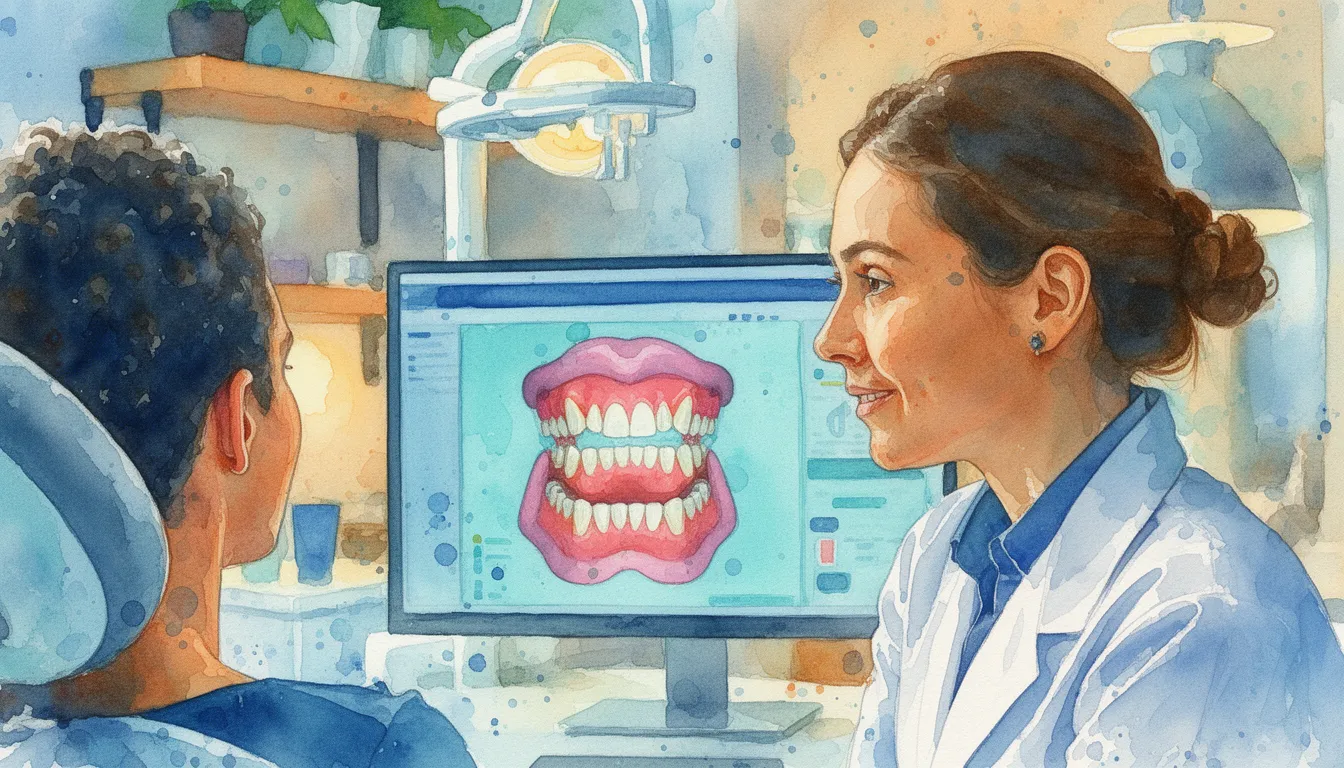
Most overbites involve a combination of dental and skeletal factors. An orthodontist will take X-rays, photographs, and digital scans to determine the underlying cause before recommending treatment.
Overbite vs Overjet
These terms are often confused but describe different things. An overbite measures vertical overlap: how much the upper teeth cover the lower teeth when biting down. An overjet measures horizontal distance: how far the upper teeth sit in front of the lower teeth. Many patients have both an overbite and an overjet, and orthodontic treatment typically addresses both.
What Causes an Overbite?
Overbites develop from a combination of genetics and environmental factors. In many cases, the tendency toward an overbite is inherited, just as jaw size and tooth size run in families.
- Genetics: Inherited jaw size, jaw position, and tooth size are the most common factors. If a parent had an overbite, their children have a higher likelihood of developing one.
- Childhood habits: Prolonged thumb sucking, pacifier use beyond age 3, or tongue thrusting can push the upper teeth forward and contribute to an overbite.
- Tooth loss: Missing lower teeth that are not replaced can allow the upper teeth to drift downward over time, creating or worsening an overbite.
- Jaw growth patterns: The upper and lower jaws grow at different rates during childhood and adolescence. If the lower jaw does not grow forward enough relative to the upper jaw, a skeletal overbite can develop.
Overbite Correction Treatment Options
The right treatment depends on the severity and type of your overbite, your age, and your overall dental health. Orthodontists have several tools available, and many overbites can be corrected without surgery.
Braces for Overbite Correction
Traditional metal braces remain the most reliable option for correcting moderate to severe overbites. Braces use brackets bonded to the teeth and archwires that apply controlled force to move teeth into their correct positions. For overbite correction, the orthodontist may also use elastics (rubber bands) that connect the upper and lower arches to shift the bite relationship.
Ceramic braces work the same way as metal braces but use tooth-colored or clear brackets for a less visible appearance. They are equally effective for overbite correction, though the brackets may be slightly larger than metal ones.
Clear Aligners for Overbite Correction
Clear aligners can correct mild to moderate dental overbites in many cases. Advances in aligner technology now allow for the use of attachments and elastics, which have expanded the range of overbites that aligners can treat. However, severe overbites or skeletal overbites generally require braces for more precise control of tooth and root movement.
If you prefer aligners, consult an orthodontist to determine whether your overbite falls within the treatable range. Not every case is suitable, and starting with the wrong treatment can extend your overall timeline.
Jaw Surgery for Severe Overbite
Orthognathic (jaw) surgery may be recommended for severe skeletal overbites in adults whose jaws have stopped growing. This typically involves moving the lower jaw forward, the upper jaw back, or both. An oral and maxillofacial surgeon performs the procedure, and an orthodontist manages the braces before and after surgery to fine-tune the tooth alignment.
Surgery is generally considered only when braces or aligners alone cannot correct the skeletal discrepancy. The combined treatment (braces plus surgery) typically takes 18 to 30 months total.
Early Treatment for Children
For children ages 7 to 10, an orthodontist may recommend early interceptive treatment to guide jaw growth and reduce the severity of an overbite. This can involve a functional appliance that encourages the lower jaw to grow forward or a palatal expander to widen the upper jaw. Early treatment does not always eliminate the need for braces later, but it can make the second phase shorter and simpler.
How Long Does Overbite Correction Take?
Treatment time varies based on the severity of the overbite, the patient's age, and the treatment method chosen. In general, most overbite correction takes 12 to 24 months with braces.
- Mild overbite with braces or aligners: 6 to 12 months
- Moderate overbite with braces: 12 to 18 months
- Severe overbite with braces and elastics: 18 to 24 months
- Overbite with jaw surgery: 18 to 30 months total (includes pre-surgical and post-surgical orthodontics)
What Affects Treatment Time
Age plays a significant role. Children and teens in active growth often respond faster to treatment because the orthodontist can work with natural jaw development. Adults can still achieve excellent overbite correction, but the process typically takes longer because bone remodeling occurs more slowly.
Compliance also matters. Wearing elastics as directed, keeping appointments, and following care instructions all affect how quickly treatment progresses. Missing elastic wear by even a few hours a day can add months to your timeline.
Overbite Correction Cost
The cost of overbite correction depends on the treatment method, case complexity, and geographic location. These figures represent typical ranges reported across practices, though your actual cost may fall outside these ranges.
Metal braces for overbite correction typically cost $3,000 to $7,000. Ceramic braces cost $4,000 to $8,000. Clear aligners typically cost $3,000 to $8,000 for treatable cases. If jaw surgery is needed, the surgical portion can add $20,000 to $40,000 before insurance, though medical insurance may cover part of this cost when the surgery is medically necessary.
Most dental insurance plans with orthodontic benefits cover a portion of braces or aligner treatment, typically up to a lifetime maximum of $1,000 to $2,500. Many orthodontic offices offer monthly payment plans. Costs vary by location, provider, and case complexity.
When to See an Orthodontist About Your Overbite
If you notice that your upper teeth significantly overlap your lower teeth, or if you experience jaw pain, difficulty chewing, or uneven tooth wear, schedule a consultation with an orthodontist. The American Association of Orthodontists recommends that children have their first orthodontic evaluation by age 7 to catch developing bite problems early.
Adults should not assume that overbite correction is only for children. Adults of any age can benefit from treatment, and many orthodontic practices see a growing number of adult patients seeking overbite correction.
Find an Orthodontist for Overbite Correction
Every orthodontist on My Specialty Dentist has verified specialty credentials. Search the [orthodontics directory](/specialties/orthodontics) to find orthodontists in your area, compare their experience, and book a consultation.
Search Orthodontists in Your Area