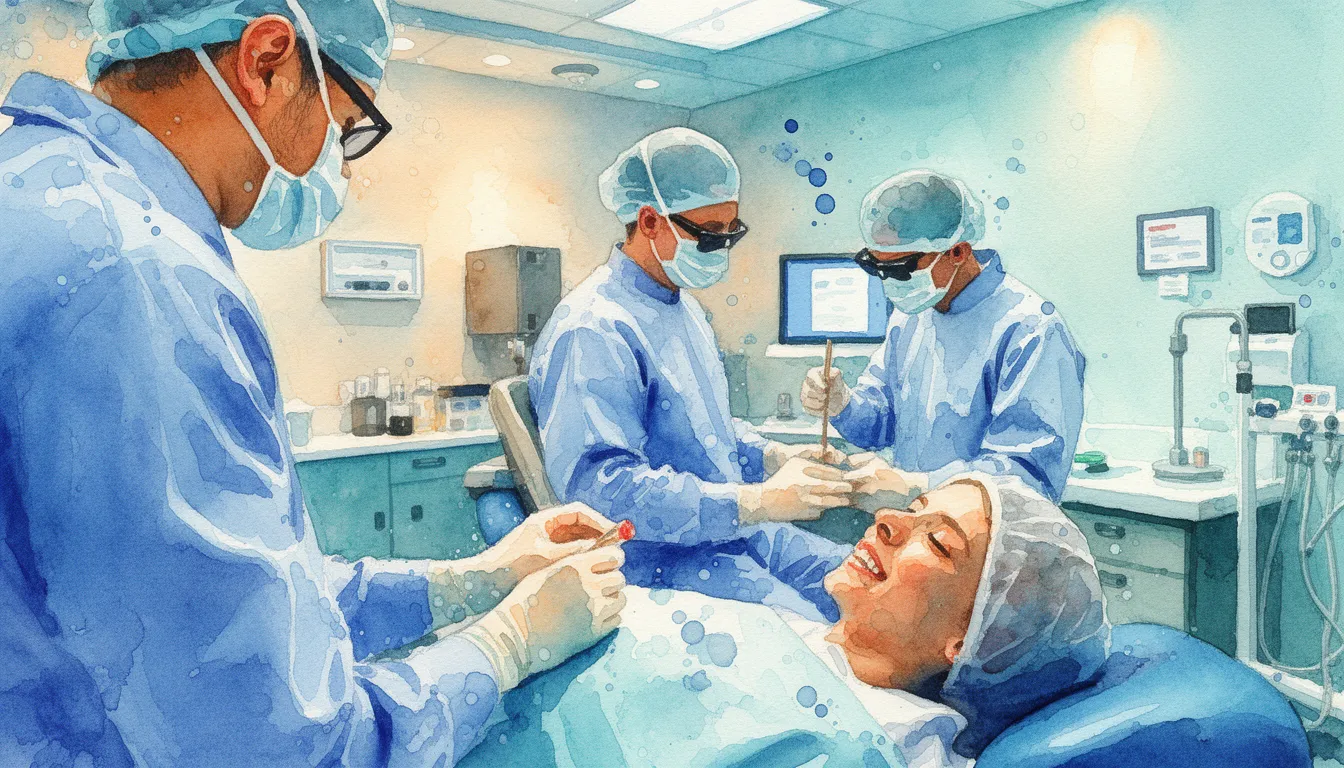
What Is Gum Flap Surgery?
Gum flap surgery is a periodontal procedure that removes infection and repairs bone damage caused by advanced gum disease. Your periodontist may also call it osseous surgery, open flap debridement, or pocket reduction surgery.
In healthy gums, the tissue fits snugly around each tooth. The shallow space between the gum and tooth, called a sulcus, is typically 1 to 3 millimeters deep. When bacteria build up and harden into tarite (calculus), this space deepens into a periodontal pocket. Pockets deeper than 5 millimeters are difficult to clean with regular brushing or even professional scaling. [3]
The goal of gum flap surgery is to reduce pocket depth and create a cleaner environment around the tooth roots. By lifting the gum tissue and gaining direct access to the root surfaces and underlying bone, the periodontist can thoroughly remove bacteria, calculus, and inflamed tissue. If the bone has developed uneven edges or craters from disease, the surgeon reshapes it so the gum can heal flat against the tooth. [3]
This procedure has been a cornerstone of periodontal treatment for decades. When performed on appropriate candidates, it typically stops the progression of bone loss and creates conditions that the patient and dental team can maintain long term.
When Is Gum Flap Surgery Recommended?
Gum flap surgery is recommended when deep pockets persist after non-surgical periodontal treatment and the disease continues to threaten tooth support.
The first line of treatment for gum disease is usually scaling and root planing (SRP), a deep cleaning performed under local anesthesia. SRP removes calculus and bacteria from below the gumline and smooths the root surface so gums can reattach. In many cases, SRP combined with improved home care is enough to control the disease. According to the American Academy of Periodontology, non-surgical treatment is effective for mild to moderate periodontitis when pockets are not excessively deep. [3]
However, some patients still have pockets of 5 millimeters or deeper after SRP. At these depths, bacteria continue to accumulate in areas that a toothbrush, floss, or even a dental scaler cannot reach. Bone loss may be progressing. In these situations, a periodontist will typically recommend surgical access to clean and repair the damage.
- Persistent deep pockets (5 mm or more) after scaling and root planing
- Irregular or cratered bone around the teeth that traps bacteria
- Progressive bone loss visible on dental X-rays despite non-surgical treatment
- Localized or generalized moderate to severe periodontitis that has not responded to conservative care
- Need for regenerative procedures, such as bone grafts or guided tissue regeneration, that require surgical access
Combining Flap Surgery with Regenerative Techniques
In some cases, the periodontist may combine flap surgery with regenerative materials to rebuild lost bone. One common approach is guided tissue regeneration (GTR), which uses a barrier membrane to direct bone and tissue growth into a defect. A Cochrane systematic review of randomized controlled trials found that GTR provided a statistically significant improvement in attachment level and pocket depth reduction compared to open flap debridement alone, particularly in infrabony defects (vertical bone loss pockets). [1]
Bone grafts, growth factors, or enamel matrix proteins may also be placed during surgery. These materials encourage the body to regenerate supporting structures rather than simply healing with scar-like tissue. Your periodontist will evaluate the shape and depth of your bone defects to determine whether regeneration is a realistic option for your case.
What to Expect: Before, During, and After the Procedure
The procedure typically takes one to two hours per quadrant and is performed under local anesthesia in the periodontist's office.
Before Surgery
Your periodontist will take detailed X-rays and measure pocket depths around every tooth to map the areas that need surgery. You will review your medical history, current medications, and any conditions that affect healing, such as diabetes or blood-thinning medication.
In the weeks before surgery, you may receive scaling and root planing if it has not already been completed. This initial cleaning reduces the bacterial load and inflammation, which helps surgical outcomes. Your periodontist may also prescribe an antimicrobial mouth rinse.
On the day of surgery, eat a light meal beforehand unless instructed otherwise. Arrange a ride home if sedation is part of your plan. Wear comfortable clothing with sleeves that roll up easily.
During Surgery
The periodontist numbs the treatment area with local anesthesia. Sedation options, such as oral sedation or nitrous oxide, are available for patients with dental anxiety.
Using a scalpel or specialized instrument, the surgeon makes small incisions in the gum tissue and gently lifts it away from the teeth and bone. This creates a flap that provides direct visibility and access to the root surfaces and underlying bone. [3]
With the roots exposed, the periodontist removes all calculus deposits, bacterial colonies, and granulation tissue (inflamed, infection-filled tissue). Each root surface is carefully smoothed. The surgeon then evaluates the bone. If the bone has developed irregular edges or craters, the surgeon reshapes these areas with hand instruments or a rotary bur. This process, called osseous recontouring, eliminates hiding spots for bacteria.
If regenerative materials are indicated, the surgeon places bone graft material, membranes, or biologic agents into the defect at this stage. [1] The gum flap is then repositioned against the tooth and secured with sutures. A periodontal dressing (a putty-like bandage) may be placed over the surgical site to protect it.
Immediately After Surgery
You will bite gently on gauze to control bleeding for the first 30 to 60 minutes. The numbness from anesthesia typically wears off within two to four hours. Your periodontist will prescribe or recommend pain medication, an antimicrobial rinse, and possibly antibiotics.
Expect mild to moderate swelling, some oozing, and discomfort for the first two to three days. Applying an ice pack to the outside of the cheek in 20-minute intervals helps reduce swelling during the first 24 hours. Avoid hot foods, straws, and vigorous rinsing on the day of surgery.
Recovery Timeline and Aftercare
Most patients resume normal daily activities within a few days, though full tissue and bone healing takes several months.
Week-by-Week Recovery
Recovery varies from person to person. Smokers and patients with systemic conditions such as uncontrolled diabetes tend to heal more slowly. The following timeline reflects typical milestones for otherwise healthy patients.
- Days 1 to 3: Swelling peaks around day two or three. Manage pain with prescribed or over-the-counter medication. Stick to soft, cool foods like yogurt, scrambled eggs, and smoothies. Do not brush the surgical site. Use the prescribed antimicrobial rinse instead.
- Days 4 to 7: Swelling begins to subside. You may gently rinse with warm salt water. Light bruising around the cheek or jaw is normal.
- Week 2: Sutures are typically removed at a follow-up visit (some sutures dissolve on their own). You can usually return to gentle brushing in the area with a soft-bristled brush. Most patients return to a normal diet, though you should still avoid hard, crunchy, or spicy foods near the surgical area.
- Weeks 3 to 4: Gum tissue continues to mature and tighten around the teeth. Sensitivity to cold or heat is common and usually temporary.
- Months 2 to 6: Bone remodeling and tissue maturation continue beneath the surface. Your periodontist will re-evaluate pocket depths at follow-up appointments, typically at three and six months.
Normal Healing vs. Signs to Call the Office
Some symptoms are a normal part of healing. Others signal a problem that needs prompt attention.
- Normal: Mild to moderate aching, light pink oozing the first day, temporary tooth sensitivity, minor gum recession as swelling resolves
- Call your periodontist: Heavy bleeding that does not stop with pressure, increasing pain or swelling after day three, pus or a foul taste from the surgical site, fever above 101 degrees Fahrenheit, numbness that persists beyond the day of surgery
Long-Term Maintenance After Surgery
Surgery alone does not cure periodontitis. The results of gum flap surgery depend heavily on ongoing home care and professional maintenance. The American Academy of Periodontology recommends periodontal maintenance visits every three to four months for most patients after surgical treatment. [3]
At these visits, the periodontist or hygienist measures pocket depths, removes any new calculus, and monitors for signs of disease recurrence. At home, thorough brushing twice daily and daily flossing or use of interdental brushes remain essential. Patients who smoke should know that tobacco significantly increases the risk of disease recurrence and compromises surgical outcomes.
Cost of Gum Flap Surgery
Gum flap surgery typically costs between $1,000 and $3,000 per quadrant in the United States. Costs vary by location, provider, and case complexity.
A quadrant refers to one-fourth of the mouth. Some patients need surgery in only one or two quadrants, while others may need all four treated. The total cost depends on how many quadrants are involved, whether regenerative materials like bone grafts or membranes are used, and the geographic region of the practice.
If guided tissue regeneration or bone grafting is added, the cost per quadrant may increase by several hundred to over a thousand dollars, depending on the type and amount of material used. [1]
Insurance Coverage and Payment Options
Many dental insurance plans cover a portion of periodontal surgery when it is deemed medically necessary. Coverage typically falls under major restorative or surgical benefits and may cover 50% to 80% of the allowed fee, depending on the plan. There is usually an annual maximum that limits total benefits.
Before scheduling surgery, ask the periodontist's office to submit a pre-treatment estimate to your insurance company. This gives you a clearer picture of your out-of-pocket responsibility. If costs exceed your budget, many periodontal offices offer payment plans or work with third-party financing companies that allow you to spread the cost over several months.
Patients without dental insurance should discuss fees upfront. Some practices offer a discount for paying in full at the time of service.
Why See a Periodontist for Gum Flap Surgery?
A periodontist is a dentist who has completed an additional three years of specialty training focused exclusively on the gums, bone, and supporting structures of the teeth. [3]
General dentists diagnose and treat many stages of gum disease. Scaling and root planing, for example, is commonly performed by a general dentist or dental hygienist. However, when surgery is needed, a periodontist brings specialized training in tissue management, bone reshaping, and regenerative techniques. This additional expertise is particularly valuable for complex cases involving multiple teeth, severe bone loss, or defects that may benefit from guided tissue regeneration. [1]
Your general dentist and periodontist work as a team. Typically, the general dentist refers you to the periodontist for surgical treatment and then continues providing your routine dental care. The periodontist manages your periodontal maintenance visits and monitors the surgical sites over time. You can learn more about what this specialty involves on the periodontics page.
When choosing a periodontist, consider their experience with the specific procedure you need. Ask how often they perform osseous surgery and whether they offer regenerative options. A face-to-face consultation allows you to review your X-rays together, discuss the treatment plan, and understand expected outcomes for your specific situation.
Find a Periodontist Near You
If you have been told you need gum flap surgery, or if you have deep gum pockets that have not responded to non-surgical treatment, a periodontist can evaluate your case and explain your options. Use the search tool on the periodontics page to find a qualified periodontist in your area and schedule a consultation.
Search Periodontists in Your Area