What Is Dental Implant Failure?
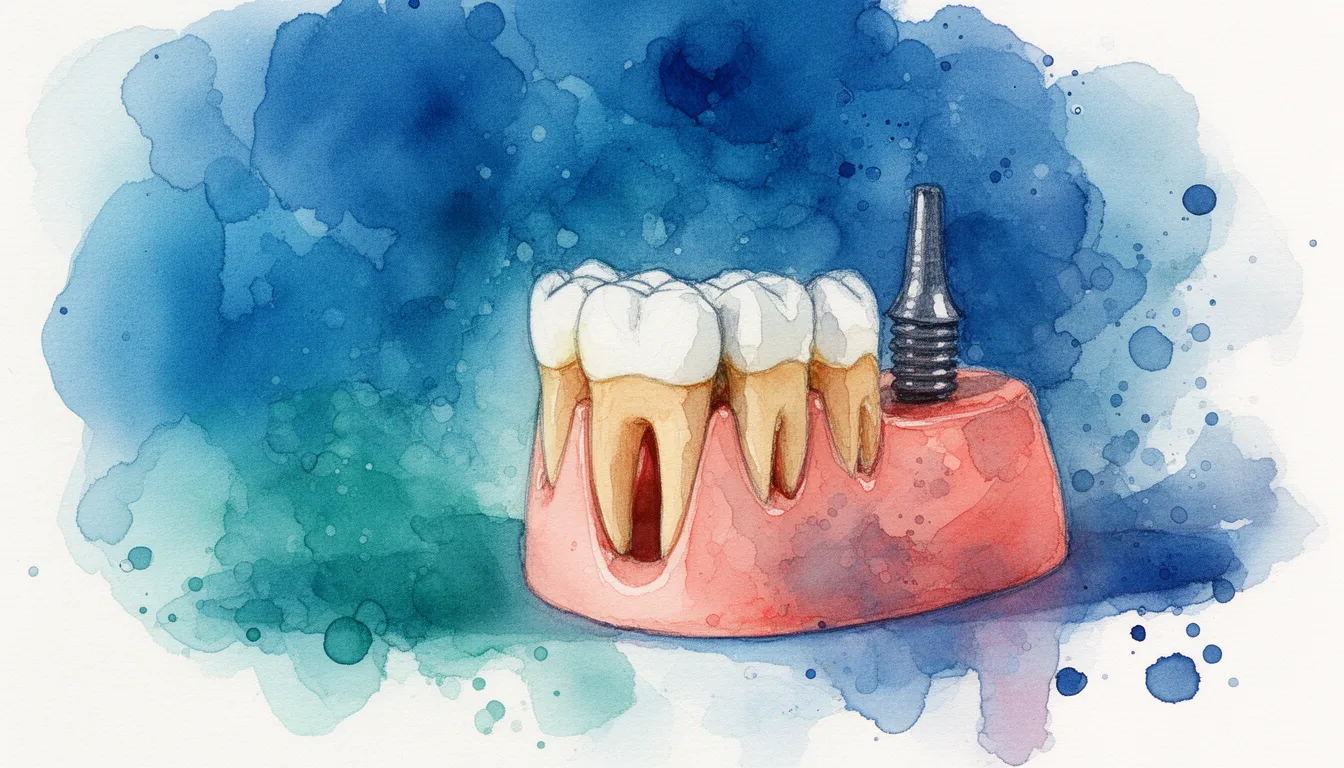
Dental implant failure occurs when an implant does not properly bond with the jawbone or loses its support over time. The implant may become loose, painful, or infected.
A dental implant is a small titanium post that a surgeon places into the jawbone to replace a missing tooth root. Over several months, the bone grows around the post in a process called osseointegration (bone bonding). Once healed, a crown, bridge, or denture attaches to the implant. If osseointegration does not happen, or if it breaks down later, the implant fails.
Dental implants are one of the most reliable tooth replacement options available. Reported long-term success rates are typically above 95%. [1] However, that still means a small number of implants do fail. Failure can happen early, within the first few months, or late, sometimes many years after placement.
Understanding the two types of failure helps clarify what went wrong and what can be done. Early failure occurs before the implant has bonded to the bone. Late failure occurs after the implant was once stable and functioning. Each type has different causes and different treatment paths.
Causes and Risk Factors for Implant Failure
Implant failure results from infection, poor bone quality, systemic health issues, or mechanical stress on the implant.
Causes of Early Implant Failure
Early failure happens during the first few months after surgery, before osseointegration is complete. The implant never fully bonds with the bone.
Several factors can prevent proper bone bonding. Infection at the surgical site is one of the most common. If bacteria contaminate the area during or after surgery, the bone cannot heal around the implant. Insufficient bone volume or poor bone density can also prevent a secure bond. If the jawbone is too thin, too soft, or has not been properly prepared, the implant may not stabilize.
Surgical technique matters as well. Overheating the bone during drilling, placing the implant at the wrong angle, or applying too much force during placement can all damage surrounding tissue. Premature loading, meaning attaching a crown or prosthesis too soon, can disrupt the healing process before the bone has had time to integrate.
- Surgical site infection
- Insufficient bone volume or density
- Overheating or trauma to the bone during surgery
- Premature loading of the implant
- Poor blood supply to the surgical area
Causes of Late Implant Failure
Late failure develops months or years after the implant was successfully integrated and functioning. The most common cause is peri-implantitis. [2]
Peri-implantitis is an inflammatory condition that affects the gum and bone tissue surrounding an implant. It begins as peri-implant mucositis (inflammation of the soft tissue only). If untreated, it progresses to peri-implantitis, where the supporting bone starts to break down. This is similar to periodontitis (gum disease) around natural teeth. As bone loss advances, the implant loses its foundation and becomes loose.
Mechanical overload is another cause of late failure. This can happen when a patient grinds or clenches their teeth (bruxism), when the bite is not properly balanced, or when the implant bears more force than it was designed to handle. Over time, this stress can cause micro-fractures in the bone or damage to the implant components.
Key Risk Factors
Certain health conditions and habits increase the likelihood of implant failure. Being aware of these can help patients and clinicians plan more carefully.
Smoking is one of the most well-documented risk factors. Tobacco restricts blood flow to the gums and bone, which slows healing and weakens the body's ability to fight infection. Uncontrolled diabetes also impairs healing and increases infection risk. Patients with well-managed diabetes typically have implant success rates close to those of non-diabetic patients. [2]
Poor oral hygiene allows plaque to build up around the implant, increasing the risk of peri-implantitis. Teeth grinding places excessive force on the implant. Osteoporosis and certain medications, such as bisphosphonates used for bone loss, may also affect bone healing around implants.
- Smoking and tobacco use: reduces blood flow and impairs healing
- Uncontrolled diabetes: increases infection risk and slows recovery
- Poor oral hygiene: allows bacterial buildup and peri-implantitis
- Bruxism (teeth grinding): places excessive force on implants
- Insufficient bone density: provides inadequate support for the implant
- Autoimmune conditions or immunosuppression: may affect healing
- History of periodontal disease: increases risk of peri-implantitis
Symptoms and Diagnosis of a Failing Implant
A failing implant typically causes pain, swelling, looseness, or gum changes around the implant site.
Warning Signs to Watch For
Some symptoms appear suddenly. Others develop gradually over weeks or months. Knowing what to look for can help you seek care before the problem worsens.
Pain or discomfort around the implant is often the first sign. This may be a dull ache or sharp sensitivity when chewing. Swelling, redness, or tenderness in the gums surrounding the implant can indicate infection. You may also notice bleeding when brushing or flossing near the implant.
An implant that feels loose or wobbly is a serious warning sign. Healthy implants should feel as solid as natural teeth. Gum recession around the implant, where the gum tissue pulls away to expose the metal post, is another concern. Some patients notice a bad taste or persistent bad breath, which may signal infection or pus drainage.
- Pain or tenderness around the implant
- Swelling or redness of the surrounding gums
- Bleeding when brushing or flossing near the implant
- The implant feels loose or moves when touched
- Gum recession exposing the implant post
- Difficulty or discomfort when chewing
- Persistent bad breath or a bad taste in the mouth
How a Failing Implant Is Diagnosed
A dentist or specialist uses a combination of clinical examination and imaging to assess implant health. During the exam, the clinician checks for implant mobility, probes the gum tissue around the implant to measure pocket depths, and looks for signs of infection or inflammation.
X-rays or cone-beam CT (CBCT) scans show the bone level around the implant. Progressive bone loss is the hallmark of peri-implantitis and late failure. Comparing current images to earlier X-rays helps the clinician track how much bone has been lost and how quickly.
If any of these symptoms appear, you should contact your dental provider promptly. Early detection gives you more treatment options and a better chance of saving the implant.
Treatment Options for a Failing Dental Implant
Treatment depends on the type and severity of failure, and may range from deep cleaning to full implant removal and replacement.
Non-Surgical Treatment
When caught early, peri-implant mucositis and mild peri-implantitis can sometimes be managed without surgery. The clinician performs a thorough professional cleaning around the implant, removing plaque and calculus (hardened plaque) from the implant surface and below the gumline.
Antimicrobial rinses or locally applied antibiotics may be used to reduce bacterial load. In some cases, systemic antibiotics are prescribed. The clinician also reviews your oral hygiene routine and provides specific instructions for cleaning around the implant at home. Special interdental brushes and water flossers can help reach areas a regular toothbrush misses. [2]
Non-surgical treatment works best when bone loss is minimal. If the infection has progressed significantly, surgery is typically needed.
Surgical Treatment
Surgical options aim to remove infected tissue, decontaminate the implant surface, and rebuild lost bone. The specific procedure depends on how much bone has been lost.
In a flap surgery, the clinician lifts the gum tissue to access the implant surface directly. Infected tissue is removed and the implant is cleaned. If bone loss has created a defect around the implant, bone grafting may be performed. Bone graft material, which can come from the patient's own body, a donor, or a synthetic source, is placed around the implant to encourage new bone growth.
Guided bone regeneration uses a membrane placed over the graft material to protect the area and direct bone healing. In many cases, these procedures can stabilize a failing implant and restore bone support. Results vary depending on the extent of bone loss, the patient's overall health, and their ability to maintain good oral hygiene afterward.
Implant Removal and Replacement
When an implant is severely loose, the bone loss is too advanced, or the implant itself is fractured, removal is typically the recommended course of action. The procedure is called explantation.
After the implant is removed, the site needs time to heal. Bone grafting is often performed at the same time to rebuild the jaw for a future implant. Healing after removal and grafting typically takes several months. Once the bone has regenerated sufficiently, a new implant can be placed. [1]
Not every patient chooses to replace a failed implant. Alternative tooth replacement options include a fixed dental bridge or a removable partial denture. A prosthodontist can help evaluate all available options and determine what makes the most sense for each situation.
Recovery and Aftercare
Recovery time depends on the treatment performed, ranging from a few days for non-surgical care to several months for bone grafting.
After non-surgical cleaning, most patients return to normal activities the same day. Mild soreness or gum tenderness may last a few days. Your clinician will likely schedule a follow-up visit within a few weeks to check healing and reassess pocket depths around the implant.
Surgical treatment requires a longer recovery period. Swelling, bruising, and discomfort are common in the first week. Most clinicians prescribe pain medication and antibiotics. A soft food diet is typically recommended for one to two weeks. Bone grafting procedures may require three to six months of healing before the area is ready for further treatment or a new implant.
Long-term aftercare is critical for preventing future problems. This includes professional cleanings on a schedule recommended by your specialist, typically every three to four months for patients with a history of peri-implantitis. Daily oral hygiene around the implant should include brushing, flossing or using interdental brushes, and antimicrobial rinses if recommended. [2] Patients who grind their teeth may benefit from a custom night guard to protect the implant from excessive force.
- Non-surgical treatment: resume normal activities the same day; follow-up in a few weeks
- Flap surgery: one to two weeks of soft diet; healing over several weeks
- Bone grafting: three to six months for bone regeneration
- Implant removal and replacement: several months total from removal to placement of a new implant
- Ongoing maintenance: professional cleanings every three to four months; diligent home care daily
Cost Factors for Treating Implant Failure
Treatment costs range widely depending on the procedure, geographic location, provider, and complexity of the case.
Non-surgical cleaning around an implant may cost between $200 and $500 per visit. Surgical treatment for peri-implantitis, including flap surgery and decontamination, often ranges from $1,000 to $3,000 or more. Bone grafting procedures can add $500 to $3,000 depending on the type and amount of graft material needed. Implant removal itself may cost $500 to $1,000. If a new implant is placed later, the full cost of implant placement, abutment, and crown typically ranges from $3,000 to $6,000 or more. Costs vary by location, provider, and case complexity.
Dental insurance coverage for implant-related treatment varies significantly between plans. Some plans cover a portion of surgical treatment for infection or bone grafting. Others classify implants and related procedures as elective and do not cover them. Review your specific plan details or ask the dental office to verify your benefits before treatment.
Many dental offices offer payment plans or work with third-party financing companies. Asking about these options before scheduling treatment can help you plan ahead.
- Non-surgical implant cleaning: approximately $200 to $500 per visit
- Surgical peri-implantitis treatment: approximately $1,000 to $3,000 or more
- Bone grafting: approximately $500 to $3,000
- Implant removal: approximately $500 to $1,000
- New implant placement (total): approximately $3,000 to $6,000 or more
When to See a Specialist
A prosthodontist or periodontist should evaluate any implant showing signs of failure, especially if bone loss is present.
General dentists often identify early warning signs of implant problems during routine checkups. They can manage mild peri-implant mucositis with professional cleaning and hygiene coaching. However, when bone loss is detected on X-rays, when the implant is mobile, or when initial treatment has not resolved symptoms, referral to a specialist is appropriate. [1]
A prosthodontist specializes in restoring and replacing teeth, including managing complex implant cases. Prosthodontists complete additional years of training beyond dental school focused on implant planning, placement of prosthetic components, and managing complications. [1] A periodontist specializes in the gum and bone tissues that support teeth and implants, making them well-suited to treat peri-implantitis surgically.
If you have already had one implant fail, seeing a specialist before placing a replacement is particularly valuable. A specialist can identify the factors that contributed to the original failure and adjust the treatment plan to reduce the risk of it happening again.
Find a Prosthodontist Near You
If you are experiencing symptoms of a failing dental implant, or if you have been told your implant needs attention, a prosthodontist can provide a thorough evaluation and walk you through your options. Use the prosthodontics directory at My Specialty Dentist to find a qualified specialist in your area.
Search Prosthodontists in Your Area