What This Guide Covers and Who It Is For
This guide explains how implant-supported dentures work, what the procedure involves, and what they cost. It is written for adults who are missing most or all of their teeth in one or both arches (upper jaw, lower jaw, or both).
Traditional dentures rest on your gums. Over time, they can become loose as the jawbone shrinks beneath them. Implant-supported dentures solve this problem by anchoring a removable denture to small titanium posts (dental implants) that are surgically placed in the jawbone. The implants act like artificial tooth roots, holding the denture firmly in place. [2]
You may also hear this treatment called an overdenture or a snap-in denture. All of these terms describe a denture that clips or snaps onto implants rather than sitting freely on the gums. The denture is still removable for cleaning, but it stays locked in position while you eat and speak.
A prosthodontist is the specialist most qualified to plan and deliver this treatment. Prosthodontists complete an additional three years of training beyond dental school, focusing on replacing missing teeth and restoring oral function. [1]
How Implant-Supported Dentures Work
Implant-supported dentures use two to six implants per arch to hold a custom denture securely against your gums and bone.
Types of Attachment Systems
The attachment system is the mechanism that connects the denture to the implants. Three main types are used in modern practice.
Ball-retained attachments use a small ball-shaped fitting on the top of each implant. The denture has a socket that snaps over each ball. This is typically the simplest and least expensive attachment system. It works best when two to four implants are placed and the patient has adequate bone height.
Bar-retained attachments use a thin metal bar that connects two or more implants. The denture then clips onto the bar with special clasps. Because the bar distributes chewing forces across multiple implants, this system can be a good option for patients who need extra stability or who have uneven bone density.
Locator-retained attachments use low-profile nylon inserts that snap onto small abutments (connector pieces) on each implant. Locator attachments are popular because they are easy to maintain. The nylon inserts wear down over time and can be replaced in a quick office visit.
How Many Implants Are Needed
The number of implants depends on which arch is being treated, your bone quality, and the attachment system chosen. The lower jaw typically needs a minimum of two implants to support an overdenture, though four implants provide greater stability. The upper jaw usually requires four to six implants because the bone in the upper jaw is less dense than the lower jaw. [2]
Your prosthodontist will use dental X-rays or a cone-beam CT scan (a 3D X-ray of the jaw) to evaluate your available bone. If the scan shows bone loss, a bone grafting procedure may be recommended before or during implant placement.
Implant-Supported Dentures vs. Traditional Dentures
Traditional dentures rely on suction (upper arch) or gravity and adhesive paste (lower arch) to stay in place. They can shift during chewing, limit what foods you eat, and cause sore spots on the gums. Over the years, the jawbone beneath a traditional denture gradually resorbs (shrinks), which changes the fit and requires periodic relining. [2]
Implant-supported dentures address each of these problems. The implants transmit biting forces into the jawbone, which stimulates the bone and slows the rate of resorption. Chewing efficiency is typically much higher with implant-supported dentures. Many patients report being able to eat foods like apples, corn on the cob, and steak that they avoided with traditional dentures.
However, implant-supported dentures do cost more, require a surgical procedure, and need regular maintenance. Neither option is universally better. The right choice depends on your health, bone quality, budget, and personal preferences.
Fixed vs. Removable Implant Dentures
It is worth understanding the difference between a removable implant-supported denture and a fixed implant-supported prosthesis (sometimes called All-on-4 or a fixed hybrid denture). A removable overdenture snaps in and out. You take it out at night and to clean it. A fixed prosthesis is screwed into the implants and can only be removed by a dentist.
Fixed options typically require more implants (four to six) and cost more. They can feel closer to natural teeth. Removable overdentures are easier to clean and usually less expensive. Your prosthodontist can explain which design suits your situation best. [1]
Practical Details Before You Start
Most healthy adults who are missing all or most of their teeth in an arch are candidates for implant-supported dentures.
Who Is a Good Candidate
Good candidates have enough jawbone to support implants, or are willing to undergo bone grafting. General health matters too. Conditions like uncontrolled diabetes, heavy smoking, or certain autoimmune disorders can reduce the success rate of dental implants. Your prosthodontist and oral surgeon will review your medical history to assess risk. [2]
There is no strict upper age limit. Patients in their 70s and 80s routinely receive implant-supported dentures. However, implants are typically not placed until jaw growth is complete, which usually happens around age 18.
How to Prepare
Preparation starts with a thorough exam. This includes dental X-rays, a CT scan, impressions or digital scans of your jaws, and a review of your medical history. If you currently wear dentures, bring them to the consultation so the prosthodontist can evaluate fit and function.
If you smoke, you will likely be asked to stop for several weeks before and after surgery. Smoking slows healing and significantly increases the risk of implant failure. Your prosthodontist may also coordinate care with your primary care physician to manage conditions like diabetes or blood-thinning medications before surgery. [2]
Timeline and Healing
The entire process from consultation to final denture delivery typically takes four to nine months. After the implants are placed, a healing period of three to six months is usually needed. During this time, the implants fuse with the jawbone in a process called osseointegration. This fusion is what gives implants their strength.
In many cases, you can wear a temporary denture during the healing phase so you are not without teeth. The temporary denture is usually a modified version of your existing denture or a new one made for this purpose. Once healing is complete, the final implant-supported denture is fabricated and fitted.
What to Expect During the Procedure
The process involves several appointments spread over months, starting with a consultation and ending with the delivery of your finished denture.
Step 1: Consultation and Treatment Planning
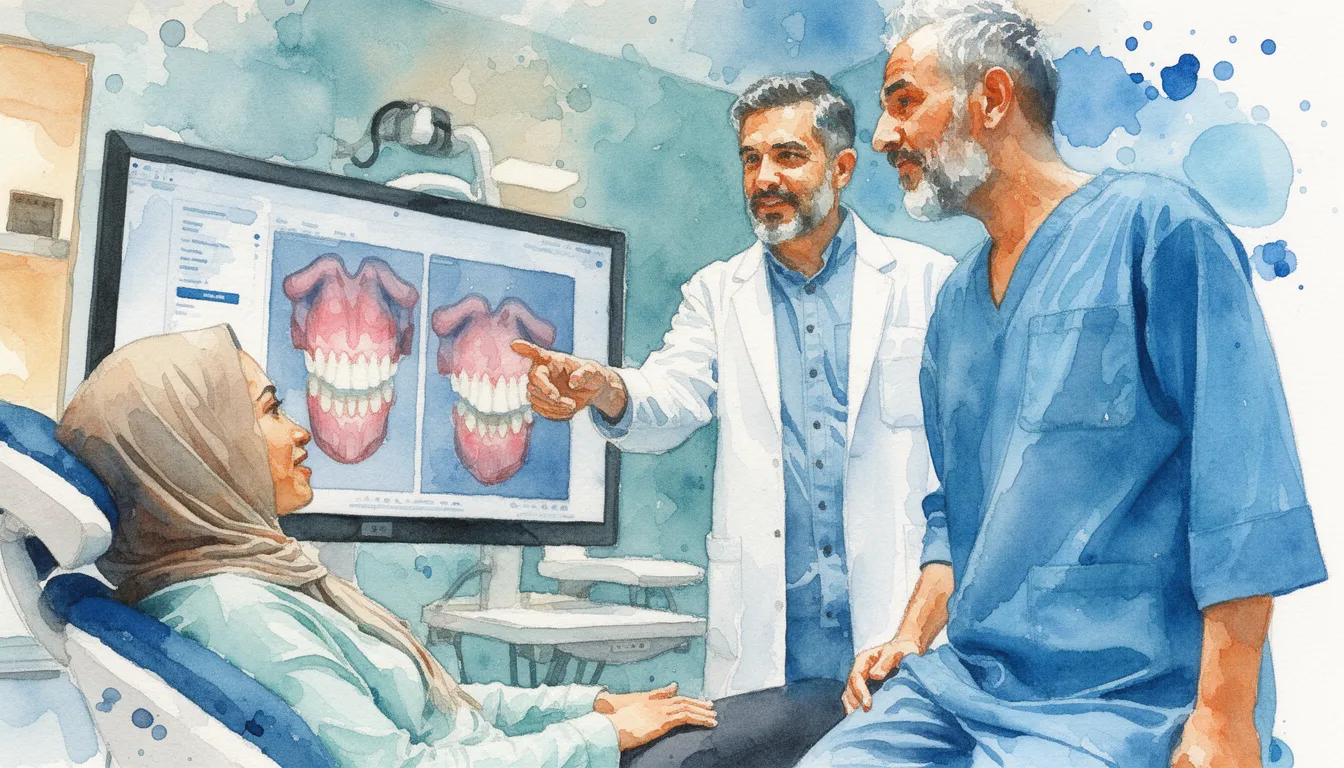
Your prosthodontist examines your mouth, reviews your CT scan, and discusses your goals. A treatment plan is created that specifies how many implants you need, where they will be placed, and which attachment system will be used. If bone grafting is required, it may be planned as a separate procedure or done at the same time as implant placement. [1]
Step 2: Implant Placement Surgery
An oral surgeon or a periodontist typically performs the surgical placement. The procedure is done under local anesthesia, often with sedation for comfort. Small incisions are made in the gum tissue, and each implant is carefully positioned in the bone according to the treatment plan. The gums are then sutured closed over or around the implants.
Most patients report moderate soreness for two to five days after surgery, managed with over-the-counter or prescription pain medication. Swelling and minor bruising are common and usually resolve within a week.
Step 3: Healing and Osseointegration
Over the next three to six months, the implants bond with the surrounding bone. You will have periodic checkups to monitor healing. During this time, avoid placing heavy chewing pressure on the surgical areas. A temporary denture can help with appearance and basic function. [2]
Step 4: Abutment Connection and Denture Delivery
Once the implants have fully integrated, your prosthodontist uncovers them (if they were buried under the gum) and attaches the abutments. Impressions or digital scans are taken to create the final denture. You may have a try-in appointment where you test the fit, bite, and appearance of a wax model before the permanent version is made.
At the delivery appointment, the final denture is connected to the implants and adjustments are made. Your prosthodontist will teach you how to snap the denture in and out and how to clean it properly. Follow-up visits in the first few weeks help fine-tune the fit.
Step 5: Ongoing Maintenance
Implant-supported dentures require regular care. Remove and clean the denture daily with a soft brush and denture cleanser. Clean around the implant abutments with a small brush or specialized tools your prosthodontist recommends. Plan for professional checkups at least twice per year.
Attachment components wear out over time. Ball attachments and locator inserts typically need replacement every one to two years. Bar clips may last longer but still require periodic servicing. These maintenance visits are usually quick and relatively inexpensive.
Cost of Implant-Supported Dentures
The total cost for one arch typically ranges from $5,000 to $25,000, though costs vary by location, provider, and case complexity.
Several factors influence where your case falls within that range. The number of implants is the biggest variable. Two implants with ball attachments will cost less than six implants with a bar system. The material of the denture also matters. Acrylic dentures are less expensive than those with a metal framework or high-end prosthetic teeth.
Additional procedures add to the total. Bone grafting, tooth extractions, sedation, and temporary dentures each carry their own fees. Geographic location plays a role as well; treatment in a large metropolitan area generally costs more than in a smaller community.
Dental insurance coverage for implant-supported dentures varies widely. Some plans cover a portion of the denture but not the implants. Others cover both partially. Ask your insurance company for a predetermination of benefits before starting treatment. Many prosthodontic offices offer payment plans or work with third-party financing companies to help spread costs over time.
When to See a Prosthodontist
A prosthodontist should be involved whenever implant-supported dentures are being considered, especially in complex cases.
General dentists can provide certain implant denture treatments. However, a prosthodontist brings specialized training in designing the denture itself, choosing the right attachment system, and managing the bite (occlusion). According to the American College of Prosthodontists, prosthodontists complete advanced residency training focused on the restoration and replacement of teeth. [1]
You should seek a prosthodontist if you have significant bone loss, a history of failed dentures, a complex bite, or if you need treatment on both arches. Patients with medical conditions that affect healing, like diabetes, also benefit from specialist-level care. A prosthodontist can coordinate with oral surgeons, periodontists, and your primary care doctor to plan a safe and effective treatment. [1]
If you already wear traditional dentures and experience constant looseness, sore spots, or difficulty eating, a consultation with a prosthodontist can help you understand whether implant-supported dentures are a practical solution for your situation.
Find a Prosthodontist Near You
If you are considering implant-supported dentures, a prosthodontist can evaluate your bone, health, and goals and recommend the right approach. Visit the prosthodontics page on My Specialty Dentist to browse qualified prosthodontists in your area and learn more about what this specialist does.
Search Prosthodontists in Your Area