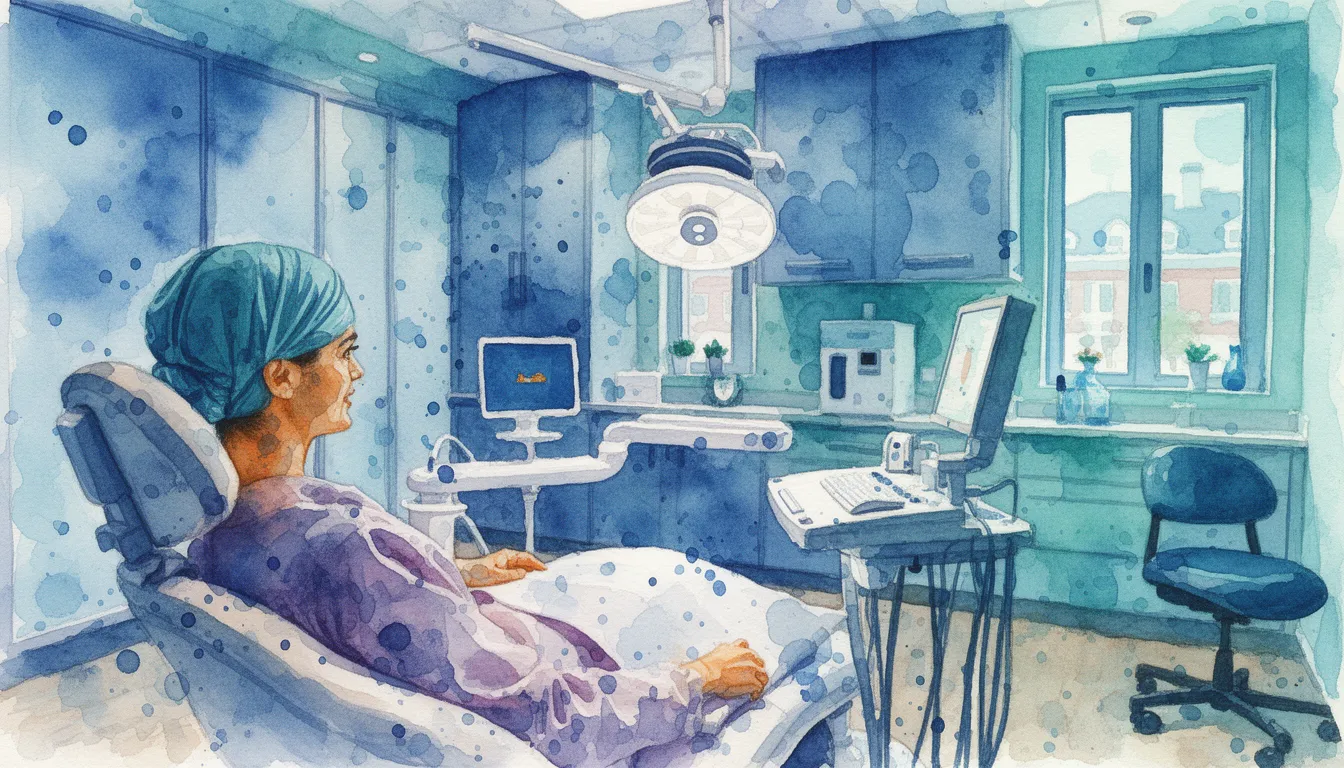
What Is TMJ Arthroscopy
TMJ arthroscopy is a minimally invasive surgery that uses a pencil-thin camera, called an arthroscope, to look inside the temporomandibular joint and treat problems through tiny incisions [1]. The surgeon places one or two small ports in front of the ear to enter the upper joint space.
The arthroscope sends a magnified video image to a monitor, which lets the surgeon see the joint disc, the cartilage lining, and the surrounding tissues in real time [2]. Through a second port, the surgeon can introduce instruments to flush the joint, release scar tissue, and reposition the disc.
Arthroscopy belongs to a broader family of minimally invasive techniques for temporomandibular disorders. Research describes a stepped care model that begins with conservative therapy, advances to arthrocentesis if needed, and then moves to arthroscopy before considering open surgery [5]. Patients seeing a specialist on the orofacial-pain page can ask where they fall on this ladder.
When TMJ Arthroscopy Is Recommended
Arthroscopy is typically recommended when jaw pain, limited opening, or joint noises persist despite weeks or months of non-surgical care. It is most often used for internal derangement of the joint, meaning the disc has slipped out of its normal position [3].
Common indications include disc displacement without reduction (a stuck disc that limits opening), painful adhesions inside the joint, persistent inflammation, and degenerative changes that have not responded to splints, physical therapy, or medications [3][7]. A systematic review of surgical management for disc displacement concluded that minimally invasive options, including arthroscopy, can improve pain and function for selected patients [3].
- Disc displacement without reduction (closed lock) that does not respond to conservative care
- Painful intra-articular adhesions that limit jaw movement
- Chronic synovitis or inflammation confirmed on imaging
- Early degenerative joint changes with mechanical symptoms
- Failed arthrocentesis after one or more attempts
Who May Not Be a Good Candidate
Arthroscopy may not help when pain is driven mainly by muscle tension, headache disorders, or referred nerve pain rather than the joint itself. Comprehensive evaluations by orofacial pain specialists help separate joint-driven from muscle-driven problems before any surgery is considered [7][8].
What to Expect During TMJ Arthroscopy
TMJ arthroscopy is an outpatient surgery performed under general anesthesia, with the actual joint work usually taking 30 to 90 minutes [1]. Most patients go home the same day after a short observation period.
Before the Procedure
Before surgery, the specialist reviews imaging such as MRI or cone-beam CT to confirm the joint problem and plan the entry points. Patients are typically asked to stop eating and drinking after midnight and to arrange a ride home.
The surgical team will go over medications, allergies, and any history of jaw, ear, or facial nerve issues. A clear airway plan is set, since the surgery happens close to the ear and upper jaw.
During the Procedure
After anesthesia takes effect, the surgeon marks landmarks in front of the ear and makes one or two incisions of about 2 to 3 mm. Sterile fluid is used to expand the upper joint space, which makes it easier to enter without injuring nearby structures [1].
The arthroscope is then inserted, and the joint is inspected for disc position, inflammation, and adhesions. Depending on the findings, the surgeon may lyse adhesions, flush inflammatory debris, reposition the disc, or place medication inside the joint [3][4]. Modern setups can even use smartphone-based platforms to display the joint view, which broadens access to this technology [2].
Right After the Procedure
Once the instruments are removed, the small incisions are usually closed with a single stitch or skin adhesive. Patients wake up in the recovery area with mild jaw soreness, some facial swelling, and a soft bandage in front of the ear.
Before discharge, the team reviews pain control, a soft-food plan, and early jaw exercises. Most people are home within a few hours.
Recovery and Aftercare
Recovery from TMJ arthroscopy is generally faster than recovery from open joint surgery, with many patients resuming routine activities within one to two weeks [4]. Full joint remodeling and final results can take several months.
Typical Recovery Timeline
Day 1 to 3: Expect mild to moderate swelling in front of the ear, jaw stiffness, and tenderness with chewing. Cold packs, prescribed pain medication, and a soft diet are usually enough.
Week 1: Swelling eases. Most patients return to desk work and light activity. Gentle jaw range-of-motion exercises typically begin within the first week to prevent new scar tissue.
Week 2 to 4: Chewing tolerance improves. Many patients move from soft foods back to a more normal diet, while continuing physical therapy if prescribed.
Month 1 to 3: Pain levels and maximum mouth opening continue to improve. Stepped-care studies of internal derangement report progressive gains in opening and comfort during this window [5].
When to Call the Office
Some swelling, bruising, and jaw soreness are expected. Call the surgical team if you notice signs that go beyond normal healing.
- Fever, increasing redness, or drainage from the incision
- Sudden weakness of the facial muscles on the operated side
- Numbness or tingling that worsens after the first few days
- Severe pain not controlled by prescribed medication
- New trouble hearing, ringing in the ear, or persistent dizziness
Cost and Insurance Considerations
TMJ arthroscopy is a surgical procedure performed in an operating room, so total costs typically include the surgeon, anesthesia, and facility fees. Costs vary widely by location, provider, and case complexity, and patients should request itemized estimates before scheduling.
Because TMJ disorders involve the jaw joint, coverage often falls under medical insurance rather than dental insurance. Some medical plans cover arthroscopy when conservative care has failed and imaging documents joint disease, while others exclude TMJ care or require prior authorization [7].
Patients are usually asked to confirm in writing what their plan covers, what counts toward the deductible, and what the out-of-pocket maximum looks like. Many surgical practices offer payment plans or work with third-party financing for the patient share.
What Drives the Cost
Key cost drivers include whether one or both joints are treated, the length of anesthesia, the use of advanced imaging, and the type of facility (hospital vs. ambulatory surgery center). Geographic region and surgeon experience also influence total fees.
- Surgeon fee, which reflects training and case complexity
- Anesthesia fee, billed in time units
- Facility fee, which differs between hospitals and surgery centers
- Pre-operative imaging, often MRI or cone-beam CT
- Post-operative physical therapy, when prescribed
Specialist vs. General Dentist for This Procedure
TMJ arthroscopy is performed by oral and maxillofacial surgeons with specific training in joint endoscopy, not by general dentists. Orofacial pain specialists usually direct the overall care plan and decide when surgical referral is appropriate [8].
A general dentist plays an important role at the start of the journey by screening for TMJ symptoms, providing bite splints, and ruling out tooth-related causes of jaw pain. When symptoms persist, they refer to an orofacial pain specialist or oral surgeon for advanced evaluation [7][9].
Many specialists use a stepped care approach: conservative therapy first, then arthrocentesis, then arthroscopy, and finally open surgery if needed [5]. This pathway helps patients try less invasive options before moving to a procedure that requires anesthesia and downtime.
Find an Orofacial Pain Specialist
If jaw pain, limited opening, or joint noises have not improved with conservative care, a focused evaluation can help you understand whether arthroscopy is a reasonable next step. Start with the orofacial-pain page to find a specialist who can review your imaging, walk through the stepped care ladder, and coordinate with an oral and maxillofacial surgeon when surgery is on the table.
Search Orofacial Pain Specialists in Your Area