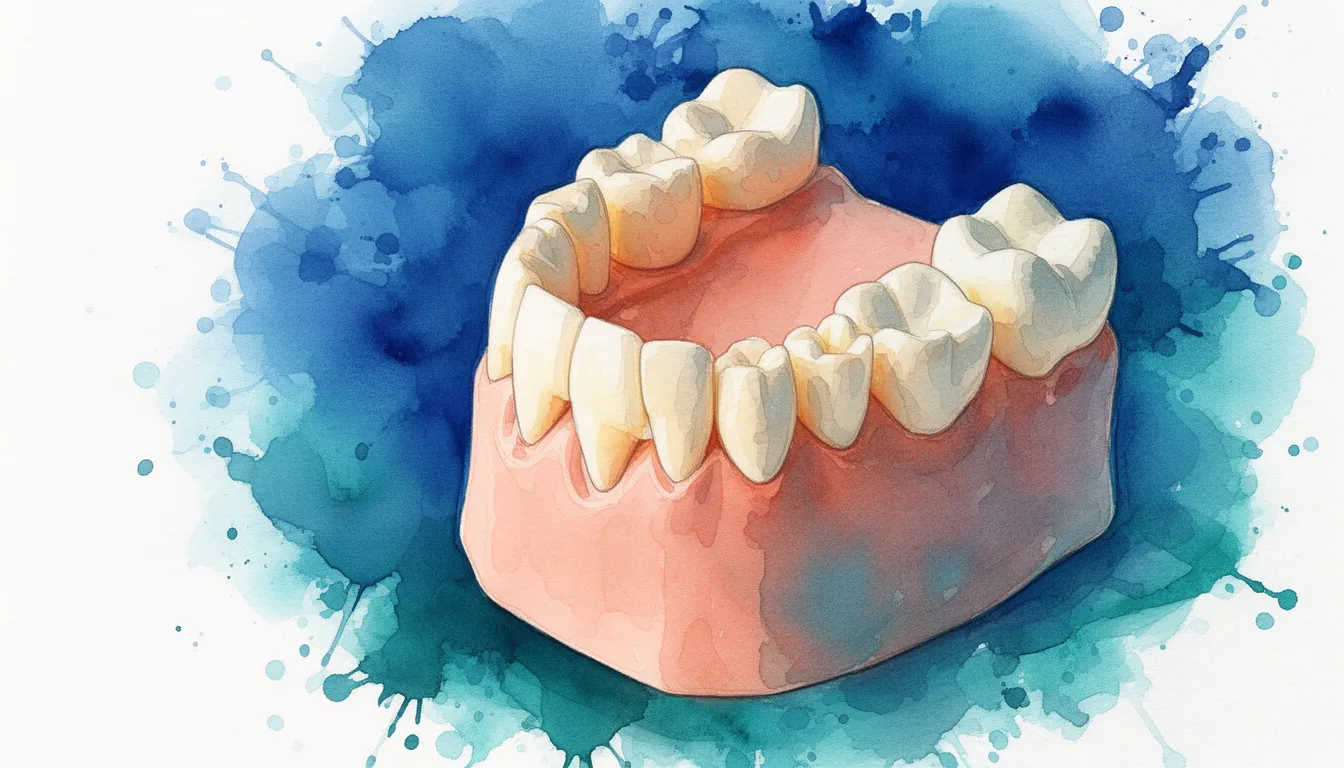
What Are Natal Teeth?
Natal teeth are teeth that are already visible in a baby's mouth at the moment of birth. Neonatal teeth, by comparison, erupt during the first 30 days of life.[8] Both are far earlier than normal eruption, which typically begins around 6 months of age.[10]
Most natal teeth look small, yellowish or whitish, and may appear less developed than a typical baby tooth. They often have thin enamel and short or incomplete roots, which is why many of them feel loose.[6][8] Parents often notice the tooth during the first feeding or a pediatric exam in the nursery.
A 15-year retrospective study from Poland found natal and neonatal teeth in a small but consistent share of newborns, with prevalence estimates across the wider literature ranging from about 1 in 2,000 to 1 in 3,500 births.[1][4] Around 85 percent or more are normal primary teeth that simply erupted ahead of schedule, rather than supernumerary teeth.[4][8] Knowing this matters: pulling a natal tooth that is actually a primary tooth means that spot will stay empty until the permanent tooth comes in years later.
Causes and Risk Factors
The exact cause of natal teeth is not fully understood, but most cases appear to involve a tooth bud that sits unusually close to the surface of the gum.[6][8] Genetics, certain syndromes, and possibly nutritional or environmental factors during pregnancy have all been studied as contributors.
Most babies with natal teeth are otherwise healthy and have no known risk factor. A family history of natal teeth is reported in a meaningful share of cases, suggesting an inherited tendency in some families.[8]
Genetic and Syndromic Associations
Several rare genetic conditions are linked with teeth at or near birth. Reviews of genodermatoses (inherited skin and connective-tissue disorders) describe natal or neonatal teeth as a recognized feature of conditions such as Ellis-van Creveld syndrome, pachyonychia congenita, and certain ectodermal dysplasias.[3] Natal teeth have also been reported in infants with Down syndrome.[7]
When a baby has natal teeth plus other unusual features (cleft lip or palate, sparse hair, nail changes, limb differences), the pediatrician may suggest a referral to genetics. In most healthy babies, however, no underlying syndrome is found.
Developmental Factors
Tooth eruption is driven by the dental follicle and tightly coordinated cellular signaling.[10] A natal tooth typically reflects a primary tooth bud positioned higher than usual, with eruption finishing earlier than the standard timetable.[6] Because root development is normally still in progress at birth, natal teeth often have short, incomplete roots, which is why mobility is common.
Symptoms and Diagnosis
Most natal teeth are spotted right after delivery by a nurse, pediatrician, or parent during the first feeding. Diagnosis is clinical: a visible tooth or tooth-like structure in the gum line at birth.
Symptoms depend on how the tooth sits and how mobile it is. Many babies have no symptoms at all. Others may have trouble latching, refuse the breast, or develop a small ulcer on the underside of the tongue from the tooth rubbing during nursing. That tongue ulcer has a name: Riga-Fede disease.[7] Mothers may also notice nipple soreness or small cuts during breastfeeding.
If a tooth is present at birth, an x-ray is sometimes ordered to confirm whether it is a true primary tooth or a supernumerary (extra) tooth, and to see how much root has formed.[6][8] This information shapes the care plan: a true primary tooth with reasonable root support is usually worth keeping, while a poorly attached extra tooth is easier to remove. Parents should seek care if the baby cannot feed, the tooth is very wobbly, or a sore develops on the tongue that does not heal.
Treatment Options
Treatment depends on how stable the tooth is and whether it is causing problems. Two paths are common: watchful monitoring or removal. Neither choice harms the permanent tooth that will erupt later in childhood.[8][9]
Monitoring and Conservative Care
If the tooth is firm enough and feeding is going well, most pediatric dentists recommend leaving it alone.[6][8] The tooth often tightens over the first weeks as the root continues to develop. A pediatric dentist will usually examine the baby, check stability, and watch for tongue or lip irritation.
For mild Riga-Fede irritation, smoothing the sharp edge of the tooth with a fine polishing instrument can let the ulcer heal while the tooth stays in place.[7] Lactation support also helps: a feeding specialist can adjust latch and positioning to reduce friction on the tongue and nipple.
Extraction
Extraction is considered when the tooth is very loose and could be inhaled, when the baby cannot feed, or when a tongue ulcer fails to heal with conservative care.[6][7][8] The procedure is typically quick and done by a pediatric dentist or oral surgeon. Local anesthesia or topical agents are used, and bleeding is usually minimal.
Because some natal teeth lack a true root, removal can leave behind small remnants of dental tissue. A short follow-up visit confirms healing and rules out residual fragments. Pulling the tooth does not damage the permanent tooth bud, which sits much deeper in the jaw and erupts around age 6 to 7.[9][10]
One important note: vitamin K is sometimes considered before extraction in newborns, since clotting factors are still maturing in the first days of life.[8] This is a decision made with the pediatrician based on the baby's age and overall health.
Comparing the Two Approaches
Keeping a stable natal tooth preserves the space for normal jaw development and avoids a surgical procedure on a newborn. Removing a very mobile or problematic tooth eliminates aspiration risk and feeding pain, but leaves a gap until the permanent tooth erupts.[6][8] Both choices are reasonable in the right situation. A pediatric dentist weighs mobility, feeding success, and tongue health rather than following a single rule.
Recovery and Aftercare
Recovery from natal tooth extraction is typically fast, with most babies feeding normally within a day. The gum heals quickly because newborn tissue regenerates rapidly and the wound is small.
After extraction, parents should expect a small amount of bleeding or oozing for a few hours. Gentle pressure with clean gauze, if recommended, usually controls it. Feeding can often resume the same day, although the baby may favor one side at first.
If the tooth is left in place, aftercare focuses on monitoring. Parents should gently wipe the tooth and gums with a clean, damp cloth once a day starting in infancy. Routine pediatric dental visits beginning by age 1 are recommended by professional groups, including the American Academy of Pediatric Dentistry.[11] The dentist will track tooth stability, look for tongue ulcers, and confirm normal facial growth at each visit. Cases of Riga-Fede disease that were managed conservatively need follow-up to make sure the ulcer heals fully.[7]
Cost Factors
Costs vary widely by location, provider, and case complexity. Charges depend on whether the visit is an exam only, includes imaging, or involves extraction.
A simple newborn dental consultation is typically billed as an evaluation. If extraction is needed, fees reflect the use of local anesthesia, the time involved, and whether the procedure is done in a dental office, a hospital nursery, or an outpatient setting. Many practices bundle a follow-up visit to confirm healing.
Insurance coverage varies. Some medical plans cover newborn dental issues that affect feeding, while dental insurance more often applies once the baby is enrolled separately. Medicaid covers pediatric dental services in every state, although specific benefits differ. Families without coverage can ask the pediatric dental office about payment plans, sliding-scale fees, or hospital financial assistance for procedures done in a hospital setting.
When to See a Specialist
Babies with natal teeth should be evaluated by a pediatric dentist, even when the tooth looks stable. A pediatric dentist has additional training in infant oral health and the safe management of newborn tooth issues.[11]
A general dentist can sometimes manage straightforward cases, but pediatric specialists are equipped to assess mobility, perform safe extractions in newborns when needed, and coordinate with pediatricians and lactation consultants. If the tooth is part of a syndrome or the baby has other medical issues, a hospital-based pediatric dental team is the safest setting.
Visit the pediatric-dentistry page for more information about what these specialists do and how their training differs from a general dentist. The American Dental Association also offers patient-facing resources on early oral health.[12]
Find a Pediatric Dentist Near You
If your newborn has a tooth at birth, a pediatric dentist can examine the tooth, decide whether monitoring or removal makes sense, and coordinate with your pediatrician and lactation team. Use our directory to find a board-certified pediatric dental specialist in your area for a calm, expert evaluation.
Search Pediatric Dentists in Your Area