What This Guide Covers and Who It Is For
This guide explains how All-on-6 implants work, what the treatment process looks like, and how to decide if six implants are right for you.
All-on-6 is a fixed implant treatment for people who are missing all or most of their teeth in one or both jaws. Six titanium implants are placed into the jawbone during a single surgical visit. These implants act as anchors for a full arch of prosthetic teeth that look and function like natural teeth. Unlike removable dentures, the prosthesis is screwed or cemented onto the implants and stays in the mouth at all times.
This treatment is most often considered when a dentist determines that four implants alone may not provide enough support. Reasons can include a larger jaw, weaker bone in certain areas, or heavy bite forces from grinding or clenching. If you currently wear a full denture and want a permanent, fixed alternative, or if you have remaining teeth that are failing, All-on-6 may be an option worth discussing with a specialist.
The information here applies to adults whose jaws have finished growing, typically age 18 and older. Every case is different, so the specific plan your specialist recommends may differ from the general steps described below.
How All-on-6 Implants Work
Six implants are placed at planned positions in the jawbone, and a full arch of teeth is attached to those implants as a single unit.
Why Six Implants Instead of Four
The All-on-4 concept uses four implants per arch, with the two rear implants angled to grip available bone and avoid certain anatomical structures like the sinus cavities or the inferior alveolar nerve. This works well for many patients. However, some clinical situations call for more support.
Adding a fifth and sixth implant distributes chewing forces across a wider area of bone. This extra distribution can reduce the load on each individual implant. In patients with lower bone density, sometimes called softer bone, having six anchor points may improve the long-term stability of the prosthesis. Patients with larger jaws also benefit because the prosthesis spans a greater distance, and more implants help prevent flexing or stress concentrations in the framework.
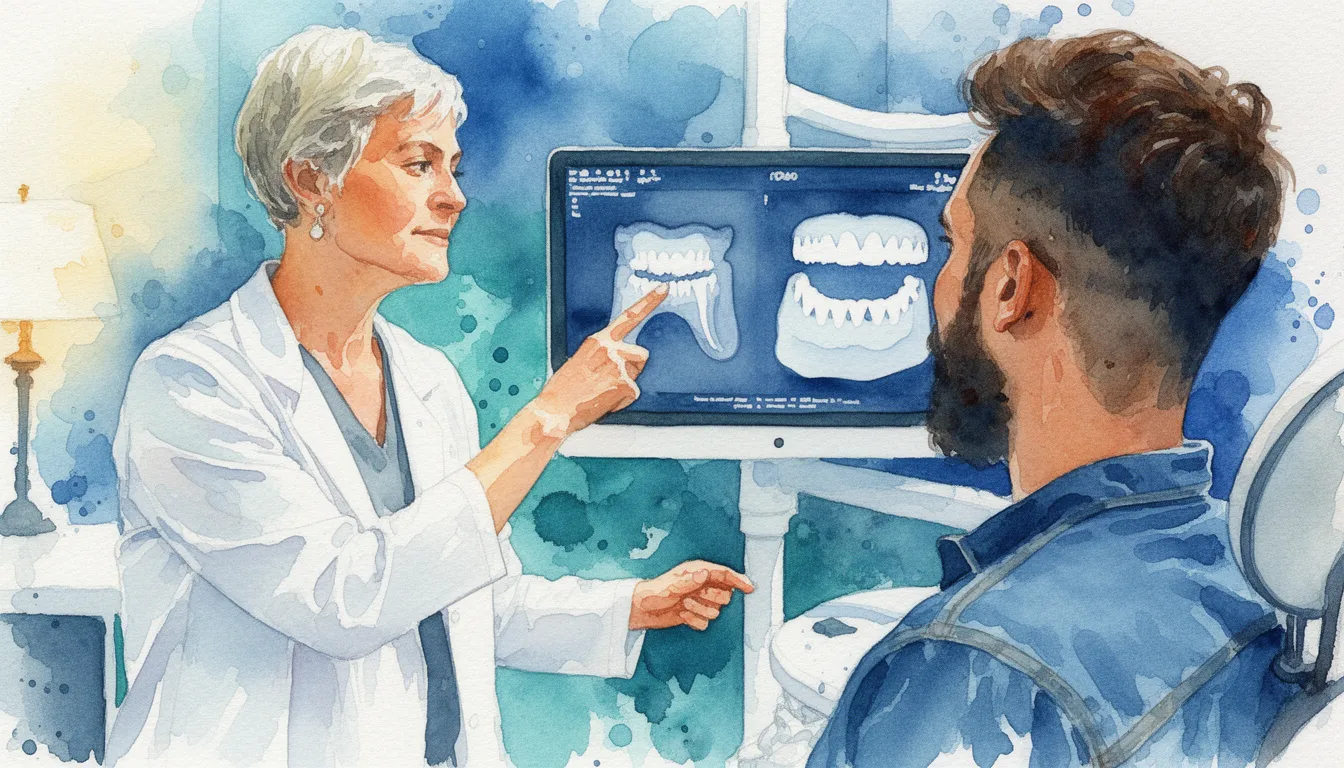
The decision between four and six implants is based on a clinical assessment of your bone volume, bone density, jaw size, and bite force. There is no single answer that fits everyone. Your specialist will use 3D imaging, typically a cone beam computed tomography (CBCT) scan, to map your bone and plan implant positions before surgery. [1]
The Prosthesis: Materials and Structure
The teeth attached to the implants are part of a single prosthetic unit called a fixed full-arch prosthesis. This is not a denture. It does not rest on your gums and cannot be removed by hand.
Common materials for the framework include titanium or zirconia. The teeth themselves may be made from acrylic resin, porcelain, or monolithic zirconia. Each material has tradeoffs. Acrylic is lighter and easier to repair but may wear faster over time. Zirconia is extremely hard and stain-resistant but can be more difficult and costly to repair if it chips. Your prosthodontist will recommend a material based on your bite strength, esthetic goals, and budget. [1]
The prosthesis typically includes 12 to 14 teeth per arch. It is designed to restore a natural-looking gum line as well. In many cases, a pink acrylic or ceramic base mimics gum tissue, which helps create a seamless appearance.
All-on-6 Compared to All-on-4
Both treatments share the same goal: a fixed, full-arch restoration supported by implants. The core differences come down to the number of implants, cost, surgical time, and clinical indications.
All-on-4 uses fewer implants, which typically means a shorter surgery, lower cost, and slightly less healing demand on the jawbone. It has a well-documented track record and works well for many patients with adequate bone. All-on-6 adds two implants for greater force distribution. This may reduce the risk of overloading any single implant, particularly in patients with compromised bone quality or quantity.
Neither approach is universally better. The right choice depends on your anatomy and your specialist's clinical judgment. In some cases, a specialist may even recommend five or seven implants. The number is guided by your unique bone structure, not by a fixed formula.
- All-on-4: Four implants per arch. Rear implants are typically angled. Generally lower cost. Well-suited for patients with adequate bone.
- All-on-6: Six implants per arch. Additional implants placed in the premolar or molar region. Better force distribution. Often chosen for larger jaws or weaker bone.
- Removable implant denture: Uses two to four implants with a snap-on or bar-retained denture. Lower cost, but the prosthesis is removable and may feel less stable.
What You Should Know Before Starting Treatment
Preparation for All-on-6 involves health screening, imaging, and a clear understanding of the timeline and commitment required.
Who Is a Good Candidate
Most adults with missing or failing teeth can be considered for All-on-6 implants. Candidates should be in stable general health and free of uncontrolled medical conditions that impair healing, such as unmanaged diabetes or active cancer treatment. Smoking significantly increases the risk of implant failure, so patients who smoke are usually asked to quit before and after surgery. [2]
Adequate bone volume is needed to place six implants. If bone has been lost due to long-term tooth loss or periodontal (gum) disease, bone grafting may be needed before or during implant placement. In some cases, strategic implant angulation can work around areas of bone loss, reducing or eliminating the need for grafting.
Patients with a history of severe teeth grinding, called bruxism, may need to wear a nightguard after treatment to protect the prosthesis. Your specialist will assess this during planning.
How to Prepare
Treatment planning starts with a clinical exam, dental X-rays, and a CBCT scan. The scan provides a 3D map of your jawbone, nerves, and sinuses. Your prosthodontist uses this information to determine exactly where each implant should go. [1]
You will likely need to provide a full medical history and a list of medications. Blood thinners, bisphosphonates (medications for osteoporosis), and certain other drugs may require coordination with your physician. Your dentist may also take impressions or digital scans of your mouth to begin designing the temporary prosthesis before surgery day.
If you have remaining teeth that need extraction, those removals are often done at the same surgery as implant placement. This is sometimes called an immediate extraction and implant protocol.
What to Expect During and After Treatment
The treatment process includes a planning phase, a surgical visit, a healing period, and delivery of the final prosthesis.
The Surgical Visit
Surgery is typically performed under intravenous (IV) sedation or general anesthesia, so you will not feel pain during the procedure. The oral surgeon or periodontist removes any remaining teeth, prepares the bone, and places six implants into the jaw. The entire surgical appointment typically lasts 2 to 4 hours per arch, though this varies by case.
In many cases, a temporary fixed prosthesis is attached to the implants on the same day. This is called immediate loading. You leave the office with a full set of teeth. The temporary prosthesis is made from acrylic and is softer than the final version. It lets you eat, speak, and smile while the implants heal underneath.
Not every patient qualifies for same-day teeth. If the implants do not achieve enough initial stability in the bone, your specialist may wait several weeks before attaching the temporary prosthesis. During that waiting period, you may wear a removable temporary denture.
Healing and Recovery
The first week after surgery involves swelling, bruising, and some discomfort. Most patients manage this with prescribed pain medication and cold compresses. Soft foods are required for the first several weeks. Hard, crunchy, or sticky foods should be avoided to protect the healing implants.
Osseointegration is the process where bone grows around the implant surface and locks it in place. This takes roughly 3 to 6 months. During this time, you will have periodic checkups so your specialist can monitor healing. You will continue wearing the temporary prosthesis throughout this phase.
Once osseointegration is confirmed, usually through imaging and clinical testing, your prosthodontist takes final impressions. The permanent prosthesis is fabricated in a dental laboratory. Fabrication typically takes 2 to 4 weeks. The final prosthesis is then tried in, adjusted, and secured to the implants.
Long-Term Care and Maintenance
Fixed implant prostheses require daily cleaning, just like natural teeth. You will use a soft toothbrush and may also use a water flosser or interdental brushes to clean around and under the prosthesis where it meets the gumline. [2]
Professional maintenance visits are typically recommended every 6 months. During these visits, the prosthesis may be temporarily removed so the specialist can clean the implant surfaces and inspect the tissue underneath. Regular checkups help catch small problems before they become serious.
With proper care, implant-supported prostheses can last many years. The implants themselves are designed to be permanent. The prosthesis on top may need replacement or repair after 10 to 20 years depending on the material and wear patterns. Results vary by patient.
Cost of All-on-6 Dental Implants
All-on-6 treatment typically costs between $25,000 and $35,000 per arch. Costs vary by location, provider, and case complexity.
The total price usually includes the surgical placement of six implants, the temporary prosthesis, all follow-up visits during healing, and the final permanent prosthesis. Some offices quote these components separately, so ask for an itemized breakdown when comparing estimates. Additional procedures like bone grafting, sinus lifts, or extractions may add to the total.
All-on-6 generally costs more than All-on-4 because of the two additional implants and the slightly longer surgical time. The price difference between the two is often in the range of $3,000 to $8,000 per arch, though this varies widely by practice.
Dental insurance plans that cover implants may cover a portion of the treatment, but many plans have annual maximums that fall well below the total cost. Some offices offer payment plans or work with third-party financing companies. It is worth contacting your insurance carrier directly to understand what your plan covers. [2]
- Per-arch cost range: $25,000 to $35,000 in most markets. Costs vary by location, provider, and case complexity.
- What is included: Implant surgery, temporary prosthesis, follow-up visits, and permanent prosthesis. Verify with your provider.
- Additional costs: Bone grafting, extractions, IV sedation, and nightguards may be billed separately.
- Insurance: Coverage varies. Many plans have annual caps that do not cover the full cost. Ask your carrier for a pre-treatment estimate.
When to See a Specialist
A prosthodontist is the dental specialist trained specifically in replacing missing teeth and restoring oral function with prostheses. [1]
You should consider seeing a prosthodontist if you are missing all teeth in an arch, if your remaining teeth are severely damaged or loose, or if you currently wear a removable denture and want a fixed alternative. A general dentist can often identify these situations and refer you, but you can also seek a consultation on your own.
All-on-6 treatment is a complex procedure that involves surgical implant placement and precise prosthetic design. The surgical portion is typically handled by an oral and maxillofacial surgeon or a periodontist. The prosthetic planning, design, and delivery are managed by a prosthodontist. In some practices, these specialists work side by side. In others, you may visit separate offices for the surgical and prosthetic phases.
If you have been told you need full-mouth extractions, or if you are unhappy with a current denture that slips or causes sore spots, a consultation with a prosthodontist is a good starting point. They can evaluate whether All-on-6, All-on-4, or another approach is the best fit for your anatomy and goals. Visit the prosthodontics page to learn more about what these specialists do.
Find a Prosthodontist Near You
If you are considering All-on-6 implants or want to explore your options for replacing a full arch of teeth, a prosthodontist can evaluate your bone, bite, and overall health to recommend the right approach. Use the My Specialty Dentist directory to search for a prosthodontist in your area, read about their training, and request a consultation.
Search Prosthodontists in Your Area