What This Guide Covers and Who It Is For
This guide explains full mouth reconstruction, including who needs it, what is involved, how long it takes, and what it costs.
Full mouth reconstruction is not a single procedure. It is a treatment plan that combines multiple restorative and sometimes surgical procedures to rebuild a person's entire bite. You might also hear it called full mouth rehabilitation or oral rehabilitation. These terms generally refer to the same concept: a coordinated plan to restore teeth that are severely damaged, decayed, worn, or missing. [1]
This guide is for anyone considering full mouth reconstruction, whether you have been told you need it or you suspect your dental problems have reached a point where individual fixes are no longer enough. It is also useful for caregivers or family members helping someone evaluate their options.
Full mouth reconstruction is different from a smile makeover. A smile makeover focuses mainly on cosmetic improvements like whitening or veneers on front teeth. Full mouth reconstruction addresses function, health, and structure first. Cosmetic improvements often come as a natural result of restoring proper tooth form and alignment.
Understanding Full Mouth Reconstruction
Full mouth reconstruction rebuilds the structure, function, and appearance of most or all of your teeth through a sequenced series of dental procedures.
What Procedures Are Involved
A full mouth reconstruction plan may include many types of restorations. Common components are dental crowns (caps that cover damaged teeth), bridges (artificial teeth anchored to neighboring teeth), dental implants (titanium posts placed in the jawbone to support replacement teeth), veneers (thin shells bonded to the front of teeth), and removable or fixed dentures. [2]
Some patients also need periodontal (gum) treatment, bone grafting, orthodontic work, or jaw surgery before or during reconstruction. The specific combination depends entirely on your diagnosis. No two reconstruction plans look the same.
Root canal therapy may be needed for teeth with deep decay or infection. Tooth extractions may be necessary for teeth that cannot be saved. The goal is to keep as many natural teeth as possible while building a stable, functional bite.
Who Needs Full Mouth Reconstruction
Candidates for full mouth reconstruction typically share one feature: their dental problems are too widespread for a single procedure to solve. Common reasons include extensive tooth decay affecting many teeth, advanced gum disease that has loosened teeth or caused bone loss, severe tooth wear from grinding (bruxism) or acid erosion, multiple missing teeth, trauma from an accident or injury, and developmental conditions that affected tooth formation. [1]
Bite collapse is another common reason. When many back teeth are lost or worn down, the vertical height of the bite decreases. This can cause the face to look shorter, the jaw joints to ache, and the remaining teeth to wear faster. Reconstruction rebuilds that lost height and distributes biting forces evenly.
Some patients need reconstruction after years of dental neglect. Others have genetic conditions that weakened their enamel from the start. There is no single profile. The common thread is that the mouth needs a coordinated, full-arch approach rather than one crown or one filling at a time.
The Role of a Prosthodontist
A prosthodontist is a dentist who has completed an additional three years of specialized training in restoring and replacing teeth. According to the American College of Prosthodontists, prosthodontists are specifically trained to manage complex cases that involve multiple missing or damaged teeth and require coordination across dental specialties. [1]
In a full mouth reconstruction, the prosthodontist typically serves as the lead clinician. They diagnose the problems, design the overall treatment plan, and determine the sequence of procedures. They then coordinate with other specialists as needed. An oral surgeon may place implants or perform extractions. A periodontist may treat gum disease or perform bone grafts. An orthodontist may align teeth before restorations are placed.
General dentists can perform some reconstruction procedures. However, cases that involve rebuilding the entire bite, managing jaw joint issues, or placing many restorations at once typically benefit from a prosthodontist's advanced training in occlusion (how teeth fit together) and treatment planning.
What to Know Before Starting Treatment
Preparation for full mouth reconstruction involves thorough diagnosis, realistic expectations about time and cost, and a clear understanding of the treatment sequence.
The Diagnostic Phase
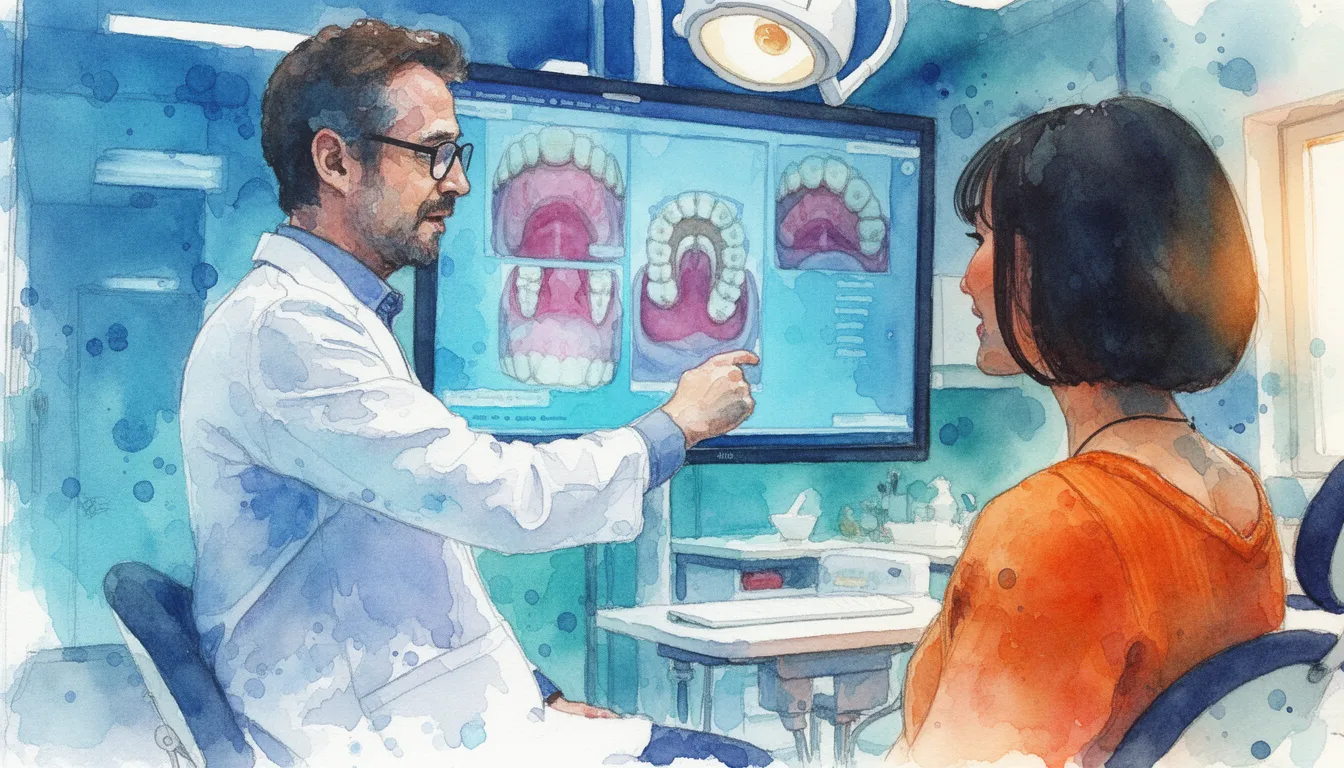
Before any treatment begins, your prosthodontist will perform a detailed evaluation. This typically includes full-mouth X-rays or a 3D cone-beam CT scan, photographs of your teeth and face, impressions or digital scans of your teeth, and a bite analysis. [1]
The prosthodontist examines each tooth individually and assesses which teeth can be saved, which need crowns, and which must be extracted. They also evaluate your gum health, jawbone density, jaw joint (TMJ) function, and how your upper and lower teeth meet when you close your mouth.
From this information, they create a sequenced treatment plan. Many prosthodontists also create a diagnostic wax-up or digital preview so you can see the planned result before treatment starts. This step helps you understand what the final teeth will look and feel like.
How Long Does Full Mouth Reconstruction Take
Treatment timelines range from a few months to over a year. The biggest factor is whether dental implants are part of the plan. Implants require a healing period of three to six months after placement before the final restoration (crown or bridge) can be attached to them.
If gum disease treatment or bone grafting is needed first, that adds additional months of healing. Orthodontic treatment, if included, can add six months to two years depending on the complexity.
In many cases, the prosthodontist provides temporary restorations during the process. These temporaries protect your teeth and let you eat and speak while waiting for healing phases to finish and permanent restorations to be made. You do not typically go without teeth during reconstruction.
Age and Health Considerations
There is no specific age requirement for full mouth reconstruction. Adults of any age can be candidates if their overall health supports the procedures involved. Older adults may need medical clearance, especially for surgical steps like implant placement or bone grafting.
Certain health conditions can affect treatment planning. Uncontrolled diabetes can slow healing and increase infection risk. Blood-thinning medications may need to be managed around surgical procedures. Osteoporosis medications, particularly bisphosphonates, require special consideration before jaw surgery. Your prosthodontist will coordinate with your physician to manage these factors. [2]
Smoking significantly increases the risk of complications, especially implant failure and delayed healing. Most specialists strongly recommend quitting or at least stopping for a period before and after surgical phases.
What to Expect During Full Mouth Reconstruction
Treatment follows a phased approach, starting with disease control, then rebuilding structure, and finishing with final restorations and bite adjustments.
Phase 1: Disease Control and Extractions
The first priority is stabilizing oral health. This means treating active infections, performing deep cleanings for gum disease, extracting teeth that cannot be saved, and addressing any acute pain. [2]
If you have cavities, they will be treated with fillings or temporary restorations. Teeth with infections may need root canals. Gum disease may require scaling and root planing (a deep cleaning below the gumline) or gum surgery. This phase sets a healthy foundation for everything that follows.
Bone grafting may also occur during this phase. If teeth were lost long ago, the jawbone in those areas may have shrunk. Grafting adds bone material to rebuild the ridge so it can support implants later.
Phase 2: Implant Placement and Structural Rebuilding
Once the mouth is healthy and stable, surgical procedures take place. Dental implants are placed into the jawbone by an oral surgeon or periodontist. The implants then need time to integrate with the bone, a process called osseointegration. This typically takes three to six months. [1]
During this healing period, temporary restorations may be placed. These can be temporary crowns, bridges, or a removable partial denture. They allow you to function normally while waiting for implants to heal.
If orthodontic treatment is part of the plan, it may run concurrently with the healing phase to make efficient use of time.
Phase 3: Final Restorations and Bite Adjustment
After healing is complete, the prosthodontist places the permanent restorations. This includes crowns on natural teeth, crowns or bridges on implants, veneers on front teeth if planned, and any removable prosthetics like partial dentures.
The prosthodontist carefully adjusts the bite so that all teeth meet evenly when you close and chew. This step is critical. An uneven bite can cause jaw pain, tooth fractures, and premature wear on restorations. Bite adjustment may require several appointments of fine-tuning.
After the final restorations are placed, you will have follow-up visits to check how everything is settling. Minor adjustments are common in the first few weeks. Most patients find that it takes a short period to adapt to the feel of new restorations.
Recovery and Long-Term Maintenance
Recovery after each phase varies. Surgical steps like implant placement or bone grafting may involve a few days of swelling and discomfort managed with prescribed medications. Non-surgical steps like crown placement typically have little to no recovery time.
Long-term success depends heavily on maintenance. Your prosthodontist will recommend a schedule of follow-up visits, typically every six months. Daily brushing, flossing, and possibly using a water flosser are essential. If grinding (bruxism) was a factor, a custom night guard is usually recommended to protect the new restorations. [2]
With proper care, crowns and bridges on natural teeth can last 10 to 15 years or longer. Implant-supported restorations have high long-term success rates, and the implants themselves can last decades. Results vary based on oral hygiene habits, overall health, and whether the patient follows the maintenance schedule.
Cost of Full Mouth Reconstruction
Total costs typically range from $15,000 to $80,000 or more, depending on the procedures included. Costs vary by location, provider, and case complexity.
What Drives the Cost
The total cost depends on how many teeth need treatment and which procedures are required. Individual components have their own cost ranges. A single dental crown may cost $800 to $3,000. A single dental implant with its crown typically costs $3,000 to $6,000. Bone grafting can add $500 to $3,000 per site. These figures are general estimates, and actual costs vary by location, provider, and case complexity.
A case that involves six implants, multiple crowns, a bridge, and bone grafting will obviously cost more than a case that involves crowns on existing teeth plus a few veneers. Your prosthodontist should provide a detailed cost estimate broken down by procedure after the diagnostic phase.
Lab fees also factor into the total. High-quality dental restorations are custom-made by a dental laboratory. The materials chosen, such as porcelain, zirconia, or gold, affect cost. Your prosthodontist can explain the material options and their trade-offs in terms of strength, appearance, and price.
Insurance and Financing Options
Dental insurance may cover portions of full mouth reconstruction. Crowns, extractions, root canals, and sometimes implants may be partially covered depending on your plan. However, most dental insurance plans have annual maximums, often between $1,000 and $2,500 per year. This means insurance typically covers only a fraction of the total cost. [2]
Some procedures may be classified as cosmetic by your insurer and denied coverage. Your prosthodontist's office can often submit a pre-authorization to determine what your plan will cover before treatment begins.
Many dental practices offer payment plans or work with third-party financing companies that let you spread the cost over months or years. Some patients choose to phase their treatment over two or more calendar years to maximize insurance benefits across multiple benefit periods. Discuss all payment options with your provider's billing team before committing to a plan.
When to See a Specialist for Full Mouth Reconstruction
You should consider seeing a prosthodontist when dental problems affect most of your teeth and your general dentist recommends a larger treatment plan.
Your general dentist can handle many individual procedures like crowns, fillings, and simple extractions. However, when multiple teeth in both arches need restoration, when the bite needs to be rebuilt, or when implants and other complex procedures need to be sequenced together, a prosthodontist's advanced training becomes valuable. [1]
Specific signs that you may benefit from a prosthodontist's evaluation include: multiple teeth that are broken, loose, or missing; a bite that feels uneven or has shifted over time; jaw pain or TMJ symptoms combined with worn or damaged teeth; a dentist telling you that you need "a lot of work done"; and difficulty chewing due to the number of damaged teeth.
A prosthodontist can also provide a second opinion if you have already received a treatment plan and want another perspective. Because prosthodontists are trained to see the full picture of how all teeth, the bite, and the jaw joints work together, their assessment may reveal options or sequencing that a general evaluation did not address. Visit the prosthodontics page to learn more about what this specialty covers.
Find a Prosthodontist Near You
If you are dealing with widespread dental damage and think full mouth reconstruction may be right for you, a prosthodontist can evaluate your situation and develop a treatment plan. Use our directory to find a qualified prosthodontist in your area, read about their credentials, and schedule a consultation to discuss your specific needs.
Search Prosthodontists in Your Area