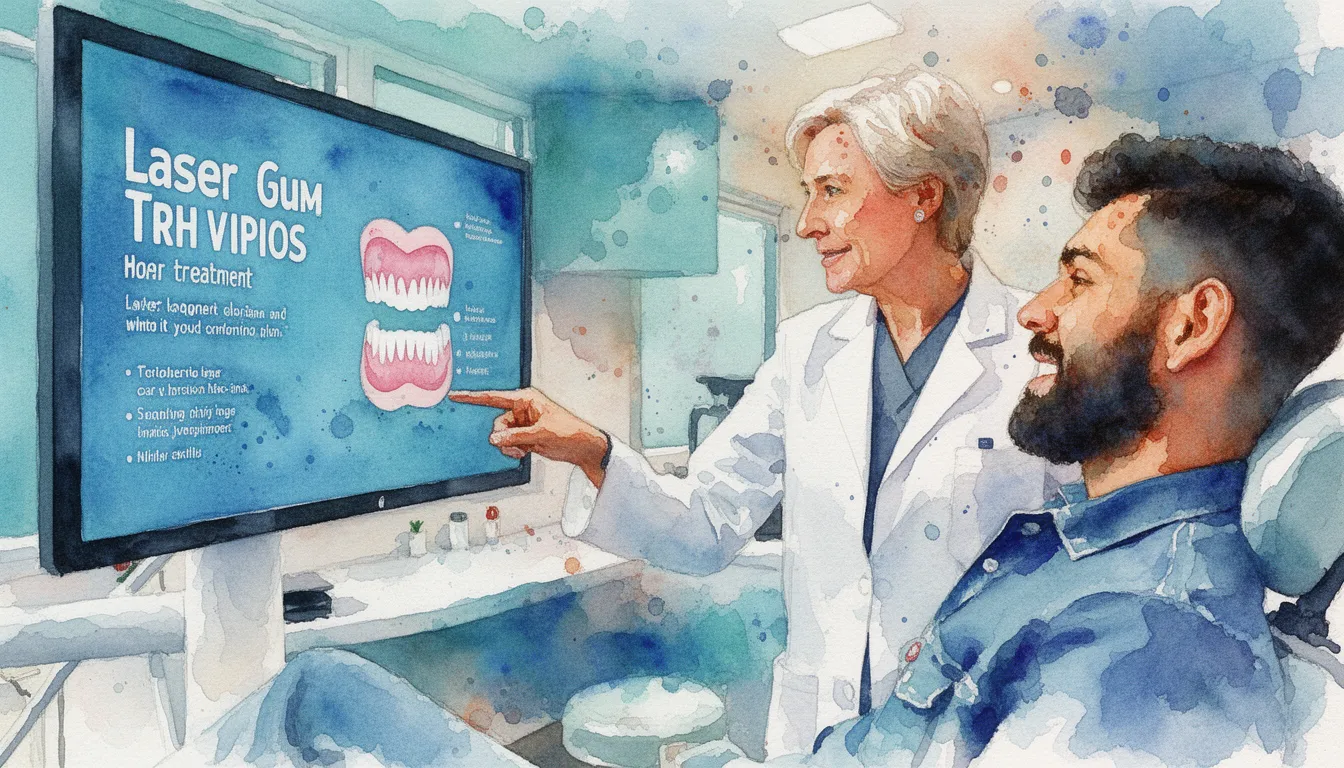
What This Guide Covers and Who It Is For
This guide explains laser gum treatment using the LANAP protocol for people diagnosed with moderate to severe periodontal disease. Periodontal disease (also called gum disease) is a bacterial infection that destroys the gums and bone supporting your teeth. According to the American Academy of Periodontology, gum disease is one of the most common chronic conditions in adults and a leading cause of tooth loss. [7]
If your dentist has told you that you need gum surgery, you may be wondering whether a laser option exists. LANAP stands for Laser Assisted New Attachment Procedure. It is one alternative to traditional flap surgery. This guide covers how the procedure works, what candidacy looks like, what to expect during and after treatment, and realistic cost ranges.
This information is not a substitute for a clinical exam. A periodontist (a dentist who specializes in gum and bone disease) is the most qualified provider to evaluate whether LANAP or another surgical approach is best for your situation.
How LANAP Laser Gum Treatment Works
LANAP uses a specific type of laser called the PerioLase MVP-7, which operates at a wavelength of 1,064 nanometers. This wavelength is selectively absorbed by diseased tissue, bacteria, and the dark pigments associated with infection. Healthy gum tissue and bone are largely unaffected by this wavelength.
LANAP Compared to Traditional Flap Surgery
Traditional flap surgery involves cutting gum tissue with a scalpel, folding it back to expose the tooth roots and bone, removing infected tissue and bacteria, and then suturing the gums back into place. This approach has decades of published research supporting its effectiveness. The American Academy of Periodontology recognizes surgical intervention as a standard treatment for advanced periodontal disease. [7]
LANAP achieves a similar goal through a different method. Instead of cutting the gums open, the periodontist inserts a thin laser fiber between the gum and the tooth. The laser energy removes bacteria, diseased tissue, and the inner lining of the periodontal pocket. Because no tissue is cut away, the gums are not shortened. This typically results in less gum recession after healing.
Both approaches aim to reduce pocket depth (the space between the gum and tooth where bacteria collect), remove infection, and create conditions for the bone to heal. Published case series and clinical reports on LANAP show favorable outcomes for pocket depth reduction and clinical attachment gain. However, traditional surgery has a larger body of randomized controlled trials and long-term follow-up data. Patients should discuss both options with their periodontist to understand the evidence and trade-offs for their specific case.
FDA Clearance: What It Means
The PerioLase MVP-7 laser used in LANAP received FDA clearance for the treatment of periodontal disease. It is important to understand the difference between FDA clearance and FDA approval. Clearance through the 510(k) pathway means the device has been found to be substantially equivalent to another legally marketed device. Approval through the premarket approval (PMA) pathway involves a more rigorous review process with clinical trial data.
LANAP is the only laser-based periodontal protocol that has received FDA clearance specifically for "true regeneration" of the attachment apparatus (the bone, ligament, and cementum around a tooth). This distinction matters because many other dental lasers are cleared for soft tissue procedures but not specifically for bone regeneration in periodontal treatment.
How the Laser Targets Diseased Tissue
The 1,064 nm wavelength of the Nd:YAG laser used in LANAP has an affinity for hemoglobin, melanin, and other chromophores (light-absorbing molecules) found in inflamed, infected tissue. Healthy gum tissue, which is lighter in color and less blood-engorged, absorbs less laser energy. This selective absorption is what allows the procedure to remove diseased tissue without a scalpel.
After the initial pass of the laser removes infected tissue, the periodontist uses ultrasonic instruments to clean the root surfaces. A second pass of the laser at a different power setting creates a stable blood clot at the gum line. This clot acts as a biological seal, holding the gum tissue against the tooth root. Over the following weeks and months, the body's healing response can form new bone and connective tissue attachment.
Candidacy, Preparation, and Practical Details
LANAP is designed for patients with moderate to severe chronic periodontitis, typically those with pocket depths of 4 mm or greater. Your periodontist will determine candidacy based on a thorough clinical exam.
Who Is a Candidate for LANAP
Good candidates for LANAP generally have moderate to advanced periodontal disease with measurable bone loss around one or more teeth. The procedure is often considered for patients who want to avoid traditional surgery or who have health conditions that make conventional surgery higher risk. Examples include patients on blood thinners, patients with certain systemic conditions like diabetes (provided the condition is well managed in consultation with their physician), or those with a strong aversion to surgical procedures.
LANAP is not appropriate for every case. Patients with very severe bone loss, certain tooth mobility patterns, or aggressive forms of periodontitis may still need traditional surgery, tooth extraction, or a combination of treatments. A periodontist will take full-mouth X-rays, measure pocket depths, and assess bone levels before recommending a specific treatment plan.
There is no strict age limit for LANAP. The determining factor is the type and severity of your gum disease, not your age. Both younger and older adults can be candidates if their clinical presentation is appropriate.
Systemic Health Conditions and LANAP Candidacy
Your overall health plays an important role in whether you are a good candidate for any periodontal procedure, including LANAP. Conditions such as diabetes, heart disease, and immune disorders can affect how well your gums and bone heal after treatment. The American Academy of Periodontology notes that periodontal disease and systemic conditions like diabetes have a two-way relationship: gum disease can make diabetes harder to control, and poorly controlled diabetes can make gum disease worse. [9]
Uncontrolled diabetes is a significant risk factor for poor healing after any type of periodontal surgery. Patients with high or unstable blood sugar levels face greater risk of infection and slower tissue repair, regardless of whether the procedure is laser-based or traditional. If you have diabetes, your periodontist will likely coordinate with your physician to make sure your blood sugar is well controlled before proceeding with LANAP or any other surgical treatment.
Be sure to share your complete medical history with your periodontist, including all medications and any chronic conditions. This information helps your provider choose the safest and most effective treatment approach for your situation.
How to Prepare for LANAP Treatment
Your periodontist will provide specific instructions before your procedure. In most cases, preparation is straightforward. You should provide a complete list of medications, including blood thinners and supplements. Some providers may adjust certain medications before treatment, but you should never stop a medication without your prescribing doctor's approval.
Eat a normal meal before your appointment unless your periodontist tells you otherwise. The procedure uses local anesthesia (numbing injections), not general anesthesia, so you will be awake. If you experience dental anxiety, ask your periodontist whether mild sedation options are available.
You may want to arrange for a soft-food diet for the first week after treatment. Stock up on items like soup, yogurt, scrambled eggs, and smoothies. Avoid crunchy, spicy, or very hot foods during the initial healing period.
What to Expect During and After the Procedure
The LANAP procedure is typically completed in two visits, each treating one side of the mouth. Each session takes about two to three hours.
Step-by-Step: During the LANAP Procedure
First, the periodontist numbs the treatment area with local anesthesia. You should not feel pain during the procedure, though you may feel pressure or warmth. Once the area is numb, the periodontist inserts a thin, flexible laser fiber (about the width of three human hairs) into the space between the gum and tooth.
The first laser pass removes diseased tissue from the pocket lining and kills bacteria. Next, the periodontist uses ultrasonic scalers and hand instruments to remove calculus (tarite or hardened plaque) from the root surfaces. A second laser pass at a lower power setting stimulates the bone and forms a stable fibrin clot. This clot seals the pocket and creates a scaffold for new tissue growth.
The gums are then compressed against the teeth. No sutures are needed because the fibrin clot holds the tissue in place. The second half of the mouth is typically treated one to two weeks later.
Recovery and Healing Timeline
Most patients report significantly less pain after LANAP compared to traditional flap surgery. Many people return to normal activities within 24 hours. Over-the-counter pain relievers like ibuprofen are often sufficient for any discomfort.
Swelling is typically mild. Some patients notice minor bleeding or oozing from the gums for the first day or two. This is normal. Your periodontist will provide a detailed list of post-operative instructions, including dietary restrictions and oral hygiene modifications.
The initial healing phase takes about one to two weeks. During this time, you should avoid flossing the treated areas (your periodontist will tell you when to restart) and eat only soft foods. Full tissue maturation and bone regeneration can take six months to a year. Your periodontist will schedule follow-up visits to monitor pocket depths and check for bone regrowth on X-rays.
Results vary from patient to patient. Factors like smoking, diabetes, oral hygiene habits, and the severity of the original disease all influence healing outcomes. Maintaining regular periodontal maintenance visits (usually every three to four months) is essential for long-term success. The American Academy of Periodontology emphasizes that ongoing maintenance is critical after any form of periodontal surgery. [7]
LANAP Cost and Insurance Coverage
Laser gum treatment with LANAP typically costs between $1,000 and $4,000 per quadrant. Costs vary by location, provider, and case complexity. A full-mouth treatment (four quadrants) may range from $4,000 to $16,000 total. These figures are comparable to, or slightly higher than, traditional periodontal flap surgery.
Several factors influence the final cost. The severity of your disease determines how much treatment is needed. Geographic location matters; treatment in a major metropolitan area typically costs more than in a smaller city. The periodontist's training and experience with the LANAP protocol can also affect pricing. Some offices include follow-up visits in the surgical fee, while others charge separately.
Dental insurance coverage for LANAP varies widely. Some insurers classify it under periodontal surgery and cover it at the same rate as traditional flap surgery. Others may consider it experimental and deny coverage. Before scheduling, ask your periodontist's office to submit a pre-authorization to your insurance company. This will give you a clearer picture of your out-of-pocket costs.
Many periodontal offices offer payment plans or work with third-party financing companies. Ask about these options during your consultation. The cost of not treating periodontal disease is also worth considering; untreated gum disease can lead to tooth loss, which requires more expensive restorative work like implants or bridges. The American Dental Association encourages patients to discuss all treatment options, including costs, with their dental provider. [8]
When to See a Periodontist for Laser Gum Treatment
You should see a periodontist if your general dentist has diagnosed you with moderate to severe gum disease or has recommended gum surgery. A periodontist has three years of additional training beyond dental school in an accredited residency program, focused specifically on treating gum and bone disease. [10]
Signs that you may need periodontal evaluation include persistent bleeding when brushing or flossing, gums that are pulling away from your teeth, loose teeth, persistent bad breath that does not improve with hygiene, and changes in how your teeth fit together when you bite. Your general dentist may notice deeper pocket depths during a routine exam and refer you for specialist care. [7]
If you have already been diagnosed with periodontal disease and want to explore laser treatment as an alternative to traditional surgery, a periodontist trained in the LANAP protocol is the right provider to consult. Not all periodontists offer LANAP; the protocol requires specific certification and the PerioLase MVP-7 laser system. When scheduling a consultation, confirm that the provider is LANAP-trained.
General dentists can manage early-stage gum disease (gingivitis) with professional cleanings and improved home care. Once the disease has progressed to periodontitis with bone loss, a specialist evaluation is typically recommended. Visit the periodontics page to learn more about what periodontists treat and how to find one near you.
Find a Periodontist Near You
If you have been told you need gum surgery, or if you are experiencing signs of advanced gum disease, a consultation with a periodontist is the best next step. A specialist can evaluate your bone levels, measure pocket depths, and explain whether LANAP, traditional surgery, or another approach fits your clinical situation. Use our directory on the periodontics page to find a qualified periodontist in your area and schedule a consultation.
Search Periodontists in Your Area