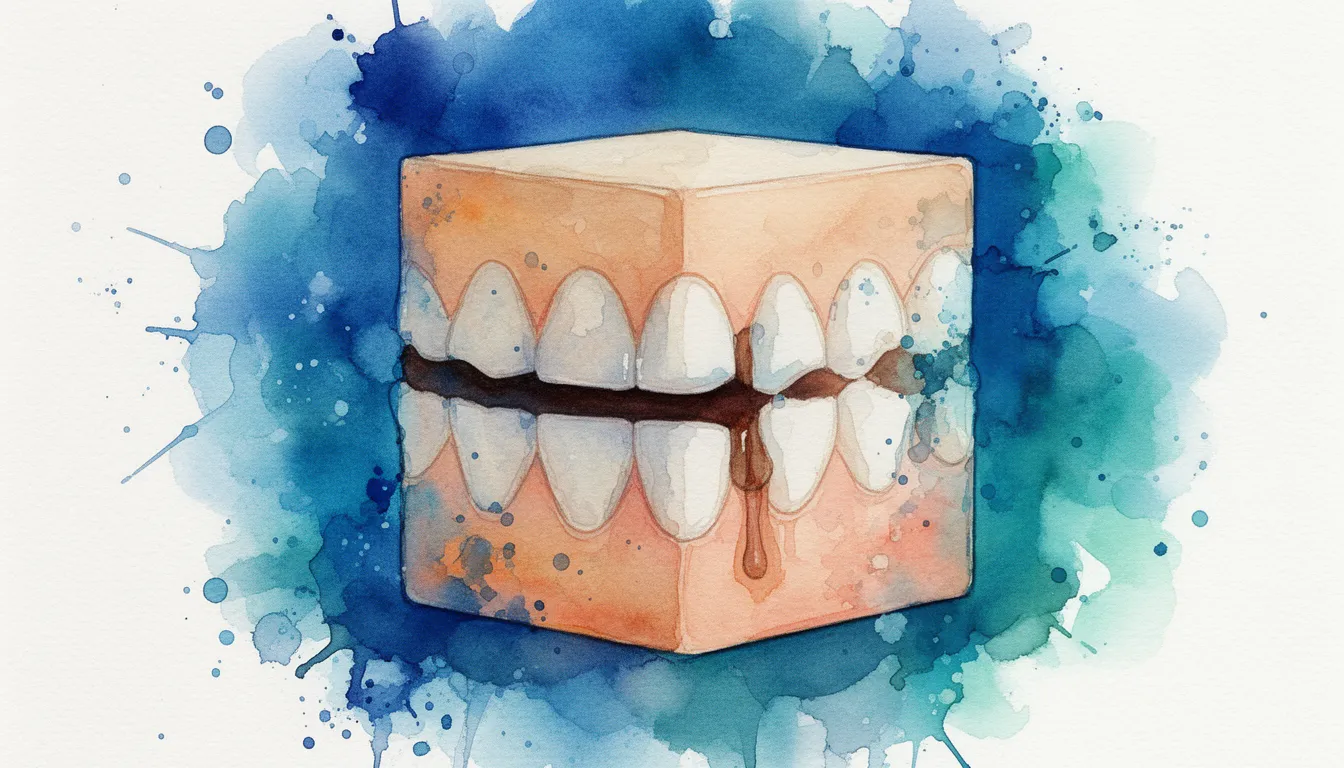
What Are Black Triangles Between Teeth?
Black triangles are dark, open gaps visible at the gum line between two adjacent teeth. Dentists call them open gingival embrasures.
In a healthy mouth, a small mound of gum tissue called the interdental papilla fills the space between each pair of teeth. When this papilla shrinks or disappears, the triangular gap underneath becomes visible. The space looks dark because you are seeing into the shadowed area behind the teeth.
Black triangles are common. They can appear between any teeth, but they are most noticeable between the upper front teeth. Research suggests they become more frequent with age as gum tissue naturally thins and bone levels change over time.
While many people first notice black triangles because of how they look, the gaps can also affect oral health. Open spaces between teeth collect food particles and make plaque removal harder, which can contribute to further gum problems. [1]
Causes and Risk Factors for Black Triangles
Black triangles form when gum tissue, bone, or both are lost between teeth. Several factors can cause this loss.
Gum Disease and Bone Loss
Periodontal disease (gum disease) is the most common cause of black triangles. [1] Gum disease begins as gingivitis, an inflammation of the gums caused by bacterial plaque. If untreated, it can progress to periodontitis, where the infection destroys the bone that supports your teeth.
As bone is lost between teeth, the gum tissue that sat on top of that bone shrinks. The papilla collapses, and a black triangle appears. The more bone that is lost, the larger the triangle becomes. This is why black triangles can be an early visible sign of a deeper periodontal problem. [1]
Gum Recession
Gum recession happens when gum tissue pulls away from the tooth, exposing more of the root surface. Recession can result from aggressive brushing, thin gum tissue (called a thin biotype), tobacco use, or clenching and grinding habits. [2]
When gums recede between teeth, the papilla height decreases. This creates or widens a black triangle. Recession along the front surface of a tooth is easier to see, but the loss of tissue between teeth often goes unnoticed until the gap is obvious.
Tooth Shape and Position
Some people have teeth that are naturally more triangular or narrow at the gum line and wider at the biting edge. This shape means the contact point between two teeth sits higher up, leaving a larger space for the papilla to fill. Even with healthy gums, the tissue may not reach all the way up to close the gap.
Crowded or rotated teeth can also create irregular spacing. After orthodontic treatment, teeth that were previously overlapping may reveal black triangles once they are straightened. The triangles were always there but were hidden by the overlapping tooth surfaces.
Aging and Other Contributing Factors
Age is a significant risk factor. Gum tissue gradually loses collagen and elasticity over time. The papilla between teeth tends to flatten with age even in people with good oral health.
Other contributing factors include smoking, which reduces blood flow to gum tissue and accelerates tissue breakdown; poorly fitting dental restorations that irritate the gums; and trauma from aggressive flossing or the use of wooden toothpicks that damage the papilla.
Symptoms and Diagnosis
The main symptom is a visible dark gap between teeth at the gum line. Many patients notice it while looking in a mirror or in photographs.
What Patients Typically Notice
The triangle may start small and grow over months or years. Patients often report food getting stuck between teeth more frequently. Some feel a whistling sound when speaking or notice air passing through the gaps.
If the underlying cause is gum disease, patients may also experience bleeding when brushing or flossing, red or swollen gums, persistent bad breath, or teeth that feel loose. [1] Not all black triangles cause discomfort, so many people are unaware of them until a dentist points them out.
How a Dentist or Periodontist Diagnoses Black Triangles
A dentist or periodontist diagnoses black triangles through a visual exam combined with periodontal probing and X-rays. Probing measures the depth of the space between the gum and the tooth. Depths greater than 3 millimeters can indicate periodontitis. [1]
X-rays reveal how much bone is present between the teeth. The distance from the bone crest to the contact point between the teeth is a key measurement. Research has shown that when this distance exceeds 5 millimeters, the papilla is unlikely to fill the space completely. This measurement helps clinicians classify the severity of the black triangle and plan treatment.
A periodontist may also evaluate the thickness and quality of the gum tissue, check for signs of active gum disease, and assess whether tooth shape or alignment is contributing to the gap.
When to Seek Care
You should see a dental professional if you notice a new gap between teeth, if existing gaps are getting larger, or if you have any signs of gum disease such as bleeding, swelling, or gum tenderness. Early evaluation gives you more treatment options. Once bone is lost, it is very difficult to regenerate, so addressing the problem before significant bone loss occurs leads to better outcomes. [1]
Treatment Options for Black Triangles
Treatment depends on the cause, severity, and location of the black triangle. Options range from minimally invasive cosmetic fixes to surgical procedures.
Treating Underlying Gum Disease First
If gum disease is present, it must be treated before any cosmetic or restorative work. [1] A periodontist typically begins with scaling and root planing (a deep cleaning that removes plaque and tartar from below the gum line). In more advanced cases, surgical treatment may be needed to reduce pocket depths and address bone loss.
Stabilizing the gums prevents further papilla loss. Without this step, any cosmetic repair is likely to fail because the disease will continue to destroy tissue.
Dental Bonding (Composite Resin)
Dental bonding uses tooth-colored composite resin to fill the black triangle. A dentist applies the resin to the sides of the adjacent teeth, building out their width so that the gap is closed or reduced. The procedure is typically completed in a single visit and does not require anesthesia in most cases.
Bonding is a conservative option because it does not require removing tooth structure. Results vary based on the size of the triangle and the skill of the provider. Bonding material can stain or chip over time and may need repair or replacement every several years.
Bioclear Method
The Bioclear method is a specific bonding technique that uses heated composite resin and clear anatomical matrices (thin, shaped molds) to create a natural-looking tooth form. The matrices help shape the composite around the tooth in a way that fills the embrasure while maintaining a smooth, cleanable surface.
Proponents of the Bioclear method suggest it creates stronger, more polished results than traditional bonding. It is typically more expensive than standard bonding and requires a dentist trained in the technique.
Porcelain Veneers
Veneers are thin shells of porcelain bonded to the front surface of teeth. By making the veneers slightly wider than the original teeth, a dentist can close the black triangle. Veneers also allow changes to tooth shape, color, and alignment in the same procedure.
Veneers require removal of a thin layer of enamel and are considered irreversible. They typically last 10 to 15 years or longer with proper care. Veneers cost more than bonding but tend to resist staining better. They are typically best suited for black triangles caused by tooth shape rather than active gum disease.
Gum Grafting and Surgical Approaches
A periodontist may recommend gum grafting to rebuild lost tissue. In this procedure, tissue is taken from the roof of the mouth or a donor source and placed in the area of the black triangle. The goal is to restore papilla height and cover exposed root surfaces.
Papilla reconstruction is one of the most challenging procedures in periodontics. Results vary depending on the amount of underlying bone support, the size of the triangle, and individual healing. In cases where significant bone has been lost, grafting alone may not fully close the gap. A periodontist may combine grafting with bone regeneration techniques in some situations.
Newer approaches include the use of injectable hyaluronic acid gel to plump the papilla. Early research suggests this may help in mild cases, but long-term data on durability is still limited. Multiple injection sessions are typically needed.
Orthodontic Correction
Orthodontic treatment (braces or clear aligners) can sometimes reduce black triangles by moving teeth closer together or changing the angle at which they contact each other. This lowers the contact point and reduces the space the papilla needs to fill.
Orthodontics is typically combined with interproximal reduction (IPR), a technique where tiny amounts of enamel are removed from between teeth to reshape them. This changes the contact from a point to a broader surface, making it easier for the papilla to fill the space. Orthodontic correction for black triangles takes months to complete and works best for mild to moderate gaps.
Comparing Treatment Options
No single treatment is best for every patient. Dental bonding and the Bioclear method are the least invasive and least expensive options, making them reasonable starting points for many cases. Veneers offer more control over aesthetics but require permanent tooth modification. Gum grafting addresses the tissue itself but is more complex and has variable outcomes. Orthodontics takes the longest but can address underlying alignment issues.
A thorough evaluation by a periodontist helps identify which approach, or which combination of approaches, is most likely to give a lasting result for your specific situation.
Recovery and Aftercare
Recovery depends on the type of treatment. Bonding and veneers require little to no downtime, while surgical procedures need a healing period.
After Bonding or Veneers
Most patients return to normal activities the same day. You may experience mild sensitivity to hot or cold for a few days. Avoid biting into very hard foods directly with bonded or veneered teeth to prevent chipping.
Good oral hygiene is essential to maintain the repair and prevent new gum problems. Use a soft-bristled toothbrush and non-abrasive toothpaste. [2] Your dentist will recommend follow-up visits to check the restoration and monitor gum health.
After Gum Grafting or Papilla Surgery
Surgical recovery typically takes one to two weeks for initial healing. Swelling, mild discomfort, and some bruising are normal during the first few days. Your periodontist will likely prescribe pain medication and an antimicrobial rinse.
Avoid brushing or flossing the surgical area until your periodontist clears you, usually after about two weeks. Stick to soft foods and avoid anything spicy, crunchy, or very hot. Full tissue maturation can take several months. Follow-up appointments allow your periodontist to track healing and determine if additional procedures are needed.
Long-Term Maintenance
Regardless of the treatment, long-term success depends on keeping your gums healthy. Brush twice a day with a soft-bristled brush. Clean between teeth daily with floss or an interdental brush. [2] See your dentist or periodontist for regular cleanings and exams.
If gum disease was the original cause of the black triangle, ongoing periodontal maintenance (typically every three to four months) is usually recommended to prevent recurrence. [1]
Cost of Black Triangle Treatment
Treatment costs vary widely based on the approach used, the number of teeth involved, and the complexity of your case. Costs vary by location, provider, and case complexity.
Typical Cost Ranges
Dental bonding typically ranges from $150 to $600 per tooth. The Bioclear method may cost $300 to $800 per tooth because of the specialized technique and materials. Porcelain veneers generally range from $900 to $2,500 per tooth.
Gum grafting procedures typically cost between $600 and $3,000 per area treated, depending on the technique and whether donor tissue is used. Orthodontic treatment for black triangle correction, including clear aligners, can range from $2,000 to $8,000 depending on the scope of movement required.
Insurance and Financing
Dental insurance coverage depends on whether the treatment is classified as cosmetic or medically necessary. Bonding and veneers done purely for appearance are often not covered. Gum grafting and periodontal treatment for gum disease are more likely to receive partial coverage because they address a health condition. [1]
Ask your dental office for a pre-treatment estimate that you can submit to your insurance company. Many practices offer payment plans or work with third-party financing companies to help spread the cost over time.
When to See a Periodontist for Black Triangles
A periodontist is the right specialist when gum disease, bone loss, or gum recession is involved. General dentists can perform bonding and veneers, but the tissue and bone evaluation requires periodontal expertise.
If your black triangle appeared after noticing gum bleeding, loose teeth, or receding gums, a periodontist can determine whether bone loss is present and how much tissue has been affected. This evaluation typically includes detailed probing measurements and dental X-rays. [1]
A periodontist is also the specialist trained to perform gum grafting and papilla reconstruction surgery. If surgical correction is recommended, or if you have been told you have moderate to severe bone loss, seeing a periodontist gives you access to the full range of treatment options.
For cases that involve only tooth shape or minor cosmetic concerns with no gum disease, a general or cosmetic dentist may be able to manage the treatment. In many cases, a periodontist and a restorative dentist work together to get the best result. Visit the periodontics page to learn more about what periodontists treat.
Find a Periodontist Near You
Black triangles between teeth deserve a careful evaluation to identify what caused them and what treatment will last. A periodontist can assess your bone levels, gum tissue health, and overall risk factors, then recommend a treatment plan specific to your situation. Use the My Specialty Dentist directory to find a qualified periodontist in your area and schedule a consultation.
Search Periodontists in Your Area