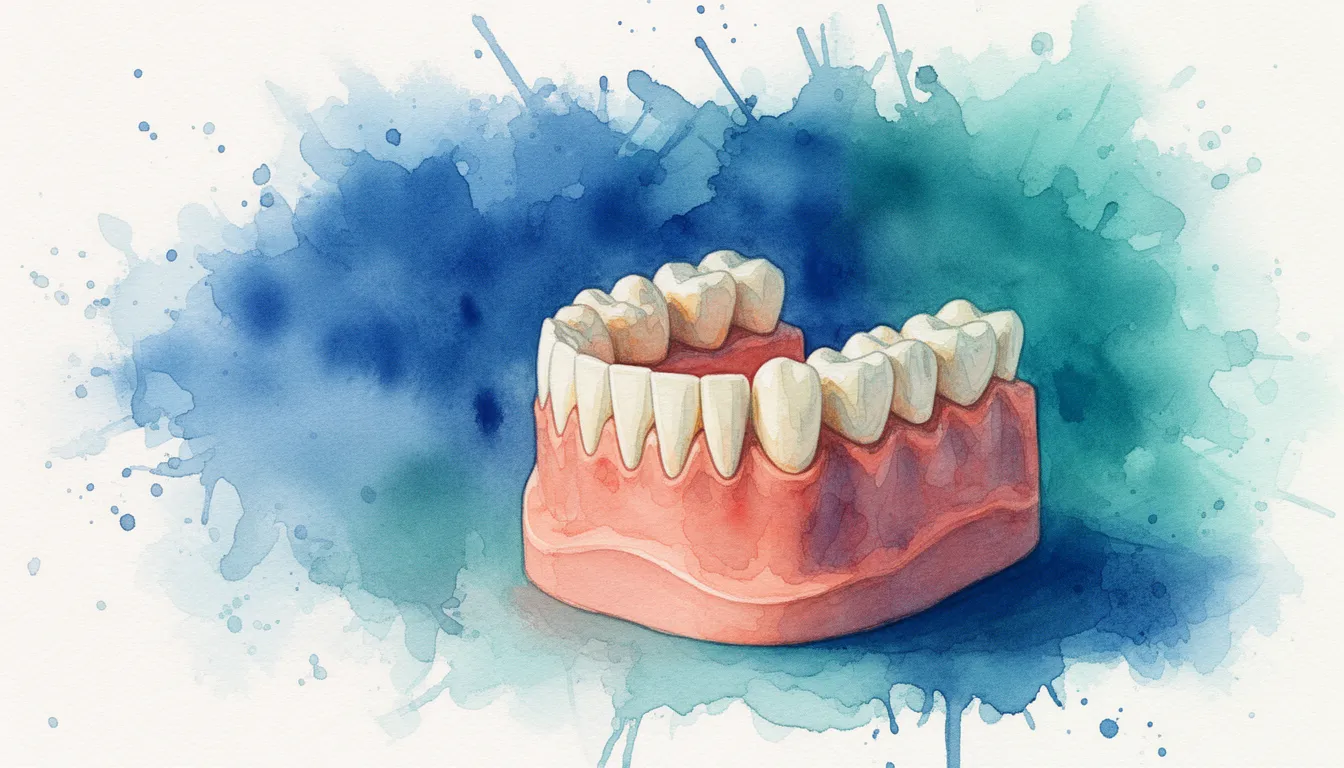
What Is Air Abrasion in Dentistry?
Air abrasion is a drill-free method that uses a focused stream of tiny abrasive particles to remove small amounts of decay or surface material from a tooth. The handpiece works like a miniature sandblaster. It directs the particle stream through a narrow nozzle aimed precisely at the area of decay.
Dentists sometimes describe air abrasion as a form of micro-dentistry. The goal is to treat early problems with the least possible loss of healthy tooth structure [1]. Because there is no spinning bur, the tooth experiences no friction-based heat and no vibration.
The American Dental Association recognizes air abrasion as one of several minimally invasive options that fit within modern caries management [2]. It is one tool in a broader toolkit, not a universal replacement for traditional drilling.
How Does Air Abrasion Work?
Air abrasion works by propelling fine particles at the tooth using compressed air. The stream chips away small amounts of decayed enamel and dentin while leaving healthy structure largely untouched.
Inside the handpiece, a regulated flow of compressed air carries the abrasive powder through a thin nozzle. The dentist controls the flow rate, particle size, and angle of attack. The result is a precise, targeted removal of softened tooth material. A high-volume suction tip captures the spent particles and tooth debris to keep the mouth clear.
The Abrasive Particles
Most modern air abrasion systems use aluminum oxide, a hard, biocompatible powder. Particle sizes typically range from very fine to coarse depending on the task. Smaller particles are used for delicate work like cleaning pit-and-fissure areas before placing a sealant. Larger particles can remove older composite or roughen a surface for bonding.
What Patients Typically Experience
Many patients say the procedure feels like a cool stream of air against the tooth. There is no vibration and no whining drill sound. Protective eyewear is worn because the particle stream produces a fine mist. A rubber dam or careful isolation helps keep particles away from soft tissues and the rest of the mouth.
What Is Air Abrasion Used For?
Dentists use air abrasion for selected procedures where precision and tissue preservation matter more than bulk removal. It is best suited for shallow, accessible work rather than complex restorations or deep decay [1].
Treating Small Cavities
The most common use is treating early cavities on chewing surfaces (occlusal caries). When decay is limited to the outer enamel or the upper layer of dentin, air abrasion can remove the soft material while preserving the surrounding tooth. The cleaned cavity is then filled with a tooth-colored composite resin.
Preparing Teeth for Sealants
Air abrasion can clean the deep grooves of molars before a dental sealant is placed. By removing debris and lightly roughening the enamel, it helps the sealant bond more reliably. This is sometimes used in children and teens as part of a prevention program [2].
Stain Removal and Composite Repairs
The technique can remove surface stains that resist regular polishing. It is also used to repair or refresh existing composite fillings, where small chips or worn edges can be cleaned away without sacrificing healthy enamel. In endodontic practice, air abrasion is sometimes used as part of access refinement on selected cases. Patients curious about this kind of work can read more on the endodontics page.
What Does the Evidence Say?
Air abrasion has been used in clinical dentistry for several decades. Professional bodies recognize it as a valid technique within minimally invasive dentistry for selected cases [1]. Results vary based on case selection, the operator's experience, and the materials used to restore the tooth.
Regulatory Status
Air abrasion units are dental devices regulated by the U.S. Food and Drug Administration. As with most dental instruments, they undergo FDA clearance through the 510(k) pathway, which means a manufacturer shows the device is substantially equivalent to an already cleared product. FDA clearance is not the same as FDA approval, which applies to a smaller category of high-risk products. Patients should ask the dentist which system is being used and confirm it is currently in good standing.
Professional Society Positions
The American Dental Association includes air abrasion among acceptable conservative techniques for early caries when used on properly selected cases [2]. The American Association of Endodontists provides patient education resources that describe modern conservative tools used in specialty practice [1]. Neither organization positions air abrasion as a universal replacement for rotary instruments.
What Research Suggests
Published clinical research on air abrasion generally supports its use for small, accessible lesions. Studies have looked at bond strength of composites placed after air abrasion, marginal sealing, and patient comfort. Findings have been mixed and case-dependent, so dentists tend to use the technique selectively rather than as a blanket alternative.
Benefits and Limitations
Air abrasion offers real comfort and conservation advantages in the right case, but it also has clear boundaries. Understanding both sides helps patients ask better questions and avoid unrealistic expectations.
Advantages of Air Abrasion
The most reported advantage is comfort. There is no friction heat, no vibration, and no high-pitched drill noise, which can reduce dental anxiety for many patients [2]. Because the procedure is gentle, anesthesia is often unnecessary for shallow lesions.
Air abrasion is also conservative. It targets softened decayed structure more selectively than a bur, so dentists can often preserve more healthy enamel and dentin [1]. Less drilling can mean a smaller, longer-lasting restoration over time. Multiple small cavities in different quadrants can sometimes be addressed in a single visit, since numbing is not required for each one.
Limitations to Be Aware Of
Air abrasion is not a one-size-fits-all tool. It does not work well on deep cavities that have reached the inner dentin or pulp, on cavities between teeth where access is tight, or on removing old metal (amalgam) fillings [2]. For those situations, traditional rotary instruments remain the standard.
The technique also requires careful isolation. The fine mist of particles must be captured by suction so it is not inhaled or swallowed. Patients wear protective eyewear, and the dental team uses rubber dam or similar barriers. Not every dental office has the equipment or chooses to invest in it, so availability varies by location and specialty.
- Best for small, early-stage cavities on accessible surfaces
- Limited use for deep decay, interproximal lesions, or amalgam removal
- Requires strong suction and proper isolation
- Not all offices stock air abrasion units
Cost and Availability
The fee for an air abrasion procedure is usually billed under the same codes as the underlying restoration, such as a small composite filling. Most plans price air abrasion similarly to a traditional composite filling rather than as a separate line item.
Out-of-pocket cost for a small composite filling commonly falls within a wide range depending on the tooth, the number of surfaces involved, the geographic market, and whether dental insurance applies. Costs vary by location, provider, and case complexity, so the most accurate number comes from a written treatment plan from your chosen dentist.
Insurance Considerations
Most dental insurance plans cover the restoration itself (the filling) when it is medically necessary. Coverage typically follows the standard rules for composite fillings, including any frequency limits and annual maximums. Because air abrasion is a method of preparing the tooth rather than a separate billable service, patients usually do not see a separate charge for the technique itself. Ask the front desk for a pre-treatment estimate so any patient share is clear before treatment.
Finding Offices That Offer It
Availability varies. General dentists, pediatric dentists, and some specialists may offer air abrasion. The simplest way to confirm is to call ahead and ask whether the office uses air abrasion for small cavities and sealant placement. Patients can also ask during a recall visit whether the office has the equipment and uses it for cases like theirs.
Questions to Ask Your Dentist
A short, focused conversation can tell you whether air abrasion is a good fit for your situation. The goal is to confirm that the dentist has experience with the technique and that your specific cavity meets the criteria.
- Is my cavity small and shallow enough for air abrasion to be a good option?
- How long have you been using air abrasion in your practice?
- Will I need anesthesia, and if so, why?
- Which material will you use to fill the tooth afterward?
- What is the total cost, and what does my insurance cover?
- What are the realistic alternatives if air abrasion is not suitable?
- How will you protect my eyes, soft tissues, and airway during the procedure?
- Will you take a new image or X-ray afterward to confirm complete removal of decay?
Find a Specialist Near You
If you have a small, early cavity or you are exploring drill-free options for yourself or your child, a specialist can help you decide whether air abrasion fits your case. Use the directory to locate a board-certified dentist or specialist in your area and confirm by phone that they offer the technique.
Search Endodontists in Your Area