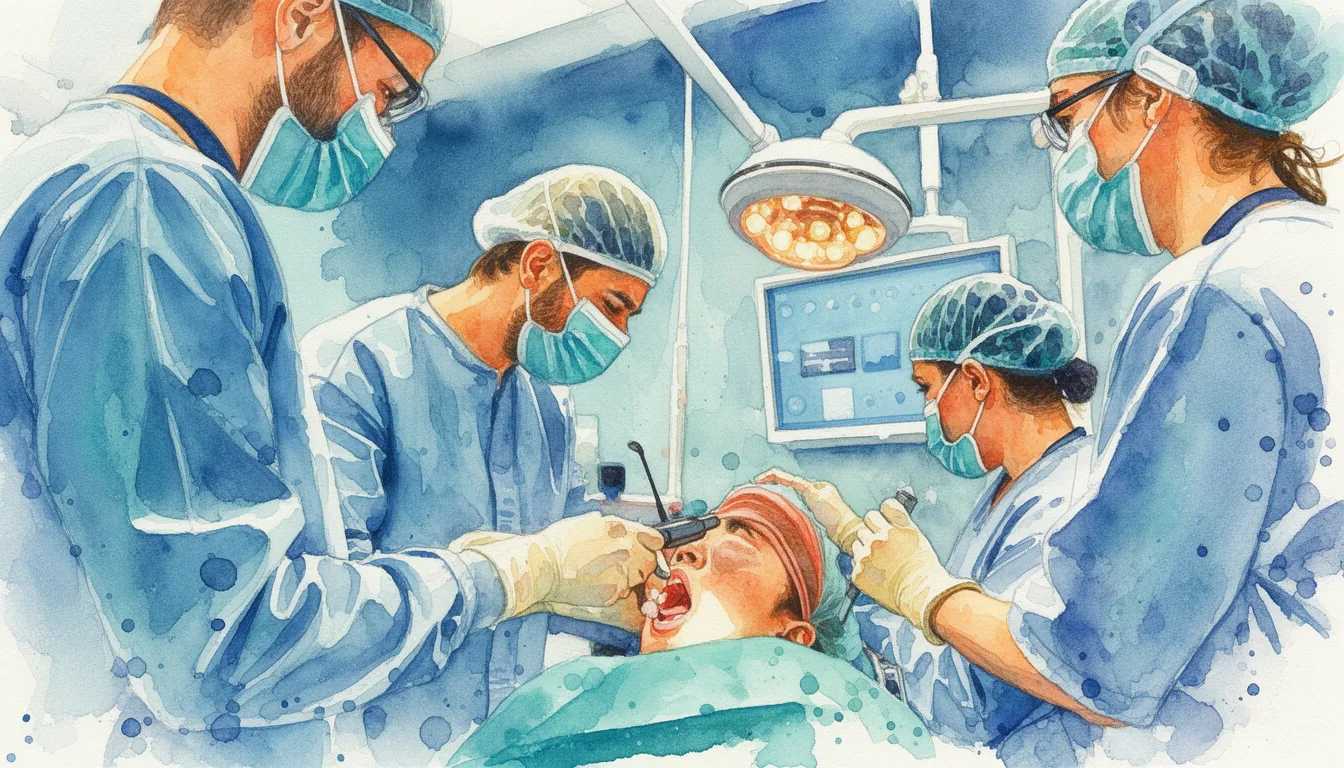
What Is an Apicoectomy?
An apicoectomy is a surgical procedure that targets the very tip of the tooth root, called the apex. During the surgery, the endodontist makes a small incision in the gum tissue, removes the infected root tip along with a small amount of surrounding bone, and places a tiny filling to seal the end of the root canal.
The procedure is also known as root-end surgery, root-end resection, or periradicular surgery. It is classified as endodontic microsurgery because modern techniques use a surgical operating microscope for precision.
Why the Root Tip Becomes a Problem
The tip of the root is where the nerve and blood supply originally entered the tooth. This area contains a complex network of tiny canal branches that can harbor bacteria. During a standard root canal, the endodontist cleans the main canals from inside the tooth. However, in some cases, bacteria persist in the microscopic branches near the root tip that cannot be reached from the top of the tooth.
When infection remains at the root tip despite root canal treatment, it can cause persistent symptoms or show up as a dark area on X-rays. An apicoectomy approaches the problem from the other direction, surgically removing the source of infection.
When Is an Apicoectomy Needed?
An apicoectomy is not a first-line treatment. It is typically recommended only after other endodontic options have been tried or ruled out.
Common Reasons for Apicoectomy
- A previous root canal has not healed after an adequate observation period, and infection persists at the root tip
- Retreatment (redoing the root canal from the top) is not feasible because of a post, crown, or other restoration that cannot be safely removed
- The root canal system has unusual anatomy, such as a blocked canal, a calcified canal, or a root tip with complex branching that standard instruments cannot reach
- A root fracture or perforation near the tip of the root needs surgical repair
- A biopsy of tissue around the root tip is needed to rule out a cyst or other pathology
Apicoectomy vs. Retreatment
Before recommending an apicoectomy, your endodontist will consider whether retreatment, repeating the root canal through the crown of the tooth, is a better option. Retreatment is usually preferred when there is an identifiable problem with the original root canal that can be corrected, such as a missed canal or inadequate cleaning.
An apicoectomy is preferred when the original root canal appears technically adequate on imaging but the tooth still has not healed, or when accessing the canals through the crown would compromise the existing restoration. Your endodontist will explain why one approach is recommended over the other.
Apicoectomy Procedure: Step by Step
An apicoectomy is performed in the endodontist's office, typically under local anesthesia. The entire procedure usually takes 30 to 90 minutes depending on the tooth and the complexity of the case.
Before the Surgery
Your endodontist will take 3D images (cone-beam CT) of the tooth before the procedure. This imaging shows the exact position of the root tip relative to nearby structures such as nerves, sinuses, and adjacent teeth. The endodontist will review the images with you and explain the treatment plan.
You may be prescribed an anti-inflammatory medication or an antibiotic to take before the procedure, though this varies by case. Follow your endodontist's specific instructions about eating, drinking, and medications.
During the Surgery
The endodontist numbs the area with local anesthesia. You will be awake but should not feel pain during the procedure. A small incision is made in the gum tissue near the tooth to expose the underlying bone. A small window is created in the bone to access the root tip.
Using a surgical microscope for magnification, the endodontist removes approximately 3 millimeters of the root tip along with any infected tissue. The end of the remaining root canal is cleaned with ultrasonic instruments and sealed with a biocompatible filling material, typically mineral trioxide aggregate (MTA) or a similar material. The gum tissue is then sutured back into place.
Sedation Options
Most apicoectomies are performed comfortably with local anesthesia alone. If you have significant dental anxiety, ask about sedation options. Many endodontists offer nitrous oxide (laughing gas) or oral sedation. IV sedation may be available in some practices. If you choose sedation beyond nitrous oxide, you will need someone to drive you home.
Apicoectomy Recovery: What to Expect
Recovery from an apicoectomy is typically faster and less uncomfortable than patients expect. Most people return to normal activities within 2 to 3 days.
The First 48 Hours
After the anesthesia wears off, you will likely experience mild to moderate soreness and some swelling. Apply ice packs to the outside of your face for 20 minutes on, 20 minutes off during the first 24 hours. This helps minimize swelling. Take pain medication as directed by your endodontist.
Avoid physical exertion, bending over, and blowing your nose forcefully (especially if the surgery involved an upper tooth near the sinus). Eat soft foods and avoid chewing near the surgical site. Do not brush or floss the area until your endodontist says it is safe.
Days 3 Through 7
Swelling typically peaks on the second or third day and then gradually decreases. Bruising on the face or gum is possible, especially for lower teeth. Most patients feel significantly better by day 3 or 4. Sutures are usually removed at a follow-up appointment 5 to 7 days after surgery.
Mild discomfort or tenderness at the surgical site may continue for a week or so. Over-the-counter pain relievers are typically sufficient.
Long-Term Healing
While the soft tissue heals within 1 to 2 weeks, the bone around the root tip takes several months to fully regenerate. Your endodontist will schedule follow-up X-rays, typically at 6 months and 12 months, to monitor bone healing and confirm the infection has resolved.
During this period, the tooth is functional. You can eat and chew normally once the initial soreness resolves. The tooth may feel slightly different from neighboring teeth for a few weeks.
Apicoectomy Success Rates and Risks
Modern apicoectomy techniques have significantly improved outcomes compared to older methods. The use of surgical microscopes, ultrasonic instruments, and biocompatible sealing materials has made the procedure more predictable.
Success Rates
Studies report success rates for modern endodontic microsurgery ranging from approximately 85% to 97%. Success means the infection resolves, the bone heals, and the tooth remains functional without symptoms. Factors that affect success include the type of tooth, the extent of the infection, and the quality of the existing root canal filling.
Front teeth and premolars tend to have higher success rates than molars, partly because they are easier to access surgically and have simpler root anatomy.
Potential Risks and Complications
Like any surgical procedure, an apicoectomy carries some risks, though serious complications are uncommon.
- Post-surgical infection at the surgical site (rare, typically managed with antibiotics)
- Temporary numbness or tingling in the lip, chin, or gum if the surgery is near a nerve. This resolves within weeks to months in most cases.
- The procedure may not fully resolve the infection, requiring additional treatment or extraction
- Opening into the sinus cavity during surgery on upper back teeth. The endodontist will manage this if it occurs.
- Damage to adjacent tooth roots (uncommon with modern imaging and microscopy)
Apicoectomy Cost and Insurance Coverage
An apicoectomy typically costs between $900 and $1,900 per tooth. The price depends on which tooth is being treated, the complexity of the surgery, the geographic area, and the individual practice.
Front teeth are generally at the lower end of the range. Molars, which have multiple roots and are harder to access, cost more. If a bone graft material is needed to support healing, that may add to the cost.
Most dental insurance plans cover apicoectomies as an endodontic surgical procedure. Coverage typically ranges from 50% to 80% after the deductible, depending on your plan. Contact your insurance provider for specific benefit details. Costs vary by location, provider, and case complexity.
When to See an Endodontist About Apicoectomy
An apicoectomy is a specialized procedure performed by endodontists. If you have a tooth that has had root canal treatment but still has symptoms or shows signs of persistent infection on X-rays, ask your dentist for a referral to an endodontist.
Not every tooth with a failed root canal needs an apicoectomy. The endodontist will evaluate whether retreatment, apicoectomy, or extraction is the best option based on the tooth's condition, anatomy, and restorability. Many endodontists accept self-referred patients and can provide a consultation without a referral.
Find an Endodontist Near You
If you have been told you may need an apicoectomy, an endodontist can evaluate your options. Every endodontist on My Specialty Dentist has verified specialty credentials. Search by location to find an endodontist in your area and schedule a consultation.
Search Endodontists in Your Area