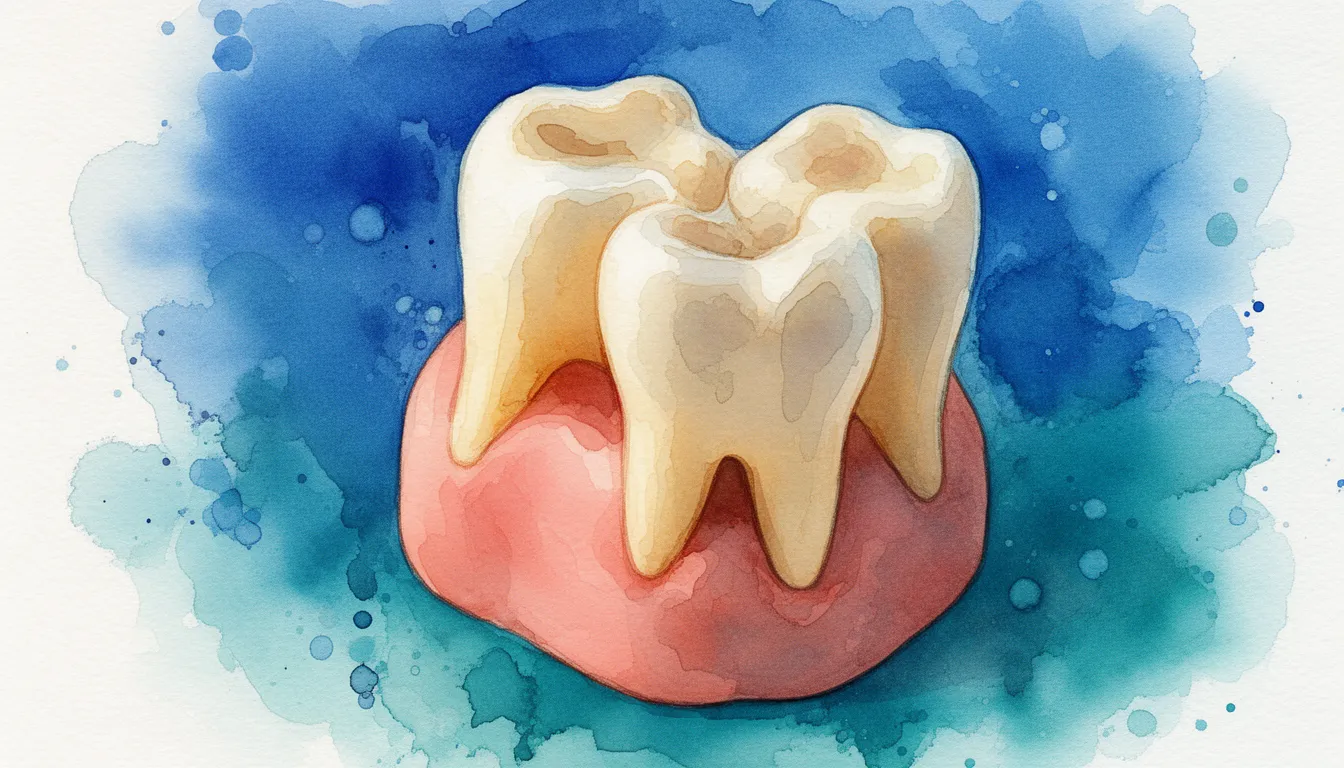
What Is Pericoronitis?
Pericoronitis is an infection and inflammation of the soft tissue around a partially erupted tooth. It occurs most often around the lower third molars (wisdom teeth), typically in people between the ages of 17 and 25 when these teeth are trying to come in.
When a wisdom tooth only partially breaks through the gum, a flap of gum tissue called an operculum covers part of the tooth. Food particles and bacteria get trapped under this flap, creating an environment where infection can develop. The space between the flap and the tooth is nearly impossible to clean with normal brushing and flossing.
Pericoronitis can be acute (sudden and severe) or chronic (low-grade and recurring). Acute pericoronitis causes significant pain and swelling and may require urgent treatment. Chronic pericoronitis involves mild, recurring discomfort and dull pain in the area that comes and goes over weeks or months.
Symptoms of Pericoronitis
Pericoronitis symptoms can range from mild discomfort to severe pain. The location is almost always at the very back of the mouth, behind the last visible molar.
Common Symptoms
- Pain and tenderness in the gum tissue behind the last molar
- Swollen, red gum flap over or around the partially erupted tooth
- Bad taste in the mouth or persistent bad breath
- Difficulty or pain when opening the mouth (trismus)
- Pain when biting down, especially if the upper tooth hits the swollen gum
- Difficulty swallowing
Signs of a More Serious Infection
If pericoronitis progresses without treatment, the infection can spread beyond the gum flap. Watch for these warning signs that indicate the infection may be getting worse.
- Fever or chills
- Swelling that extends to the cheek, jaw, or neck
- Swollen lymph nodes under the jaw
- Difficulty swallowing or breathing
- Pus draining from the area around the tooth
Home Care for Mild Pericoronitis
Mild pericoronitis with localized soreness and no fever may respond to home care while you wait to see a dentist. These measures can help reduce pain and keep the area clean.
- Rinse gently with warm saltwater (half a teaspoon of salt in 8 ounces of warm water) several times a day to reduce bacteria and soothe the tissue.
- Use a soft-bristled toothbrush to carefully clean around the partially erupted tooth. An irrigating syringe or water flosser on a low setting can help flush debris from under the gum flap.
- Over-the-counter pain relievers such as ibuprofen can help with both pain and inflammation. Follow the dosing instructions on the label.
- Avoid chewing on the affected side to prevent further irritation.
- Do not place aspirin directly on the gum tissue, as this can cause a chemical burn.
When Home Care Is Not Enough
Home care is a temporary measure, not a substitute for professional treatment. If symptoms do not improve within 2 to 3 days, if pain worsens, or if you develop fever or facial swelling, see a dentist or oral surgeon promptly. Pericoronitis often recurs even after symptoms improve because the underlying cause, the partially erupted tooth and gum flap, is still present.
Professional Treatment for Pericoronitis
A dentist or oral surgeon will first assess the severity of the infection and then determine the right treatment approach.
Treating the Active Infection
The first step is getting the current infection under control. Your dentist will clean the area by flushing debris and bacteria from under the gum flap using an irrigating solution. This is called debridement.
If the infection is moderate to severe, your dentist may prescribe antibiotics, typically amoxicillin or metronidazole, to help fight the infection. Antibiotics alone will not resolve pericoronitis. They control the infection so that further treatment (usually extraction) can be performed safely.
Operculectomy (Gum Flap Removal)
In some cases, the dentist may remove the flap of gum tissue covering the tooth. This procedure, called an operculectomy, eliminates the space where bacteria collect. It is most effective when the tooth is expected to fully erupt into a normal position. However, the gum tissue can sometimes grow back, and the procedure is not a long-term solution for wisdom teeth that are impacted or poorly positioned.
Wisdom Tooth Extraction
Extracting the wisdom tooth is the most definitive treatment for pericoronitis. Once the tooth is removed, the infection source is eliminated and the condition will not recur in that area.
If the tooth is partially impacted (stuck under bone or soft tissue), extraction is typically performed by an oral and maxillofacial surgeon. The procedure may be done under local anesthesia, sedation, or general anesthesia depending on the complexity and your preference. Most oral surgeons prefer to wait until the active infection has been treated with antibiotics before performing the extraction.
Recovery from wisdom tooth extraction generally takes about one week. Swelling, mild pain, and limited mouth opening are normal during the first few days. Your surgeon will provide specific instructions for care after the procedure.
Complications of Untreated Pericoronitis
Pericoronitis that is ignored or undertreated can lead to serious complications. The infection can spread from the gum tissue into deeper spaces in the jaw, throat, and neck.
- Periapical abscess: A pocket of pus forming around the tooth root
- Cellulitis: A spreading soft-tissue infection in the cheek, jaw, or neck that causes significant swelling
- Ludwig's angina: A rare but dangerous infection of the floor of the mouth that can compromise the airway and requires emergency hospital treatment
- Osteomyelitis: Infection that spreads to the jawbone itself
- Trismus: Severe limitation in jaw opening caused by infection and inflammation of the surrounding muscles
Recurring Pericoronitis
Chronic, recurring pericoronitis is common when the underlying tooth is not removed. The infection may clear up with treatment, only to return weeks or months later when bacteria again accumulate under the gum flap. Most dental professionals recommend extraction after a second episode to prevent the cycle from continuing and reduce the risk of a more serious infection.
Pericoronitis Treatment Cost
The cost of treating pericoronitis depends on the severity and whether extraction is needed. An office visit with irrigation and a prescription for antibiotics may cost $100 to $300. Wisdom tooth extraction costs vary based on the complexity of the case.
A simple extraction of a fully visible tooth typically ranges from $200 to $500. Surgical extraction of an impacted wisdom tooth is more involved and generally costs $300 to $800 per tooth. If you choose IV sedation or general anesthesia, that adds an additional fee. Costs vary by location, provider, and case complexity.
Most dental insurance plans cover a portion of wisdom tooth extraction when it is medically necessary. Check with your insurance provider about coverage before scheduling the procedure.
When to See an Oral Surgeon
Your general dentist can manage mild pericoronitis by cleaning the area and prescribing antibiotics. However, an oral and maxillofacial surgeon is the right specialist when extraction is needed, especially for impacted wisdom teeth.
See an oral surgeon if your pericoronitis has recurred more than once, if the wisdom tooth is partially or fully impacted, if you have significant swelling or difficulty opening your mouth, or if your general dentist recommends a referral. Oral surgeons complete 4 to 6 years of hospital-based residency training beyond dental school, which includes extensive experience with wisdom tooth removal, anesthesia, and managing surgical complications.
Find an Oral Surgeon Near You
Every oral surgeon on My Specialty Dentist has verified specialty credentials. Search by location to find oral and maxillofacial surgeons in your area who can evaluate your wisdom teeth and recommend the right treatment.
Search Oral Surgeons in Your Area