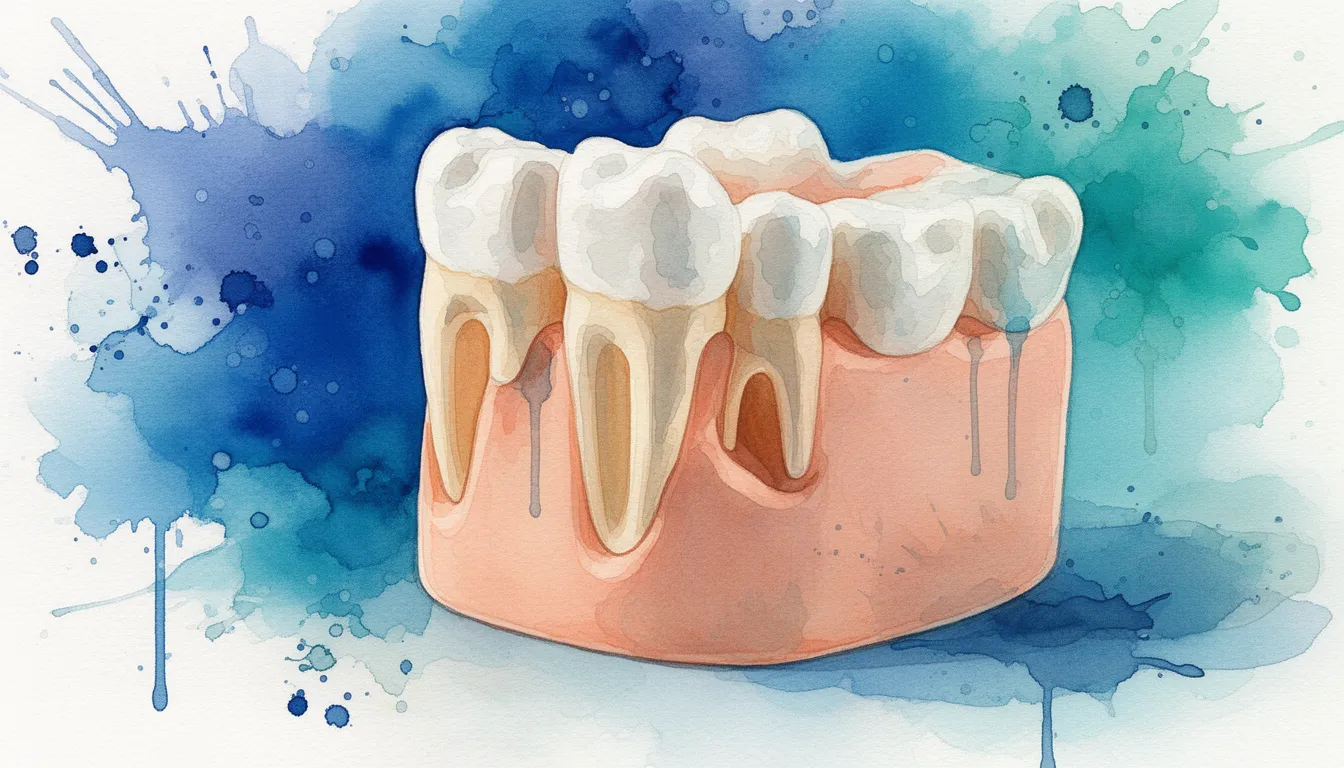
What Is a Wisdom Tooth Infection?
A wisdom tooth infection is a bacterial infection in the gum tissue or bone surrounding a wisdom tooth, most often one that has only partially broken through the gum.
Wisdom teeth are the third molars. They are the last teeth to come in, typically between the ages of 17 and 25. Many people do not have enough room in their jaw for these teeth to fully emerge. When a wisdom tooth only partially breaks through the gumline, it creates a pocket between the tooth and the overlying gum tissue. Bacteria and food particles collect in this pocket and cause infection. [1]
The specific term for this type of infection is pericoronitis (PAIR-ee-kor-oh-NY-tis). It means inflammation of the soft tissue surrounding the crown of a partially erupted tooth. Pericoronitis is one of the most common reasons young adults visit an oral surgeon. Clinical reviews note that recurrence is common, which supports extraction as the definitive treatment. [3] It can occur as a single episode or come back repeatedly until the tooth is removed. [2]
Wisdom tooth infections can also develop from tooth decay in the wisdom tooth itself, from a cyst forming around an impacted tooth, or from gum disease affecting the area. Regardless of the cause, these infections share many of the same symptoms and typically require professional treatment.
Causes and Risk Factors
Partial eruption of a wisdom tooth is the most common cause, because the gum flap over the tooth creates a space where bacteria thrive.
How Wisdom Tooth Infections Start
When a wisdom tooth only partially comes through the gum, a flap of tissue called an operculum covers part of the tooth's chewing surface. This flap creates a warm, dark pocket that is nearly impossible to clean with a toothbrush or floss. Food particles become trapped under the flap. Bacteria feed on those particles and multiply rapidly. [1]
Impacted wisdom teeth, meaning teeth that are stuck in the jawbone and cannot erupt properly, can also become infected. An impacted tooth may press against the neighboring second molar, creating a tight space that collects bacteria. In some cases, a fluid-filled sac called a dentigerous cyst can form around an impacted wisdom tooth. If bacteria enter this cyst, infection follows. [1]
Tooth decay is another pathway. Wisdom teeth sit so far back in the mouth that they are hard to brush and floss effectively. Cavities can develop unnoticed. Once decay reaches the inner pulp of the tooth, bacteria invade and cause a dental abscess, which is a pocket of pus that forms at the root tip.
Who Is Most at Risk?
Several factors increase the likelihood of a wisdom tooth infection. Age is one. Most wisdom tooth problems occur between ages 17 and 25, when these teeth are actively trying to erupt. [1]
Other risk factors include poor oral hygiene, which allows bacteria to build up more easily, and smoking or tobacco use, which reduces blood flow to the gums and slows healing. Stress and illness can weaken the immune system and make an existing mild inflammation flare into a full infection. People with diabetes or other conditions that affect immunity may be more susceptible to infections in general. [2]
The angle and position of the wisdom tooth also matter. A tooth that is tilted sideways or angled toward the next tooth creates more trapping space for bacteria than a tooth that is growing straight up. Your dentist can evaluate tooth position with a panoramic X-ray.
- Age 17 to 25, when wisdom teeth are actively erupting
- Partial eruption with a gum tissue flap (operculum)
- Poor oral hygiene or difficulty reaching the back of the mouth
- Smoking or tobacco use
- Weakened immune system from stress, illness, or chronic conditions
- Tilted or angled wisdom tooth position
Symptoms and Diagnosis
Throbbing pain in the back of the jaw, swollen gums, and a bad taste in your mouth are the most recognizable signs of a wisdom tooth infection.
Common Symptoms
A wisdom tooth infection typically starts with soreness and tenderness in the gum behind your last molar. Over hours or days, this can progress to a persistent, throbbing pain. The gum tissue around the tooth often becomes red, swollen, and tender to the touch. You may notice a bad taste in your mouth from pus draining from the infected area, or persistent bad breath that does not improve with brushing. [2]
Other common symptoms include difficulty opening your mouth fully, a condition called trismus (TRIZ-mus). Pain may radiate to the ear, temple, or throat on the affected side. Some people experience a low-grade fever, swollen lymph nodes under the jaw, or a general feeling of being unwell.
- Throbbing or aching pain near the back molars
- Red, swollen, or bleeding gums around the wisdom tooth
- Bad taste or foul smell in the mouth
- Difficulty opening the mouth or pain when chewing
- Pain that spreads to the ear, temple, or throat
- Low-grade fever and swollen lymph nodes
- Pus or discharge around the tooth
How a Dentist Diagnoses the Infection
A dentist or oral surgeon will start with a visual examination. They will look for redness, swelling, and pus around the wisdom tooth. They may gently press on the gum flap to see if discharge is present. They will also check how far you can open your mouth, because limited opening suggests the infection is affecting the muscles of the jaw.
X-rays are the next step. A panoramic X-ray shows all four wisdom teeth, their position in the jaw, their angle, and any surrounding bone loss or cysts. A periapical X-ray, which focuses on one or two teeth, can reveal a dental abscess at the root tip. In some cases, if the infection appears to have spread beyond the tooth, a CT scan may be ordered to see the full extent of the infection in three dimensions. [1]
Warning Signs That Need Immediate Attention
Most wisdom tooth infections are uncomfortable but manageable with timely treatment. However, certain signs indicate the infection may be spreading and require urgent or emergency care. These include swelling that extends beyond the gum to the cheek, under the jaw, or into the neck. A fever above 101°F (38.3°C) is another red flag.
The most dangerous sign is difficulty breathing or swallowing. This can mean the infection has spread to the deep spaces of the neck or the floor of the mouth, a condition called Ludwig's angina. This is a medical emergency. If you experience any trouble breathing or swallowing alongside a wisdom tooth infection, go to the nearest emergency room immediately. [1]
Treatment Options
Treatment for a wisdom tooth infection typically begins with managing the active infection using antibiotics, then removing the tooth to prevent the problem from coming back.
Home Care for Symptom Relief
Home remedies can ease symptoms while you wait to see a dentist. They do not cure the infection. Rinsing with warm salt water, about half a teaspoon of salt in eight ounces of warm water, several times a day can help reduce bacteria and draw out some of the swelling. [2]
Over-the-counter pain relievers such as ibuprofen (Advil, Motrin) or acetaminophen (Tylenol) can help manage pain and reduce inflammation. Ibuprofen is often preferred because it addresses both pain and swelling. A cold compress applied to the outside of the cheek for 15 to 20 minutes at a time can also help reduce swelling. These measures are temporary. You still need professional evaluation and treatment.
Antibiotics
When a wisdom tooth infection is confirmed, a dentist or oral surgeon will typically prescribe antibiotics. The most commonly prescribed antibiotic for dental infections is amoxicillin. For patients allergic to penicillin, alternatives such as clindamycin or azithromycin may be used. In some cases, a dentist may prescribe amoxicillin combined with clavulanic acid (Augmentin) for broader coverage. [4]
Antibiotics work to reduce the bacterial load and bring the acute infection under control. A typical course lasts 5 to 7 days. It is important to finish the full course even if symptoms improve within a few days. Stopping early can allow resistant bacteria to survive and the infection to return. [4]
Antibiotics alone are not a permanent solution. If the wisdom tooth remains in place, the infection is likely to come back. That is why antibiotics are usually the first phase of a two-step treatment plan, with tooth removal as the second step.
Incision and Drainage
If a dental abscess has formed, meaning a pocket of pus has collected near the tooth root or in the gum tissue, the dentist or oral surgeon may need to drain it. This procedure involves making a small cut in the swollen area, allowing the pus to flow out, and then cleaning the space. [1]
Incision and drainage provides immediate pressure relief and can dramatically reduce pain. The procedure is done under local anesthesia so you should not feel sharp pain during it. It is often combined with antibiotics and followed by extraction once the acute infection has resolved.
Wisdom Tooth Extraction
Removing the wisdom tooth is the definitive treatment. Extraction eliminates the source of the problem and prevents the infection from recurring. In many cases, an oral surgeon performs the extraction, especially when the tooth is impacted or when the infection has been severe. [1]
A simple extraction can be done when the tooth has fully erupted and is accessible. The dentist loosens the tooth and removes it with forceps. A surgical extraction is needed when the tooth is impacted, meaning it is partially or fully trapped under the gum or bone. The surgeon makes an incision in the gum, may remove some bone around the tooth, and sometimes divides the tooth into sections for easier removal.
Extraction is typically not performed while the infection is at its peak. The usual approach is to prescribe antibiotics first, wait a few days for the infection to settle, and then schedule the extraction. Operating on actively infected tissue can be more painful, harder to numb, and carries a higher risk of spreading the infection. [3]
Operculectomy
In select cases, a procedure called an operculectomy may be considered. This involves surgically removing the flap of gum tissue (operculum) that covers the partially erupted tooth. By removing the flap, the pocket where bacteria collect is eliminated.
This option is sometimes considered when the wisdom tooth is in good position and expected to fully erupt. However, the tissue may grow back, and the infection can recur. For this reason, extraction is more commonly recommended as the long-term solution. Your oral surgeon can help you decide which approach makes the most sense for your specific situation.
Recovery and Aftercare
Most people recover from wisdom tooth extraction within one to two weeks, though the first few days require the most care.
What to Expect During Recovery
After extraction, expect some swelling, discomfort, and minor bleeding for the first two to three days. Swelling typically peaks around 48 to 72 hours after surgery and then gradually decreases. Pain is usually most noticeable on the first day and can be managed with prescribed or over-the-counter pain medication. [1]
By days four through seven, most people notice significant improvement. You may still have some stiffness when opening your mouth and mild soreness at the extraction site. The gum tissue begins to close over the socket during this time. Full healing of the bone and soft tissue beneath the surface takes several weeks to a few months, but most daily activities can resume within a few days.
Aftercare Instructions
Following your surgeon's aftercare instructions is essential for smooth healing. For the first 24 hours, bite gently on gauze pads to control bleeding. Avoid using a straw, spitting forcefully, or smoking, because the suction can dislodge the blood clot that forms in the socket. Losing this clot leads to a painful condition called dry socket (alveolar osteitis). [2]
Eat soft foods such as yogurt, applesauce, mashed potatoes, and smoothies for the first few days. Gradually return to normal foods as comfort allows. Rinse gently with warm salt water starting 24 hours after surgery to keep the area clean. Avoid brushing directly over the extraction site for the first day or two, but continue brushing and flossing your other teeth.
- Bite on gauze pads for 30 to 45 minutes after surgery to control bleeding
- Apply ice packs to the outside of the cheek, 15 to 20 minutes on, 15 to 20 minutes off
- Avoid straws, spitting, and smoking for at least 72 hours
- Eat soft foods and stay hydrated
- Rinse gently with warm salt water starting the day after surgery
- Take all prescribed medications as directed, including finishing the full course of antibiotics
- Attend your follow-up appointment so the surgeon can check healing
When to Call Your Surgeon After Extraction
Some complications can occur after extraction. Contact your oral surgeon if you experience heavy bleeding that does not slow with pressure after an hour, increasing pain after day three instead of improving, fever above 100.4°F (38°C), numbness that does not resolve after the anesthesia should have worn off, or pus or a foul taste coming from the socket.
These signs may indicate dry socket, a secondary infection, or another complication that needs professional attention. Most post-operative issues are treatable and resolve quickly with the right care.
Cost Factors
The cost of treating a wisdom tooth infection depends on the type of treatment needed, the complexity of the extraction, and whether sedation is used.
Typical Cost Ranges
An initial exam and X-rays to diagnose the infection typically cost between $100 and $300. Antibiotics are generally inexpensive, often $10 to $30 with insurance or a pharmacy discount card. The main cost is the extraction itself.
Based on national estimates from insurance claims data and patient cost surveys, a simple wisdom tooth extraction, where the tooth has fully erupted, may cost between $200 and $400 per tooth. A surgical extraction of an impacted wisdom tooth is more involved and typically costs between $300 and $800 per tooth. If IV sedation or general anesthesia is used, that adds another $250 to $600 to the total. These figures are approximate and vary by geographic location, provider, and case complexity. [5]
If an incision and drainage procedure is needed before the extraction, that can add $150 to $500 depending on the setting. Emergency room visits for severe infections are significantly more expensive, often $1,000 or more before any dental follow-up.
Insurance and Financing
Most dental insurance plans cover a portion of wisdom tooth extraction, especially when it is deemed medically necessary due to infection, impaction, or damage to adjacent teeth. Coverage levels vary widely by plan. Many plans classify surgical extractions as a major service and cover them at a lower percentage than preventive care. It is essential to check with your insurance provider before the procedure to understand your specific out-of-pocket costs.
If you do not have dental insurance, many oral surgery offices offer payment plans or accept third-party financing through companies like CareCredit or LendingClub. Some offices offer a discount for paying in full at the time of service. Dental schools are another option. They offer reduced fees for procedures performed by supervised dental students and residents.
When to See an Oral Surgeon vs. a General Dentist
A general dentist can diagnose a wisdom tooth infection and prescribe antibiotics, but an oral surgeon is often the better choice for extraction, especially for impacted teeth.
General dentists handle many simple extractions. However, if the wisdom tooth is impacted, positioned close to a nerve, or if the infection is severe, a referral to an oral surgeon is standard practice. Oral and maxillofacial surgeons complete four to six years of additional surgical training after dental school. They are trained in sedation and general anesthesia, complex surgical extractions, and managing infections that have spread beyond the tooth. [1]
You should see an oral surgeon if you have a wisdom tooth that is fully or partially impacted, if you have had recurrent pericoronitis, if the infection has spread to your cheek, jaw, or neck, or if you have medical conditions that make surgery higher risk. If your general dentist has already started antibiotics and the infection is not improving, an oral surgeon should evaluate the situation promptly.
If you are unsure whether you need a specialist, ask your general dentist. They will let you know if a referral is appropriate. In many cases, your dentist and oral surgeon work together to ensure you get the right treatment at the right time.
Find an Oral Surgeon Near You
If you have symptoms of a wisdom tooth infection, getting a professional evaluation is the best next step. An oral surgeon can assess the tooth, manage the infection, and determine whether extraction is needed. You can search for a qualified oral surgeon in your area through our directory to find a specialist who can help.
Search Oral Surgeons in Your Area