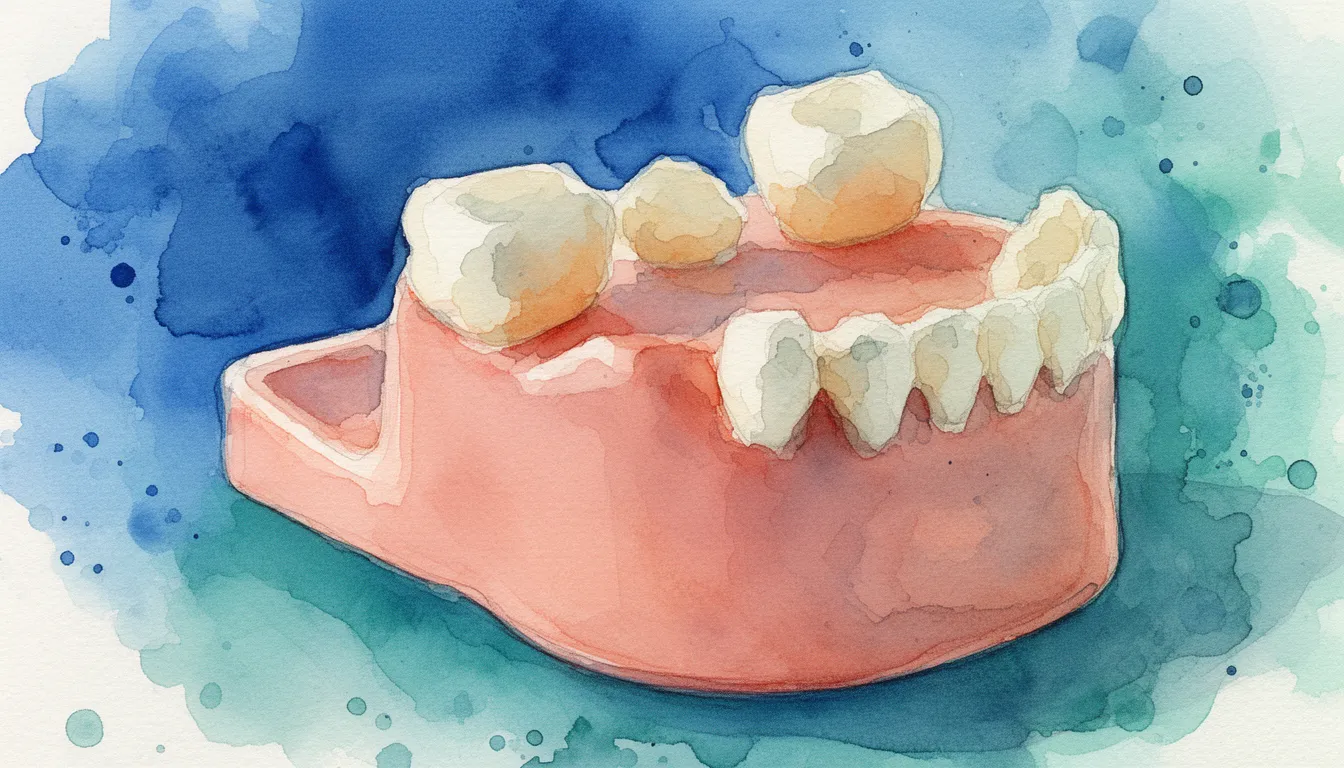
What Is Peri-Implantitis?
Peri-implantitis is a destructive inflammatory condition that affects the gum tissue and bone surrounding a dental implant. It is essentially gum disease around an implant rather than around a natural tooth.
When bacteria build up around an implant, they first trigger inflammation in the soft tissue. This early stage is called peri-implant mucositis (inflammation of the gum tissue around the implant without bone loss). A 2024 prospective study found that peri-implant mucositis can often be resolved with standard professional cleaning, making early intervention critical. [3] If mucositis is left untreated, bacteria can penetrate deeper and begin to destroy the bone that holds the implant in place. At that point, the condition becomes peri-implantitis.
A study of Belgian adults found that peri-implantitis affected a notable proportion of implant patients, with smoking and poor oral hygiene significantly increasing the risk. [9] The 2017 World Workshop on the Classification of Periodontal and Peri-Implant Diseases formally defined peri-implantitis as a pathological condition requiring documented bone loss beyond initial remodeling. [6] This classification helps clinicians distinguish it from normal post-surgical changes.
Peri-implantitis does not heal on its own. Bone loss around an implant tends to progress faster than bone loss around a natural tooth with periodontitis. That is why recognizing it early and starting treatment promptly matters so much.
Peri-Implant Mucositis vs. Peri-Implantitis
The key difference between these two conditions is bone loss. Peri-implant mucositis involves only the soft tissue, the gum around the implant. It causes redness, swelling, and bleeding on probing but no measurable bone destruction. Research demonstrates that mucositis typically resolves with professional debridement (removal of bacterial deposits) and improved home care. [3]
Peri-implantitis, by contrast, includes both soft tissue inflammation and progressive loss of the bone supporting the implant. Once bone loss begins, the condition is no longer fully reversible. Treatment can stop or slow progression, but rebuilding lost bone usually requires surgical intervention. Think of mucositis as the warning stage and peri-implantitis as the advanced stage.
Causes and Risk Factors for Peri-Implantitis
Bacterial infection is the primary cause, but several patient and clinical factors increase the likelihood of developing it. Understanding these risk factors can help you and your dental team take preventive steps.
Bacterial Biofilm
Peri-implantitis starts with bacterial biofilm, a sticky layer of bacteria that forms on the implant surface and under the gum line. The rough, threaded surface of many implants can harbor bacteria more easily than a smooth natural tooth root. When biofilm is not removed regularly, the immune system responds with inflammation. Over time, this chronic inflammation breaks down the bone. [8]
The bacterial species involved in peri-implantitis overlap with those found in periodontitis (gum disease around natural teeth). Patients who had periodontitis before receiving implants carry a higher risk because the same harmful bacteria may already be present in their mouths.
Patient-Related Risk Factors
Several personal health factors raise the risk of peri-implantitis. A study of Belgian adults identified smoking and a history of periodontal disease as two of the strongest predictors. [9] Smokers have reduced blood flow to the gums, which weakens the immune response and slows healing.
Uncontrolled diabetes is another significant factor. The 2017 World Workshop recognized that systemic conditions, including poorly managed diabetes, can directly affect periodontal and peri-implant tissues. [7] Poor oral hygiene is consistently linked to higher peri-implantitis rates. A 2021 study showed that patients who did not regularly use interproximal cleaning devices (tools like interdental brushes that clean between implants) had significantly more plaque accumulation and peri-implant inflammation. [4]
There is also emerging evidence that genetic factors may play a role. A study examining gene polymorphisms in an Iranian population found a potential association between certain genetic variations and susceptibility to both periodontitis and peri-implantitis, though more research is needed to confirm this link. [10]
Clinical and Procedural Risk Factors
Not all risk factors are within a patient's control. Excess dental cement left in the gum tissue during the placement of the implant crown is a well-documented trigger. Cement acts as a foreign body, trapping bacteria and provoking a localized inflammatory response.
Other clinical factors include implant positioning. An implant placed too close to an adjacent tooth or at a poor angle can create areas that are difficult to clean. Lack of adequate keratinized tissue (the firm, attached gum tissue around the implant) may also make the site more vulnerable to bacterial invasion.
Symptoms and Diagnosis of Peri-Implantitis
The earliest sign is usually bleeding around the implant when you brush or when your dentist probes the area. Recognizing symptoms early gives you the best chance of stopping bone loss before it becomes severe.
What Patients Notice
Peri-implantitis often develops silently. Many patients feel no pain in the early stages, which is why regular dental checkups are essential. Symptoms to watch for include redness or dark discoloration of the gum tissue around the implant, swelling or puffiness along the gum line, bleeding when brushing or flossing near the implant, and a bad taste or persistent odor coming from the implant site.
As the condition advances, the gum may begin to recede, exposing the metal implant surface or the gray abutment (the connector piece between the implant and the crown). Pus may drain from the gum pocket. In later stages, the implant itself may feel loose. Any of these signs warrants prompt evaluation.
- Redness, swelling, or dark discoloration of gums near the implant
- Bleeding when brushing, flossing, or during dental probing
- Gum recession that reveals the implant collar or abutment
- Pus discharge or a persistent bad taste near the implant
- Implant feels loose or shifts position (advanced stage)
How Peri-Implantitis Is Diagnosed
Diagnosis requires a clinical exam combined with dental X-rays. Your dentist or periodontist will use a periodontal probe, a thin instrument marked in millimeters, to measure the depth of the pocket around the implant. Deeper pockets with bleeding on probing suggest active disease.
X-rays, particularly periapical radiographs, show how much bone has been lost around the implant compared to the baseline taken when the implant was placed. The 2017 World Workshop classification requires evidence of progressive bone loss beyond the initial remodeling that normally occurs in the first year after implant placement. [6] Without a baseline X-ray for comparison, diagnosis can be more challenging.
Researchers have also explored chairside diagnostic tests. One example is a point-of-care test that detects active matrix metalloproteinase-8 (aMMP-8), an enzyme elevated in inflamed peri-implant tissues. Early research suggests these biomarker tests could help clinicians identify active disease before significant bone loss occurs. [5] However, these tests are not yet standard in most dental offices.
Peri-Implantitis Treatment Options
Treatment depends on how much bone has been lost and how the condition responds to initial therapy. Options range from non-surgical cleaning to surgical bone regeneration.
Non-Surgical Treatment
For mild to moderate cases, non-surgical treatment is typically the first step. This involves mechanical debridement, carefully removing bacterial biofilm and calcified deposits (calculus) from the implant surface using specialized instruments that avoid scratching the implant. Ultrasonic scalers with plastic or carbon-fiber tips are commonly used.
Your periodontist may also prescribe local or systemic antibiotics alongside debridement. Some clinicians use locally delivered antimicrobials placed directly into the pocket around the implant. Non-surgical treatment is often sufficient when caught at the peri-implant mucositis stage. [3]
Adjunctive (additional) therapies have also been studied. A 2024 Cochrane systematic review examined antimicrobial photodynamic therapy (aPDT), a technique using light-activated dye to kill bacteria, as an add-on to standard non-surgical treatment for peri-implant diseases. The review found very low certainty evidence for any additional benefit, meaning there is not yet strong proof that aPDT improves results over standard treatment alone. [2]
Surgical Treatment
When non-surgical approaches do not control the disease or bone loss is already moderate to severe, surgery becomes necessary. Surgical access allows the periodontist to directly visualize and clean the implant surface, remove infected tissue, and decontaminate the area using chemical agents or lasers.
In cases where the bone defect has a favorable shape (typically a contained, crater-like defect), bone grafting and guided bone regeneration may be performed. This involves placing bone graft material around the implant and covering it with a membrane to encourage new bone growth. The goal is to rebuild lost support and stabilize the implant.
A recent systematic review with meta-analyses examined whether adding systemic antibiotics to surgical treatment of peri-implantitis provides additional benefits. The review found limited evidence that systemic antibiotics offered meaningful improvement in clinical outcomes when combined with surgical therapy. [1] This suggests that thorough surgical debridement and decontamination may be more important than antibiotic use, though your periodontist will make antibiotic decisions based on your individual case.
Implant Removal (Explantation)
In advanced cases where the implant has lost most of its bone support, is mobile, or has not responded to prior treatment, the implant may need to be removed. This procedure is called explantation. After removal, the site is cleaned and allowed to heal. In many cases, bone grafting is performed at the time of removal to rebuild the area.
Depending on the amount of bone that regenerates, a new implant may be placed after a healing period of several months. Other tooth-replacement options, such as a fixed bridge or removable partial denture, can also be considered. Your periodontist and restorative dentist will discuss these alternatives with you.
Recovery and Aftercare
Recovery time depends on the type of treatment you receive. Non-surgical treatment typically requires little downtime, while surgical cases need weeks to months of healing.
After non-surgical debridement, you may notice mild soreness or sensitivity around the implant for a few days. Your periodontist will likely recommend a chlorhexidine mouth rinse and specific oral hygiene instructions. You can usually return to normal activities within a day.
Surgical recovery takes longer. Expect swelling and mild discomfort for the first week. Most periodontists advise a soft diet for 7 to 14 days and no brushing directly on the surgical site during initial healing. Sutures are typically removed after 10 to 14 days. If bone grafting was performed, the graft needs 4 to 6 months to mature before the site can be evaluated for stability.
Long-term aftercare is just as important as the treatment itself. Research highlights the role of consistent interproximal hygiene (cleaning between the implant and adjacent teeth) in preventing recurrence. A study found that patients who did not use interdental brushes around their implants had significantly higher levels of plaque and inflammation. [4] Your periodontist will recommend a maintenance schedule, typically every 3 to 4 months, for professional cleaning and monitoring.
- Non-surgical recovery: minor soreness for a few days; normal activity within 24 hours
- Surgical recovery: soft diet for 1 to 2 weeks; suture removal at 10 to 14 days
- Bone graft maturation: 4 to 6 months before re-evaluation
- Maintenance visits: typically every 3 to 4 months to monitor implant health
- Daily interdental brushing around implants to reduce plaque and prevent recurrence [4]
Peri-Implantitis Treatment Costs
Costs vary widely depending on the severity of the condition and the type of treatment required. Costs vary by location, provider, and case complexity.
Non-surgical debridement with localized antibiotic therapy typically ranges from $300 to $800 per implant site. This is the least expensive treatment tier and may be all that is needed for early-stage disease.
Surgical treatment costs more. Access flap surgery (where the gum is lifted to clean the implant surface and remove infected tissue) generally ranges from $1,000 to $3,000 per site. If bone grafting and guided bone regeneration are added, the total can reach $2,000 to $5,000 per site. Implant removal with site grafting typically falls in a similar range.
Dental insurance coverage for peri-implantitis treatment varies significantly between plans. Some plans classify peri-implant treatment under periodontal benefits, while others exclude implant-related procedures entirely. Contact your insurance provider to verify your specific coverage before starting treatment. Many periodontal offices offer payment plans or work with third-party financing companies to help manage out-of-pocket costs.
When to See a Periodontist
A periodontist is a dentist with additional years of specialty training in treating diseases of the gums and the bone that supports teeth and implants. They are the specialists best equipped to handle peri-implantitis.
Your general dentist may be the first to notice signs of peri-implant disease during a routine checkup. Many general dentists treat peri-implant mucositis in their offices. However, once bone loss is confirmed on X-rays, or if non-surgical treatment has not resolved the inflammation, a referral to a periodontist is appropriate.
You should seek a specialist evaluation if you notice any of the following: persistent bleeding around an implant that does not improve with better brushing, gum recession exposing the implant surface, pus or drainage from the implant site, or any looseness in an implant that previously felt stable. According to the American Academy of Periodontology, periodontists are trained to perform both non-surgical and surgical treatments for peri-implant diseases, including bone regeneration procedures. [11]
Periodontists also play an important role in ongoing maintenance. Because peri-implantitis can recur, regular monitoring by a specialist helps catch early signs before the condition progresses again.
Find a Periodontist Near You
If you have symptoms of peri-implantitis, or if your dentist has recommended a specialist evaluation, finding a qualified periodontist is the next step. Use the the periodontics page on My Specialty Dentist to search for board-certified periodontists in your area who specialize in treating peri-implant diseases. Early professional care gives you the best opportunity to preserve your implant and protect your oral health.
Search Periodontists in Your Area