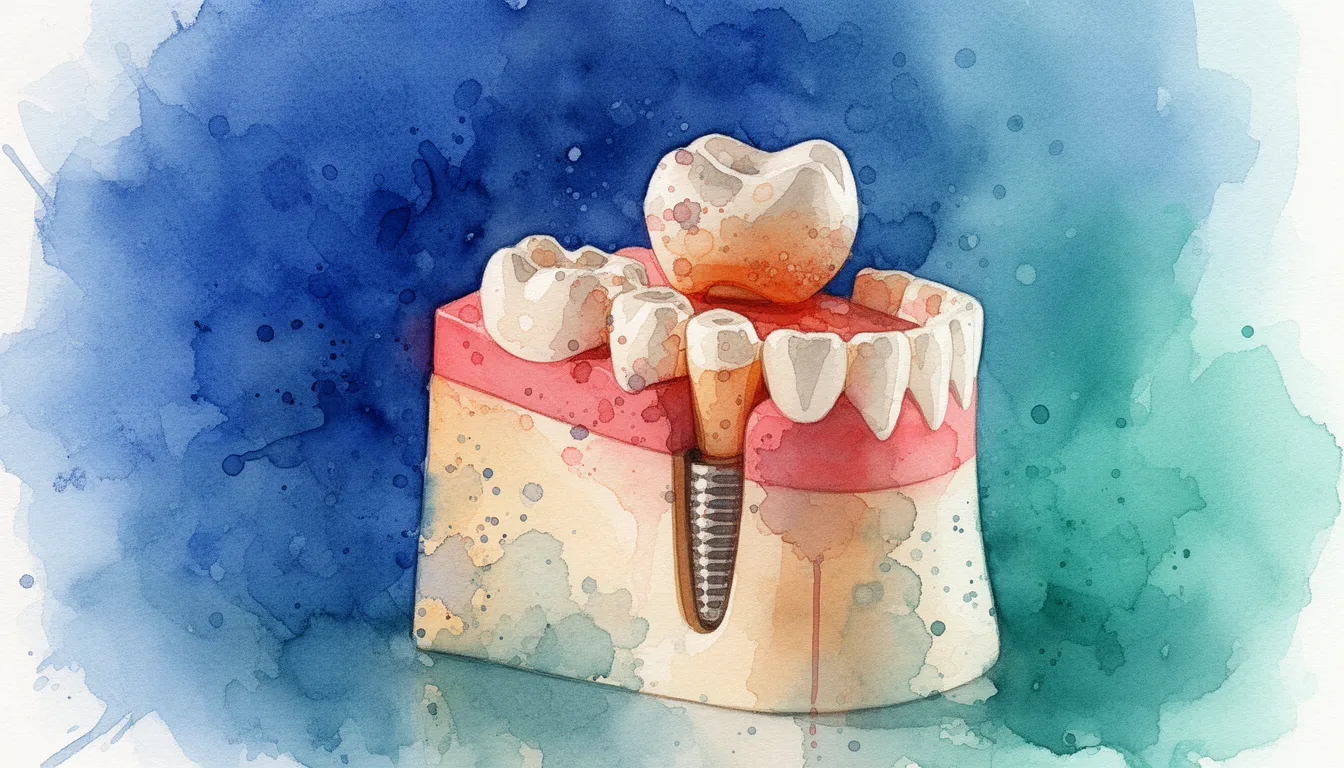
What Is Bone Loss Around a Dental Implant?
Bone loss around a dental implant is the gradual breakdown of the jawbone that holds the implant in place. Dentists call this condition peri-implant bone loss. It often begins with inflammation of the soft tissue, a stage known as peri-implant mucositis. If left untreated, mucositis can progress to peri-implantitis, where the infection reaches the bone itself and causes it to deteriorate. [2]
Some amount of early bone remodeling is considered normal after implant placement. A meta-analysis published in Clinical Implant Dentistry and Related Research found that implants typically lose a small amount of marginal bone, roughly 0.5 to 1.0 mm, during the first year of function. [8] After that initial settling, bone levels usually stabilize. Ongoing or accelerating bone loss beyond that first year is a warning sign that something is wrong. [7]
Peri-implantitis is surprisingly common. A concept review in the Journal of Contemporary Dental Practice reported prevalence estimates ranging widely, from about 10% to over 40% of implants, depending on the definition used and the population studied. [6] This wide range reflects differences in diagnostic criteria, but the takeaway is clear: bone loss around implants is not rare. It is a condition that any implant patient should understand.
The good news is that bone loss does not automatically mean you will lose your implant. Early detection and the right treatment can halt progression in many cases. [4] Understanding the causes, symptoms, and treatment options puts you in the best position to protect your implant long term.
Causes and Risk Factors for Peri-Implant Bone Loss
Bacterial infection is the primary driver of bone loss around dental implants. However, several patient-related and procedure-related factors raise the risk significantly. [2]
Bacterial Infection (Peri-Implantitis)
Peri-implantitis begins when bacterial plaque accumulates on the implant surface and triggers an inflammatory response. The body's immune reaction to these bacteria damages not only the soft tissue but also the surrounding bone. A European review on the etiology and pathogenesis of peri-implantitis confirmed that the disease process closely parallels periodontitis around natural teeth, though it can progress more rapidly around implants because implants lack the protective connective tissue attachment that natural teeth have. [2]
Plaque buildup is the starting point. When oral hygiene is inadequate, a biofilm forms on the implant and the prosthetic crown. This biofilm matures over time, harboring more aggressive bacterial species. The transition from peri-implant mucositis (soft tissue inflammation only) to peri-implantitis (bone involvement) is not inevitable, but it happens frequently when mucositis is left untreated. [4] [5]
Patient-Related Risk Factors
Several personal health factors increase vulnerability to peri-implant bone loss. The concept review by Marcantonio et al. identified smoking, poorly controlled diabetes, and a prior history of periodontal disease as the most consistently reported risk factors. [6]
Smoking reduces blood flow to the gums and impairs the body's ability to fight infection and heal. Patients with diabetes face similar challenges because elevated blood sugar compromises immune function and tissue repair. A history of gum disease is especially relevant because it signals that a patient's immune system may respond aggressively to bacterial challenge, a pattern that tends to repeat around implants. [6] [11]
Hormonal changes and certain medications can also play a role. For example, research in animal models has shown that bisphosphonate therapy, a class of drugs used to treat osteoporosis, combined with peri-implant inflammation may increase the risk of bone complications around implants. [1] Patients taking bisphosphonates should inform their dental provider before any implant procedure.
Symptoms and Diagnosis of Peri-Implant Bone Loss
Early peri-implant bone loss often produces no pain or visible symptoms, which makes routine monitoring essential. [7]
Signs and Symptoms to Watch For
The earliest sign is usually bleeding when you brush or floss around the implant. Redness or swelling of the gums at the implant site may follow. These symptoms point to peri-implant mucositis, the reversible stage before bone loss begins. [4] [5]
As the condition advances to peri-implantitis, symptoms may include deepening of the pocket (the gap between the gum and the implant), pus or discharge from the gum margin, a bad taste in the mouth, and, eventually, noticeable looseness of the implant. [2] By the time an implant feels loose, significant bone has typically already been lost. That is why waiting for symptoms is not a reliable strategy.
How Bone Loss Is Diagnosed
Diagnosis relies on a combination of clinical probing and dental X-rays, often called radiographs. During probing, the dentist or periodontist uses a thin instrument to measure the depth of the pocket around the implant. Pocket depths greater than about 5 to 6 mm, along with bleeding on probing, suggest active disease. [2]
Radiographs reveal the level of bone surrounding the implant. Your provider will compare current X-rays to baseline images taken when the implant was first placed or restored. Progressive bone loss visible on sequential X-rays confirms peri-implantitis. [7] [8] In some cases, a cone-beam CT scan (a 3D X-ray) may be used to assess the extent of bone loss in three dimensions.
Because early bone loss is silent, the American Academy of Periodontology recommends regular professional evaluations for all implant patients. [11] Catching the problem at the mucositis stage, before bone is involved, gives you the best chance of a simple, non-surgical resolution. [4]
Treatment Options for Bone Loss Around Dental Implants
Treatment depends on the severity of bone loss and ranges from non-surgical cleaning to bone regeneration surgery. [2] A periodontist will assess your specific situation and recommend a plan based on the amount of remaining bone, the degree of infection, and your overall health.
Non-Surgical Treatment
When bone loss is minimal or the condition is still at the mucositis stage, non-surgical approaches are typically the first step. These include professional mechanical debridement (careful cleaning of the implant surface using specialized instruments), antiseptic rinses, and sometimes local or systemic antibiotics. [4]
A decision-making review published in the British Dental Journal emphasized that managing peri-implant mucositis promptly with professional cleaning and improved home care can prevent progression to peri-implantitis in many patients. [4] The key is removing the bacterial biofilm from the implant surface without scratching or damaging the titanium.
Adjunctive therapies have been studied as well. A Cochrane systematic review examined antimicrobial photodynamic therapy (aPDT), which uses a light-activated dye to kill bacteria, as an add-on to standard cleaning for peri-implant diseases. The review found the current evidence was uncertain about whether aPDT provides additional benefit beyond conventional debridement alone. [3] More research is needed before this technique can be broadly recommended.
Surgical Treatment
When bone loss is moderate to severe, surgery is typically necessary. Surgical treatment aims to access the implant surface directly, remove infected tissue, decontaminate the implant, and, in some cases, rebuild lost bone.
Open flap debridement involves lifting the gum tissue to expose the implant surface. The periodontist then cleans the surface using mechanical instruments, sometimes combined with chemical agents or lasers. The gum tissue is repositioned and sutured. [2]
Bone grafting, also called guided bone regeneration, may be performed at the same time. The surgeon places bone graft material (from a tissue bank, synthetic source, or the patient's own body) into the defect around the implant and covers it with a barrier membrane. Over several months, new bone can grow into the graft site. This approach works best when the bone defect has a contained shape, such as a crater around the implant. [2]
In cases where the bone defect is too wide, the implant is excessively mobile, or infection cannot be controlled, removal of the implant may be the most predictable option. After the site heals, a new implant can often be placed once the bone is rebuilt. [7]
Comparing Approaches
No single treatment works for every case. Non-surgical therapy is less invasive and has a shorter recovery, but it may not be sufficient when significant bone has already been lost. Surgical therapy addresses deeper defects more thoroughly but carries the usual risks of any oral surgery, including swelling, discomfort, and the possibility that the graft may not fully integrate.
The European review by Berglundh et al. noted that while surgical interventions show promise, long-term data on predictable bone regeneration around previously infected implants remain limited. [2] Results vary based on the amount of bone remaining, patient health, and adherence to follow-up care. A candid conversation with your periodontist about realistic expectations for your specific case is essential.
Recovery and Aftercare
Recovery time depends on whether treatment was non-surgical or surgical, with surgical cases requiring a longer healing period.
After non-surgical treatment, most patients experience minimal downtime. Gums may be tender for a few days. Your provider will likely schedule a follow-up visit within four to six weeks to re-evaluate pocket depths and check for signs of continued inflammation. [4]
Surgical recovery is more involved. Expect swelling and some discomfort for the first week. Your periodontist will prescribe or recommend pain medication and may place you on antibiotics. If bone grafting was performed, full bone maturation typically takes three to six months. During this time, you may be asked to avoid chewing directly on the treated implant and to follow a soft-food diet for the initial weeks.
Regardless of the treatment type, long-term maintenance is critical. Peri-implantitis has a tendency to recur. A structured maintenance schedule, typically every three to four months in the first year after treatment, helps your provider catch early signs of relapse. [5] [11] Diligent home care remains the single most important factor under your control. Brushing twice daily, using interdental brushes or a water flosser around the implant, and avoiding tobacco all contribute to a stable outcome.
Cost Factors for Treating Peri-Implant Bone Loss
Treatment costs vary widely depending on the type of procedure, the extent of bone loss, and your geographic location.
Non-surgical treatment, including professional debridement and localized antibiotic therapy, may range from $300 to $800 per visit. Surgical treatment with open flap debridement and implant decontamination typically falls between $1,000 and $3,000 per site. When bone grafting is added, the total for a surgical procedure can range from $2,000 to $5,000 or more per site. Costs vary by location, provider, and case complexity.
Dental insurance coverage for peri-implant treatment is inconsistent. Some plans cover a portion of the surgical and maintenance procedures under their periodontal benefits. Others classify implant-related treatment as a separate category with different coverage limits. Contact your insurance provider before treatment to understand your specific benefits.
Many periodontal offices offer payment plans or work with third-party financing companies. Ask the office about available options during your consultation. Investing in treatment now is typically less costly than implant removal and replacement later.
When to See a Periodontist
A periodontist is a dentist with additional years of training in the prevention, diagnosis, and treatment of gum disease and implant complications. [11]
Your general dentist may identify early signs of peri-implant bone loss during a routine visit. In many cases, the general dentist will refer you to a periodontist for further evaluation and treatment. This referral is especially appropriate when pocket depths are increasing, when X-rays show progressive bone loss, or when non-surgical treatment performed by a general dentist has not resolved the inflammation. [2]
You should also seek evaluation from a periodontist if you notice persistent bleeding, swelling, or discharge around an implant. Any sensation of looseness warrants prompt attention. A periodontist has specialized instruments, surgical training, and experience managing complex bone defects around implants.
If you have risk factors such as a history of periodontitis, diabetes, or smoking, consider establishing a relationship with a periodontist soon after your implant is placed. Proactive monitoring by a specialist can catch problems at the earliest, most treatable stage. Visit the periodontics page to learn more about what periodontists do and the conditions they treat.
Find a Periodontist Near You
If you have concerns about bone loss around a dental implant, or if your general dentist has recommended a specialist evaluation, finding a qualified periodontist is a straightforward next step. Use the My Specialty Dentist directory to search for a periodontist in your area. You can filter by location and read provider profiles to find someone suited to your needs.
Search Periodontists in Your Area