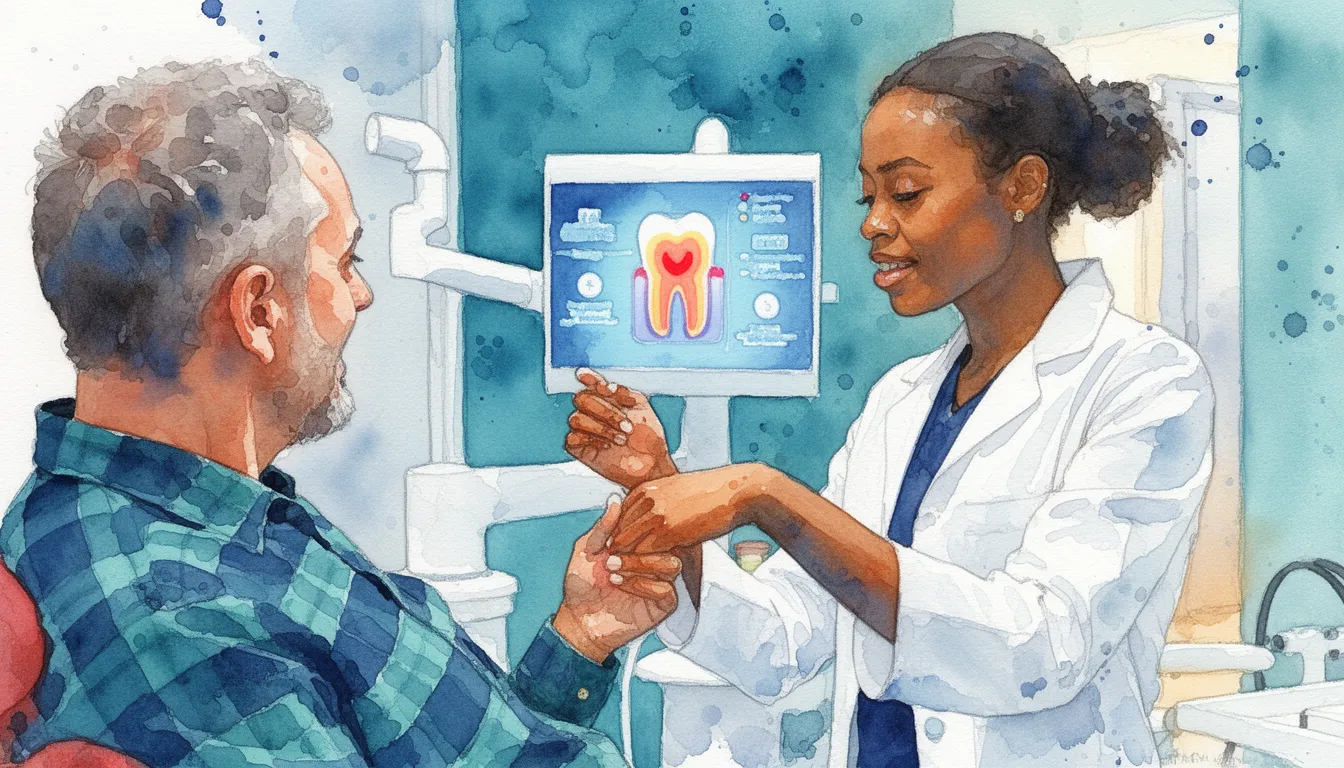
What Is a Gum Abscess?
A gum abscess, also called a periodontal abscess, is a localized collection of pus within the gum tissue. It occurs when bacteria become trapped in a pocket between the gum and the tooth, causing an infection. The body's immune response to this infection produces pus, which builds up and creates a painful, swollen area on the gum.
Gum abscesses most commonly develop in people who already have some degree of gum disease (periodontitis), where deeper pockets have formed between the teeth and gums. Food debris, tartar, or a foreign object (like a popcorn hull or broken toothpick) trapped in these pockets can trigger an abscess.
Gum Abscess vs. Tooth Abscess: What Is the Difference?
A gum abscess originates in the gum tissue alongside the tooth. A tooth abscess (periapical abscess) originates at the tip of the tooth's root, usually due to decay or trauma that has reached the inner pulp. The distinction matters because the treatment is different.
Gum abscesses are treated by a general dentist or periodontist through drainage and deep cleaning. Tooth abscesses typically require root canal treatment by an endodontist to address the infection inside the tooth. Your dentist will use X-rays and a clinical exam to determine which type you have.
Symptoms of a Gum Abscess
Recognizing the symptoms of a gum abscess helps you seek treatment early, before the infection spreads.
- A painful, tender bump or swelling on the gum, often near the gumline of a specific tooth
- Pus draining from the gum, which may cause a bad taste in your mouth
- Redness and swelling in the gum tissue around the affected area
- Sensitivity to hot, cold, or pressure when chewing
- Throbbing or constant pain that may radiate to the jaw, ear, or neck
- Bad breath that does not improve with brushing
- A loose-feeling tooth near the abscess
- Fever, which indicates the infection may be spreading
What Causes a Gum Abscess?
Gum abscesses develop when bacteria invade the gum tissue, typically through a pathway created by gum disease or physical injury.
Gum Disease (Periodontitis)
The most common cause is existing gum disease. When periodontitis creates deep pockets between the teeth and gums, bacteria accumulate in areas that brushing and flossing cannot reach. These pockets can become sealed off by swollen tissue or debris, trapping bacteria and leading to abscess formation.
Trapped Food or Foreign Objects
A piece of food, a popcorn kernel shell, or a broken bristle from a toothbrush can become lodged between the gum and tooth. If the object is not removed, bacteria colonize the area and an abscess can develop within days.
Other Contributing Factors
- Weakened immune system: Conditions like diabetes or medications that suppress the immune system increase abscess risk.
- Injury to the gum tissue: Aggressive brushing, dental procedures, or accidental trauma can create an entry point for bacteria.
- Poor-fitting dental restorations: Crowns, bridges, or dentures that do not fit properly can trap food and bacteria against the gums.
How Is a Gum Abscess Treated?
A gum abscess requires professional treatment. The infection will not resolve on its own, and delaying treatment allows it to spread to surrounding tissues or even into the bloodstream.
Incision and Drainage
The first step is draining the pus. Your dentist or periodontist numbs the area with local anesthesia, then makes a small incision in the abscess to allow the pus to drain. This immediately reduces pressure and pain. The area is then flushed with saline to remove bacteria and debris.
Deep Cleaning (Scaling and Root Planing)
If the abscess is related to gum disease, your dentist or periodontist will perform a deep cleaning of the affected area. Scaling removes tartar and bacteria from below the gumline. Root planing smooths the root surfaces so the gum tissue can reattach to the tooth. This addresses the underlying pocket that allowed the infection to develop.
Antibiotics
Antibiotics are not always necessary for a gum abscess. If the abscess is localized and can be fully drained, your dentist may not prescribe them. Antibiotics are typically prescribed when the infection has spread beyond the immediate area, when you have a fever, when you have a weakened immune system, or when the abscess cannot be fully drained at the first visit.
If prescribed antibiotics, complete the full course as directed, even if your symptoms improve before the medication is finished.
Home Care Before Your Dental Appointment
If you cannot get to a dentist immediately, these steps can help manage pain and reduce the risk of the infection worsening. They are temporary measures, not a substitute for professional treatment.
- Rinse with warm salt water (half a teaspoon of salt in 8 ounces of warm water) several times a day. This draws some pus toward the surface and reduces bacteria.
- Take over-the-counter pain medication. Ibuprofen (Advil, Motrin) helps with both pain and inflammation. Follow the dosage instructions on the label.
- Avoid very hot or very cold foods and beverages near the affected area.
- Do not try to pop or squeeze the abscess. This can push bacteria deeper into the tissue.
- Continue brushing and flossing your other teeth. Be gentle around the affected area.
- Do not place aspirin directly on the gum. This causes a chemical burn to the tissue.
When Is a Gum Abscess a Dental Emergency?
Most gum abscesses can be treated during a regular dental appointment within a day or two. However, certain symptoms indicate the infection is spreading and requires emergency care.
Go to an emergency room or seek urgent dental care if you have a fever above 101 degrees Fahrenheit, if the swelling extends to your face, neck, or under your eye, if you have difficulty swallowing or breathing, or if you feel generally ill with chills and body aches. A spreading dental infection can become life-threatening in rare cases. Do not wait for a regular appointment if you have these symptoms.
Learn more about periodontists and how they treat gum infections on our /specialties/periodontics page.
Cost of Gum Abscess Treatment
Treatment costs depend on the severity of the abscess and the procedures needed.
A simple incision and drainage typically costs $150 to $300. If deep cleaning (scaling and root planing) is needed, expect to pay $200 to $500 per quadrant of the mouth. Antibiotics, if prescribed, add $10 to $50 with insurance or $20 to $100 without. Emergency or after-hours dental visits may carry an additional fee of $50 to $200.
Most dental insurance plans cover abscess treatment as a medically necessary procedure. Check with your plan for specific coverage details. Costs vary by location, provider, and case complexity.
Find a Periodontist Near You
Every periodontist on My Specialty Dentist has verified specialty credentials. If you have a gum abscess or recurring gum infections, search by location to find a board-certified periodontist for evaluation and treatment.
Search Periodontists in Your Area