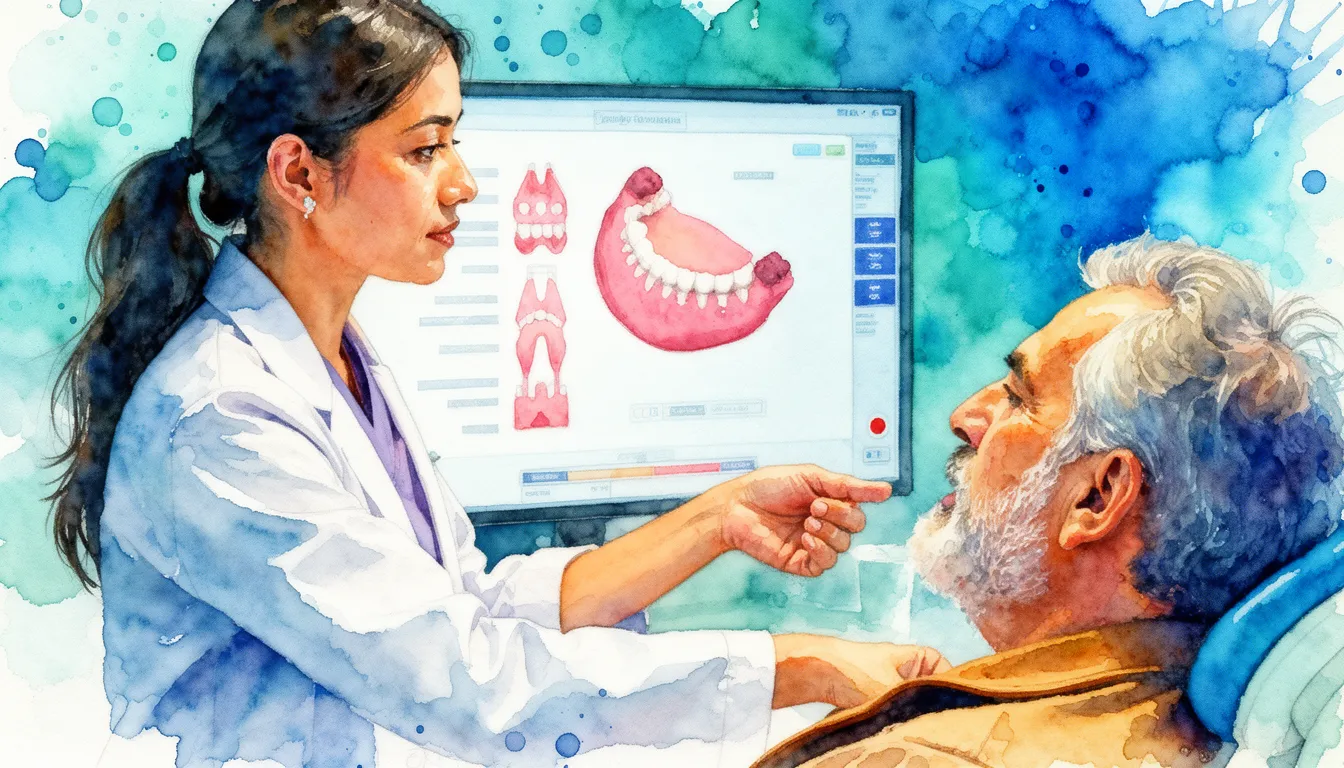
What This Guide Covers and Who It Is For
This guide explains gum disease treatment options at every stage, from early gingivitis to advanced periodontitis. It is written for anyone who has been told they have gum disease, suspects they might, or wants to understand what treatment involves before seeing a dentist or periodontist.
Gum disease, also called periodontal disease, is an infection of the tissues that hold your teeth in place. [1] It is typically caused by a buildup of plaque, a sticky film of bacteria that forms on teeth. When plaque is not removed through brushing and flossing, it hardens into tartar (calculus) and triggers inflammation in the gums. [3]
The good news is that gum disease is treatable at every stage. Early-stage disease can often be reversed entirely. More advanced disease can be managed to prevent further damage. This guide covers non-surgical treatments, surgical procedures, laser therapy, costs, recovery, and when you should see a specialist.
Understanding Gum Disease: Stages, Causes, and Treatment Options
Gum disease progresses through distinct stages, and the right treatment depends on how far the disease has advanced. Catching it early gives you the most options and the best outcomes.
The Two Main Stages of Gum Disease
Gum disease is broadly divided into two stages: gingivitis and periodontitis. These differ in severity, symptoms, and how they respond to treatment.
Gingivitis is the earliest stage. It causes red, swollen gums that may bleed when you brush or floss. At this point, the infection affects only the gum tissue. The bone and fibers that hold your teeth in place are not yet damaged. Gingivitis is reversible with proper oral hygiene and professional cleaning. [1]
Periodontitis develops when gingivitis is left untreated. The inner layer of the gum pulls away from the teeth, forming pockets (spaces between the gum and tooth). These pockets collect debris and become infected. As the body's immune system fights the bacteria, bone and connective tissue begin to break down. [1] Periodontitis is not fully reversible, but it can be managed to stop further progression and, in some cases, regenerate lost tissue.
Periodontitis itself has varying degrees of severity. Mild periodontitis may involve pocket depths of 4 to 5 millimeters. Moderate cases show pockets of 5 to 7 millimeters with noticeable bone loss. Severe periodontitis involves pockets deeper than 7 millimeters, significant bone loss, and teeth that may feel loose.
Non-Surgical Treatments
Non-surgical treatments are the first line of defense against gum disease. They work well for gingivitis and mild to moderate periodontitis.
Scaling and root planing (SRP), often called a deep cleaning, is the most common non-surgical periodontal treatment. [1] Scaling removes plaque and tartar from above and below the gumline. Root planing smooths the root surfaces of the teeth, which helps the gums reattach to the tooth and makes it harder for bacteria to accumulate. SRP is typically performed with local anesthesia (numbing) so you stay comfortable during the procedure.
Antibiotic therapy is sometimes used alongside SRP. Your dentist or periodontist may place a localized antibiotic directly into the periodontal pockets after cleaning. Oral antibiotics may also be prescribed in certain cases. These medications help reduce bacteria that scaling alone may not eliminate.
Antimicrobial mouth rinses, such as chlorhexidine, may be recommended as part of your home care routine after treatment. These rinses help control bacterial growth between dental visits. [2]
Surgical Treatments for Advanced Periodontitis
When non-surgical treatment does not adequately control the disease, surgical options become necessary. Surgery allows the periodontist to access the roots of the teeth, remove deep deposits of bacteria, and repair damaged bone.
Flap surgery (pocket reduction surgery) involves lifting the gums back to remove tartar deposits in deep pockets. The periodontist then sutures the gum tissue back in place so it fits snugly around the tooth. This reduces the pocket depth and makes it easier to keep the area clean. [1]
Bone grafts use fragments of your own bone, donated bone, or synthetic bone to replace bone destroyed by periodontitis. The grafts serve as a platform for regrowth of natural bone. Guided tissue regeneration (GTR) is a related technique where a small piece of mesh-like material is placed between the bone and gum tissue. This barrier prevents gum tissue from growing into the area where bone should regenerate. [1]
Soft tissue grafts reinforce thin gums or fill in places where gums have receded. Tissue is typically taken from the roof of your mouth (palate) or from a donor source and stitched to the affected area. This procedure protects exposed tooth roots and can reduce sensitivity.
LANAP Laser Therapy
LANAP (Laser-Assisted New Attachment Procedure) is an FDA-cleared laser treatment for periodontitis. It uses a specific wavelength of laser light to remove diseased tissue and bacteria from periodontal pockets without cutting the gum with a scalpel.
During LANAP, the laser targets infected tissue while leaving healthy tissue intact. The laser also stimulates the bone and tissue at the base of the pocket, which may encourage the body to regenerate lost attachment between the tooth and bone. The procedure typically results in less bleeding, swelling, and discomfort compared to traditional surgery.
LANAP is an option for patients with moderate to severe periodontitis. It is important to note that LANAP has received FDA clearance (meaning the FDA has determined it is substantially similar to other legally marketed devices) rather than FDA approval (which involves a more rigorous review process). Results vary by patient, and not every case is suitable for laser treatment. Your periodontist can help determine if LANAP is appropriate for your specific situation.
What You Should Know Before Treatment
Preparing for gum disease treatment involves understanding timing, medical considerations, and what to plan for at home during recovery.
How Gum Disease Is Diagnosed
Your dentist or periodontist diagnoses gum disease using a periodontal probe, a thin instrument that measures the depth of pockets around each tooth. Healthy pockets measure 1 to 3 millimeters. Pockets of 4 millimeters or deeper typically indicate periodontal disease. [1]
X-rays are used to check for bone loss beneath the gumline. Your provider will also look at factors like bleeding on probing, gum recession, and tooth mobility. All of these measurements together determine the stage and grade of your disease, which guides the treatment plan.
There is no ideal age for gum disease treatment because the disease can affect adults at any stage of life. However, risk increases with age. Other risk factors include smoking, diabetes, certain medications that reduce saliva flow, hormonal changes, and genetics. [1] [2]
How to Prepare for Your Appointment
Bring a list of all medications you are currently taking, including over-the-counter supplements. Some medications, such as blood thinners, may need to be adjusted before procedures. Your provider will coordinate with your physician if needed.
If you have diabetes, let your periodontist know, as blood sugar levels can affect healing and treatment outcomes. Similarly, if you are pregnant or planning to become pregnant, discuss timing with your provider. Hormonal changes during pregnancy can worsen gum inflammation. [2]
Plan to eat a soft meal before your appointment, especially if local anesthesia will be used. You may not be able to eat comfortably for a few hours afterward. Arrange for someone to drive you home if sedation is part of your treatment plan.
What to Expect During and After Treatment
Gum disease treatment varies by procedure, but most patients can return to normal activities within a few days. Here is a general overview of what each treatment involves.
During Scaling and Root Planing
SRP is usually done in one to two visits, depending on how many areas of the mouth need treatment. Each visit typically lasts 45 minutes to an hour. Your provider will numb the treatment area with local anesthesia so you feel pressure but not pain.
Using hand instruments or ultrasonic scalers, the provider removes plaque and tartar from below the gumline. Root planing follows, smoothing rough spots on the root surface. After the procedure, your gums may feel sore and sensitive for a few days. Over-the-counter pain relievers usually manage this discomfort.
Your provider will typically schedule a follow-up visit 4 to 6 weeks later to re-measure pocket depths and assess healing. In many cases, pockets shrink and gums reattach more firmly to the teeth after SRP. If pockets remain deep, your provider may recommend additional treatment.
During Surgical Procedures
Periodontal surgery is performed under local anesthesia, and sedation options may be available depending on the complexity of the case and your comfort level. Flap surgery typically takes 1 to 2 hours. Bone grafting or tissue regeneration adds additional time.
After surgery, expect some swelling, mild to moderate discomfort, and minor bleeding for the first 24 to 48 hours. Your periodontist will prescribe pain medication and may prescribe antibiotics. Ice packs applied to the outside of the face can help reduce swelling.
Recovery from periodontal surgery typically takes 1 to 2 weeks for initial healing. During this time, stick to soft foods, avoid smoking, and follow your provider's instructions for oral hygiene carefully. Full healing of bone grafts and regenerated tissue may take several months. Follow-up visits are essential to monitor progress.
During LANAP Laser Treatment
LANAP is typically completed in two sessions, each lasting 1 to 2 hours. One side of the mouth is treated per session. Local anesthesia is used to keep you comfortable.
Most patients report less post-operative pain with LANAP compared to traditional surgery. You can typically return to your normal routine the next day, though you should eat soft foods for about a week. Your periodontist will provide specific aftercare instructions and schedule follow-up visits to track healing.
Gum Disease Treatment Costs and Insurance
Treatment costs depend on the type of procedure, the number of areas treated, and the severity of disease. Costs vary by location, provider, and case complexity.
Scaling and root planing typically costs between $200 and $300 per quadrant. Your mouth has four quadrants, so full-mouth SRP may range from $800 to $1,200. Some dental insurance plans cover a portion of SRP, especially when documented periodontal disease is present. [2]
Surgical procedures are more expensive. Flap surgery generally costs $1,000 to $3,000 or more per quadrant. Bone grafts and guided tissue regeneration may add $500 to $1,500 per site depending on the materials and technique used. LANAP laser treatment typically falls in a similar range to traditional surgery, though pricing varies significantly by practice.
Many dental insurance plans classify periodontal treatment as a major procedure and cover 50% to 80% of the cost after deductibles. However, coverage limits, waiting periods, and annual maximums apply. Ask your insurance provider for a pre-treatment estimate. Many periodontal offices also offer payment plans to help spread the cost over time.
When to See a Periodontist
A periodontist is a dentist who has completed 3 additional years of specialty training focused on the prevention, diagnosis, and treatment of gum disease, as well as the placement of dental implants. [1]
Your general dentist can treat gingivitis and mild periodontitis with professional cleanings and scaling and root planing. However, a referral to a periodontist is typically appropriate in certain situations.
You may need to see a periodontist if your gum disease has not responded to initial non-surgical treatment, if pocket depths remain 5 millimeters or greater after SRP, or if you have moderate to severe bone loss visible on X-rays. Periodontists are also the right specialists to consult if you need surgical intervention such as flap surgery, bone grafting, or soft tissue grafts. [1]
Other signs that specialist care may be needed include teeth that are loose or shifting, gum recession that exposes tooth roots, or persistent bad breath that does not improve with regular brushing and flossing. If you have systemic health conditions like diabetes that complicate gum disease management, a periodontist can provide more targeted care. Patients who smoke or have a history of aggressive periodontitis also benefit from specialist involvement.
Find a Periodontist Near You
If you are experiencing signs of gum disease, such as bleeding gums, persistent bad breath, or gum recession, a periodontist can evaluate your condition and recommend the right course of treatment. Visit the periodontics page on My Specialty Dentist to search for a board-certified periodontist in your area, read about their training and credentials, and take the next step toward protecting your oral health.
Search Periodontists in Your Area